Saudi pipeline reopens while Red Sea port faces alerts again
Saudi Arabia restarted its East-West Pipeline as low Yanbu flows, Houthi threats and President Trump's UN meetings put Gulf energy security in focus.
Omar Farouk ·
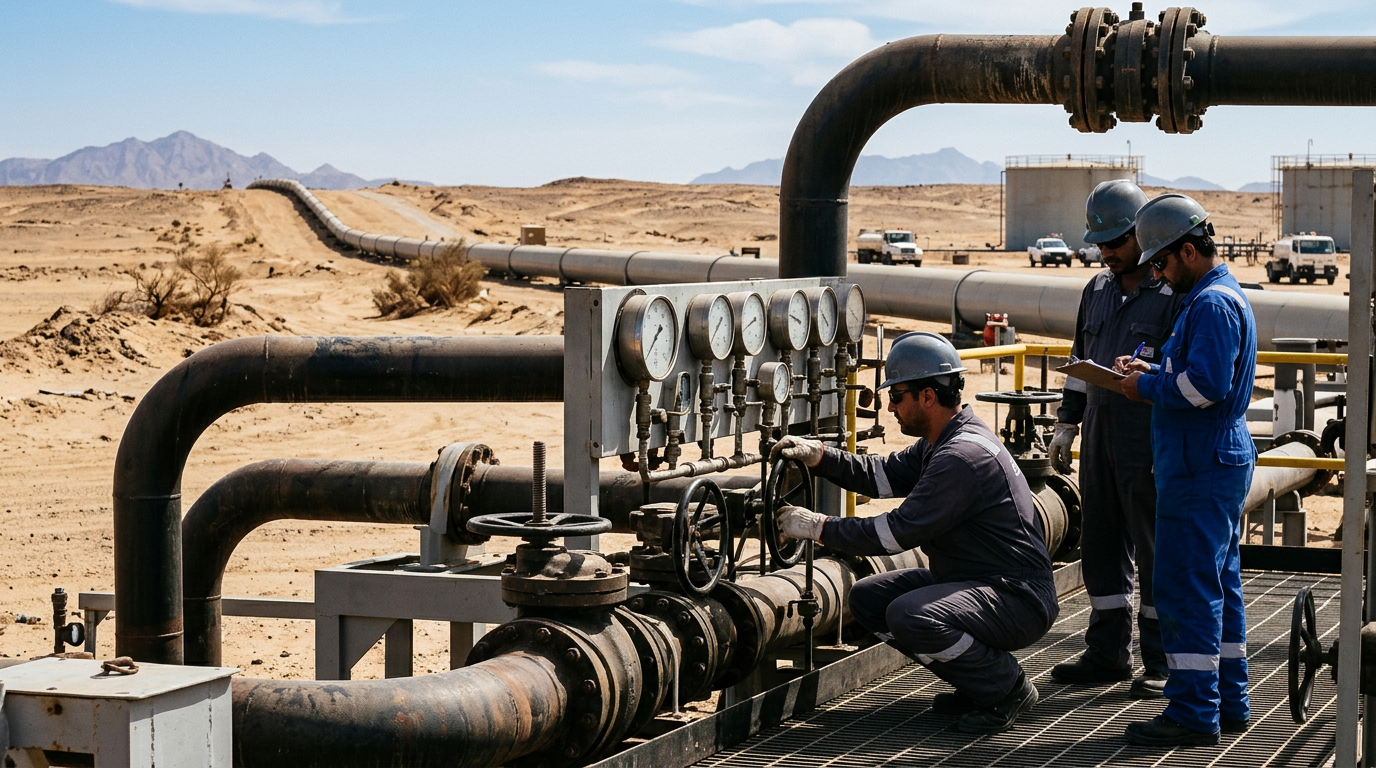
Saudi pipeline operations restarted as low Yanbu crude flows and new Houthi attack alerts kept Gulf energy security under pressure.
The East-West Pipeline gives Saudi Arabia a route to the Red Sea port of Yanbu, away from Gulf shipping lanes that have become a central concern in the war. Media reports said crude exports from Yanbu could resume today, though volumes were still described as low.
The restart matters because Yanbu has been targeted by Yemen's Houthis, according to the reports. Saudi Arabia issued new warnings on Monday about a possible attack, adding to the pressure on governments trying to keep oil infrastructure operating while military and diplomatic tracks move in parallel.
Yanbu route draws new alerts
The East-West Pipeline is a strategic link for Saudi crude flows because it connects production areas to a Red Sea outlet. When that route is disrupted or threatened, the issue is not only a Saudi operating problem; it affects how traders assess the security of regional export capacity.
The available reports did not give a verified throughput figure for the pipeline or a confirmed export volume at Yanbu. That leaves the market with a narrow set of hard facts: the line has restarted, flows remain low, and the port is under renewed security warnings.
For Saudi Arabia, the immediate test is whether the restart can move from limited flows to sustained exports without another interruption. For buyers, the practical question is whether cargo schedules through Yanbu can be treated as reliable while the Red Sea remains exposed to attack risk.
Allies split over military backing
Britain has offered support for Saudi military efforts, while France has offered help to secure energy infrastructure, according to the reports. Those offers point to a European focus on keeping oil facilities and export channels protected rather than leaving the burden entirely to Riyadh.
The United States has taken a different public posture. A separate report said Washington has proposed a multibillion-dollar fund to rebuild energy facilities across the Gulf, while so far declining to back Riyadh's campaign against the Houthis.
That distinction matters for Saudi calculations. Infrastructure funding can lower the cost of repairing damaged assets, but it does not provide the same deterrent effect as direct military support for strikes or defensive operations.
Hormuz proposal reaches Washington
Iran has also offered a route to reopening the Strait of Hormuz within a week if Washington eases military pressure and lifts its blockade of Iranian ports, according to a media report. The account frames Hormuz as a negotiating lever rather than only a maritime chokepoint.
The report did not include public confirmation from Washington or Tehran on the detailed terms. Without that confirmation, the offer should be read as a reported diplomatic position, not as an agreed path to reopening the waterway.
President Trump is due to address the UN General Assembly today and meet Gulf leaders in New York as part of a diplomatic push to end the war. Those meetings place Saudi export security, Houthi attacks and Iran's maritime conditions inside the same negotiating frame.
Three routes for oil flows
If Yanbu exports resume at higher and steady volumes, pressure on Saudi logistics would ease and crude buyers would have more confidence in Red Sea loadings. That path would support the Saudi export system, reduce stress on the Gulf energy sector and limit the risk of an oil-supply shock spreading into broader inflation expectations.
If Houthi threats continue to restrict flows, Saudi Arabia would face a longer period of constrained Red Sea operations. The wider industry would have to price more security risk into Gulf infrastructure, and the global macro effect would depend on whether lost or delayed barrels are large enough to affect benchmark crude prices.
If the Hormuz proposal becomes a serious negotiation, the main mechanism would be de-escalation around shipping lanes and port access. If it fails, the region faces overlapping risks at Yanbu and Hormuz, leaving governments and energy companies to manage export security while diplomacy remains unsettled.