Noida artist’s balcony draws 200 birds daily, a case study in urban refuge
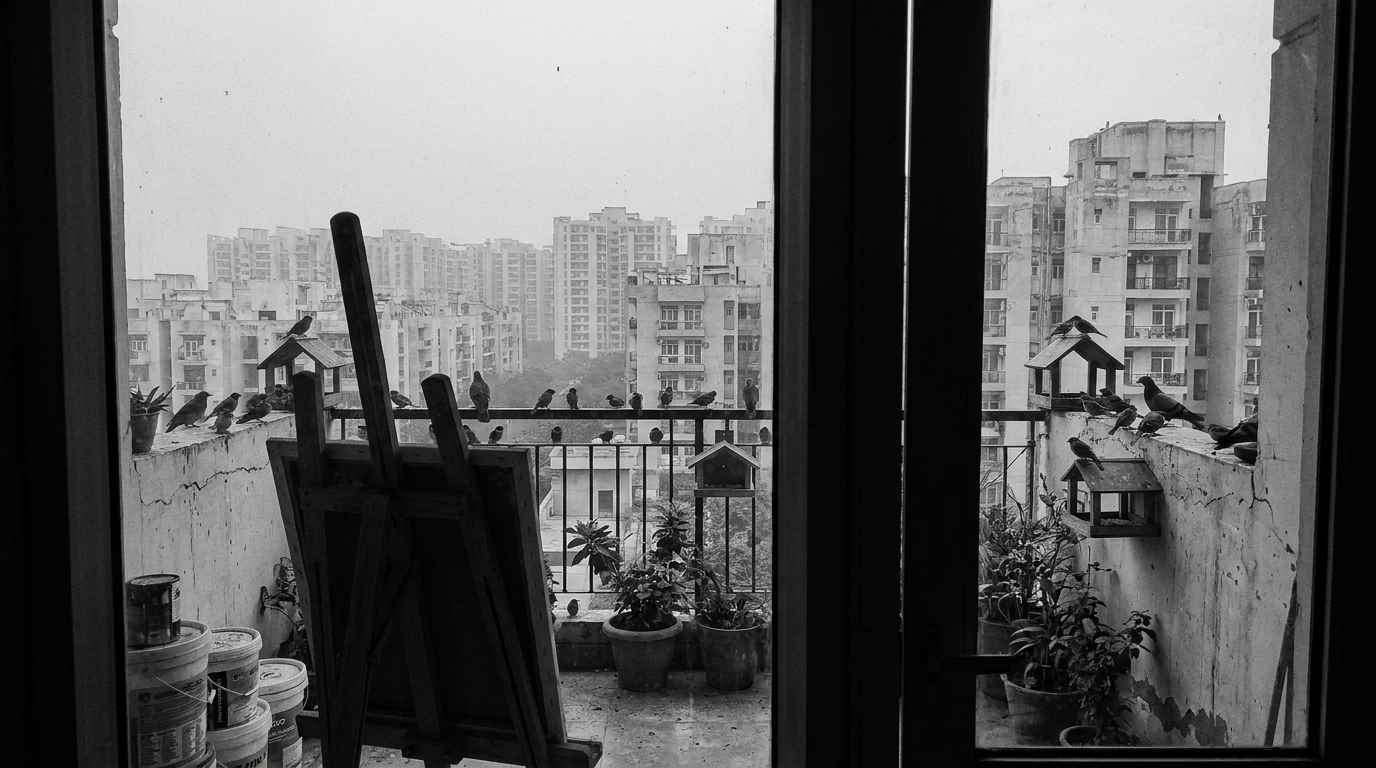
A Noida artist says about 200 birds visit her high-rise balcony each morning, drawn not just by food but by a space that feels safe.
Mei Lin ·
# Noida artist’s balcony draws 200 birds daily, a case study in urban refuge
A Noida-based artist featured in a recent photo story said around 200 birds visit her high-rise balcony each morning. She described the visits as driven not only by feeding, but by the sense of safety the balcony environment provides.
National Capital Region
Noida, part of India’s National Capital Region, has seen rapid high-rise development over the past decade, pushing more daily life upward into balconies, terraces, and shared podium spaces. In dense urban settings, small design choices such as ledges, planters, and sheltered corners can unintentionally become micro-habitats for common city birds.
The photo story frames the balcony as a repeatable “safe space” rather than a one-off feeding spot, which aligns with a broader pattern seen in Indian cities: birds adapt quickly to predictable human routines when disturbance is low. The signal does not identify the bird species involved, nor does it document the setup used on the balcony.
Urban bird congregation points can become informal indicators of how wildlife is coping with construction intensity, noise, and heat stress in fast-growing Asian cities. If birds are choosing elevated balconies for safety, it suggests ground-level green patches and traditional nesting spaces may be under pressure, even when food sources remain available.
There is also a public-health and building-management angle
There is also a public-health and building-management angle for high-rise communities across Asia, including India: large, regular bird gatherings can create conflicts over cleanliness, noise, and pest concerns, while also spurring resident-led conservation behavior. How housing societies respond, through either restrictions or accommodation, can shape the viability of such micro-refuges.
By 2026-08-31, watch for whether the local housing society or municipal authorities issue any written guidance or restrictions on balcony feeding or bird-attracting setups in the artist’s complex, or whether the artist documents changes such as species diversity or stable daily counts. The signal’s claim is supported if a consistent, dated record shows similar morning volumes over multiple weeks; it is weakened if visits drop sharply following policy action, complaints, or changes to balcony access.