

Neves faces emigration test in Cape Verde’s six-way vote
Joana Rosa, the first woman to run for president since independence, is among five opposition candidates challenging the incumbent.
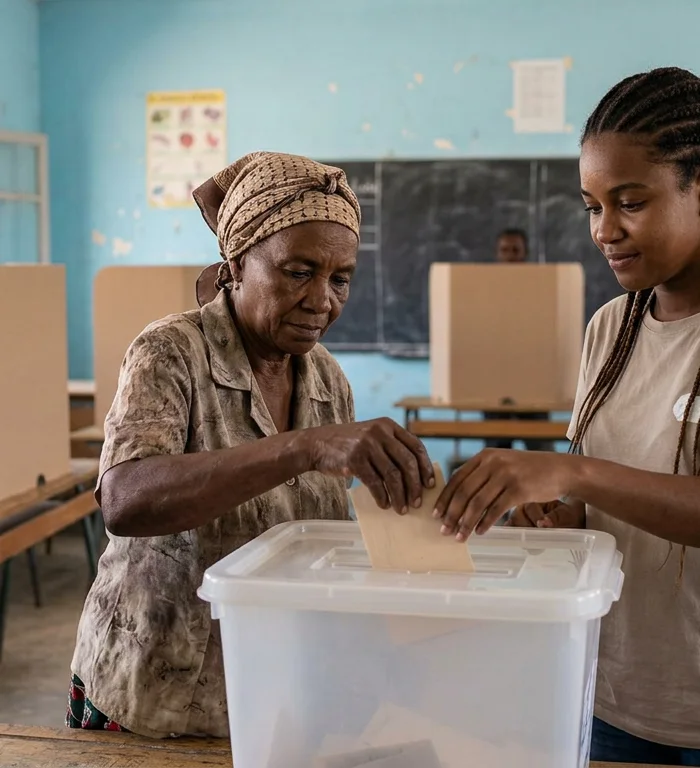
More than 300,000 people were eligible to vote in Cape Verde’s Sunday, Nov. 15, presidential election, where President Jose Maria Neves sought a second term, Al Jazeera reported with AP and Reuters.
The vote put emigration at the centre of the race in a country of about 500,000 residents, with more Cape Verdeans living in the diaspora than on the islands.
Voters were choosing from six presidential candidates between 8 a.m. and 6 p.m. local time, or 09:00 GMT to 19:00 GMT.
Neves faced five opposition candidates, including Joana Rosa, the first woman to run for president since independence in 1975.
Neves, 66, is a member of the African Party for the Independence of Cape Verde, the country’s oldest political party. He served as prime minister for 15 years and became president in 2021.
His party won 37 of 72 parliamentary seats in May, allowing Neves to appoint Francisco Carvalho, then mayor of Praia, as prime minister. Rosa, a former justice minister, represents the Movement for Democracy, which governed for 10 years before the May vote.
Cape Verde runs a hybrid parliamentary-presidential system in which the president has veto authority and a mediating role. The election therefore tests both the presidency and the balance between the country’s main political forces.
The campaign has focused on a shortage of jobs and the long-running departure of young Cape Verdeans. Nearly 77,000 diaspora Cape Verdeans are registered to vote at embassies abroad.
Neves has promised to organise a youth summit on emigration if he wins a second term. Rosa called for a government that allows young people “to build their futures here at home and prevent the continued exodus of young Cape Verdeans abroad”.
Roselma Evora, a professor of political science and gender studies at the University of Cabo Verde, told AP that many voters feel distant from the political class because of concerns that it does not understand their daily difficulties.
Results are expected within two to three days. A candidate must win more than 50% of the vote to avoid a runoff.
If no candidate clears that threshold, the top two candidates will face a runoff vote on Nov. 29.
Source: news report, Al Jazeera with AP and Reuters, Nov. 15, 2026
More stories
- Monrovia mayor-designate seeks $14.5m city budget
- Iran's attacks hit 25 tankers near Strait of Hormuz
- Russia strikes Ukraine as Odesa faces electricity strain
- Bahrain reports two injuries after Iranian aerial attacks
- Baltic responders fight Sparta II fire after drone strike
- Estonia to close 5 Russia road crossings for six months
- French school protests cost exam pupils up to 150 class hours
- UN agencies seek aid for 30.3m facing DR Congo hunger
- UN climate fund earmarks $20m for Nepal flood recovery
- Ethiopia's coffee sector faces $453m EU export risk
Latest news
- Rwanda faces budget strain from 85% electricity access push
- ICE arrests at Seattle airport draw protests and scrutiny
- AI doubts leave Asian stocks facing a new investment test
- EU rejects COP31 deal as fossil fuel divisions block pact
- Deal Sheet: Fortis shutdown costs over 400 jobs
- Germany to pay about $11 a month into child pension accounts
- Laura Brand curbs prison messages after YouTube dispute
- Nigeria's family-planning budget falls 97%