

Netanyahu lobbies haredi rabbis to block coalition defections
Prime Minister Benjamin Netanyahu has ramped up direct outreach to ultra-Orthodox leadership to prevent potential moves toward opposition factions.
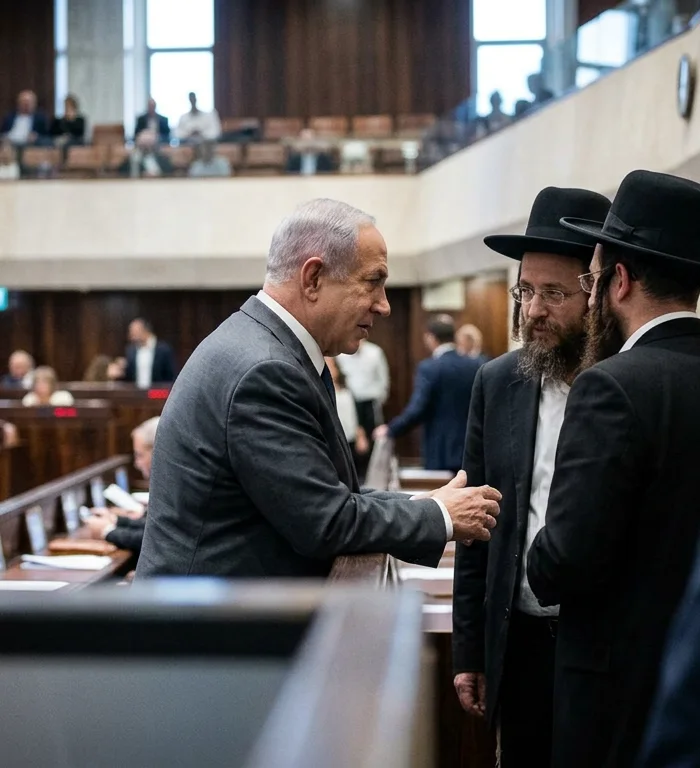
Netanyahu shifts to direct coalition defense
Prime Minister Benjamin Netanyahu has launched an intensive lobbying campaign directed at ultra-Orthodox rabbis to prevent political defections. According to sources familiar with the discussions, the Prime Minister is bypassing senior haredi leadership to communicate directly with religious authorities as tensions over military conscription policy rise.
The effort marks a tactical shift from traditional coalition management to urgent containment. Reports indicate Netanyahu is deploying personal emissaries to reinforce the stability of his government as opposition figures, including Gadi Eisenkot, seek to build support for a rival political bloc.
Haredi influence in Israeli governing coalitions Ultra-Orthodox parties have historically served as the essential Ultra-Orthodox parties have historically served as the essential kingmakers in Israeli politics, holding the balance of power necessary for Netanyahu to maintain his administration. Their ongoing participation is predicated on maintaining specific legal frameworks, most notably those surrounding the military draft exemption for seminary students. The current legislative standoff regarding the status of haredi students in the Israel Defense Forces has placed an unprecedented strain on this partnership. With the Supreme Court and public pressure demanding broader conscription, the legislative protections previously guaranteed to haredi partners are facing severe legal and political challenges. Security, diplomacy, and regional stability The internal political volatility directly influences Israel's capacity to navigate complex regional security challenges. A fragmented or unstable coalition complicates decisions regarding military strategy and long-term diplomatic alignments in a theater defined by ongoing conflict.
Disruptions to the governing alliance carry significant global implications for energy security and maritime trade routes. Instability in Jerusalem limits the government's ability to maintain a unified posture on sensitive issues involving regional neighbors and international military commitments.
Legislative deadlines and coalition survival
The viability of the current government hinges on the successful passage of pending legislation, specifically the draft exemption bill. Should this legislation fail to satisfy either the haredi parties or the political requirements of the broader coalition, the risk of early elections or a government collapse will increase significantly before December 31, 2024.
More stories
- Germans oppose Ukraine aid as poll shows support slipping
- Kim Jong-un receives 10 envoys after constitutional shift
- Ukraine claims Libya strike sinks Russian naval corvette
- COP31 climate talks collapse over fossil fuels and funds
- Russian military faces 1,087 recorded suicides in Ukraine war
- US faces China, Russia in Africa minerals contest
- Melaka vote puts living costs before 687,697 voters
- Cameroon faces succession test after Biya's 10-week absence
- Nigeria minister seeks clean-cooking finance for 2060 plan
- ICN warns on misinformation after Congo Ebola nurse killing
Latest news
- Trump prepares tariffs on China and other major exporters
- New-car buyers pay record average $50,087 in October
- Banks face ECB reserve debate over liquidity and profits
- Investors see Anthropic debut gains fade below $83 a share
- Iraq orders federal control over Kurdish-area oilfields
- Nvidia shares retreat as AI rally cools before PCE data
- Macy’s parade faces balloon limits as storm winds approach