NATO summit shifts as Trump threatens allies on Iran war
NATO summit talks in Ankara were overtaken by Trump’s threats on trade, troops and Iran, unsettling allies seeking unity.
Amira Hassan ·
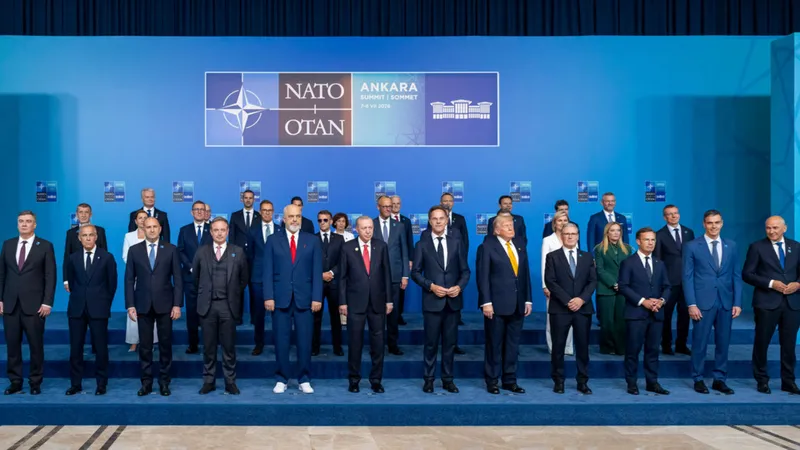
NATO summit talks in Ankara were overtaken by President Trump’s threats on trade, troops and Iran, unsettling allies seeking unity.
The supplied account says Trump used a short visit to Turkey to reopen disputes with European governments and cast doubt on Washington’s role in the alliance. His comments touched Spain, Iran, Greenland, China, Turkey and the future of U.S. forces in Europe.
The immediate pressure point was Iran. Trump declared the ceasefire with Tehran finished, described diplomacy as futile and suggested U.S. forces could destroy Iranian bridges if hostilities resumed, according to the account.
Spain becomes the trade target
Spain drew one of the sharpest warnings after refusing to allow U.S. use of its military bases for strikes on Iran. Trump threatened to halt trade with the country and called it “hopeless,” language that turned a security disagreement into an economic confrontation.
The dispute matters because Spain is both a NATO member and a European Union economy, so a U.S. trade threat against Madrid could quickly become a broader transatlantic issue. The account did not provide trade figures or details on the legal mechanism Trump might use.
Trump also revived his interest in acquiring Greenland, a Danish territory that became a flashpoint earlier in the year. Danish Prime Minister Mette Frederiksen had pledged that Denmark would defend its territory after the issue triggered a political crisis in January, according to the account.
Troop comments unsettle Europe
The most consequential security signal was Trump’s suggestion that the United States could remove its soldiers from Europe. For allies that have built defense planning around the U.S. security umbrella for decades, even a floated withdrawal changes the political math inside NATO.
Trump’s message was not limited to Europe. He praised China’s President Xi Jinping, called himself a “big fan” and showed warmth toward Turkish President Recep Tayyip Erdoğan, a posture the account says came despite Israeli objections.
The White House framed the trip very differently. Press secretary Karoline Leavitt said, “President Trump delivered a marathon, high-energy performance at the NATO summit, holding four separate press availabilities plus a solo press conference and taking unscripted questions from reporters on a wide range of topics.”
Leavitt added, “The President commanded every room, gave our allies some much-needed tough love, and left the summit with a stronger NATO and more united free world.” The administration’s defense of the visit centered on forceful leadership, while the account described allies facing new doubts about U.S. commitments.
Iran moves into alliance politics
The Iran rupture changed the summit’s focus from alliance coordination to crisis management. If Washington and Tehran return to direct conflict, NATO governments would face pressure to clarify whether they support U.S. military action, restrict base access or push for renewed talks.
That choice would carry consequences beyond defense policy. If more European governments follow Spain in limiting U.S. operational access, the alliance’s military planning could become slower and more politically conditional, while companies exposed to energy, shipping or defense supply chains would face a more volatile operating backdrop.
If Trump’s threats remain rhetorical, the immediate damage may be diplomatic rather than institutional. In that case, NATO could preserve formal unity while European governments accelerate contingency planning for a less predictable U.S. role.
If the troop-withdrawal idea becomes policy, the macro effect would be a larger European defense burden and a possible reallocation of public budgets toward military spending. For the Trump administration, the mechanism would be leverage: pressure allies to align with U.S. demands or absorb more of their own security costs.
Signals allies will track
The next test is whether Trump’s comments translate into orders, negotiations or tariffs. Spain will be watched for any formal U.S. trade action, while Denmark will look for signs that Greenland has returned as a concrete demand rather than a political talking point.
NATO members will also track whether the Iran ceasefire can be restored and whether the U.S. military posture in Europe changes on paper. The open question is whether Ankara marked a moment of pressure tactics, or the start of a deeper break between U.S. priorities and allied expectations.