

Myanmar Leadership Reassesses ASEAN Ties Amid Diplomatic Standoff
Myanmar’s leadership is reconsidering its ASEAN ties after the bloc conditioned the restoration of political representation on progress toward the Five-Point…
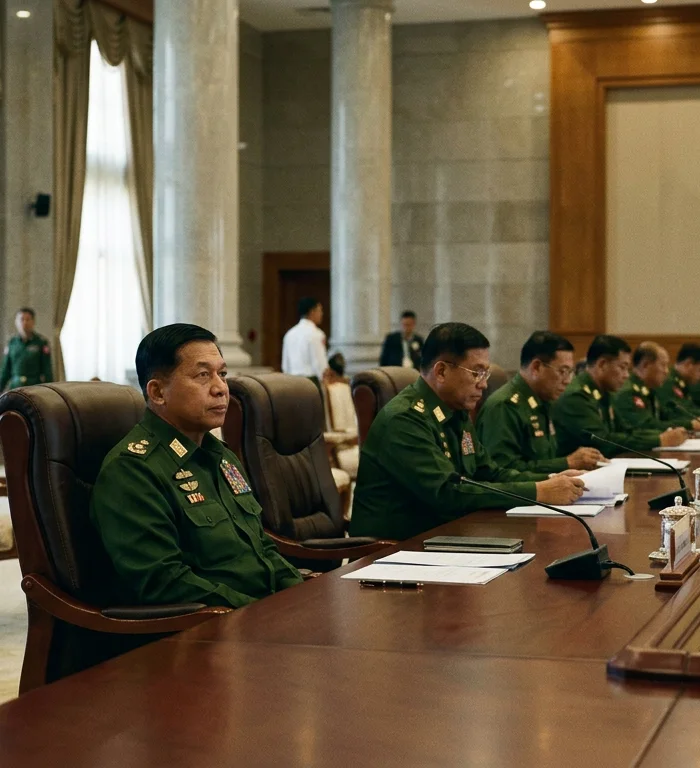
Myanmar’s military-backed leadership is re-evaluating its relationship with the Association of Southeast Asian Nations (ASEAN) following the bloc’s decision to maintain restrictions on the country’s political representation. President Min Aung Hlaing expressed dissatisfaction with the current diplomatic pressure, characterizing the bloc's approach as uniquely punitive compared to its treatment of other member states.
Despite this friction, the administration intends to maintain ongoing discussions with individual ASEAN members. The leadership has signaled a preference for bilateral engagement, noting that nearly half of the bloc’s members have increased direct contact since the April 2026 election. This shift suggests a potential pivot toward fragmented diplomacy rather than reliance on the regional consensus framework.
In an effort to address domestic instability, the administration announced plans for a peace conference scheduled for February. The stated objective is to conclude the ongoing civil conflict within the current five-year term, though specific details regarding the framework or participants remain undisclosed. Previous attempts at national reconciliation have failed to yield substantive results, and the conflict continues to drive significant displacement and civilian casualties.
ASEAN leaders have maintained that any restoration of Myanmar’s full political status is contingent upon “sustained and concrete” progress toward the Five-Point Consensus. This framework requires an immediate cessation of violence and the initiation of inclusive dialogue. As the military continues its campaign against various armed groups, the gap between the bloc’s requirements and the administration’s domestic security strategy remains a primary obstacle to regional reintegration.
More stories
- Germans oppose Ukraine aid as poll shows support slipping
- Kim Jong-un receives 10 envoys after constitutional shift
- Ukraine claims Libya strike sinks Russian naval corvette
- COP31 climate talks collapse over fossil fuels and funds
- Russian military faces 1,087 recorded suicides in Ukraine war
- US faces China, Russia in Africa minerals contest
- Russian strikes leave many Kyiv homes with 4 hours of power
- Cebu groups seek probe into protest dispersal with more than 20 hurt
- Young French households reach 90.1% of national median income
- Lula wins fourth term in Brazil with 51.8% vote
Latest news
- Trump prepares tariffs on China and other major exporters
- New-car buyers pay record average $50,087 in October
- Banks face ECB reserve debate over liquidity and profits
- Investors see Anthropic debut gains fade below $83 a share
- Iraq orders federal control over Kurdish-area oilfields
- Nvidia shares retreat as AI rally cools before PCE data
- Macy’s parade faces balloon limits as storm winds approach