Mitch McConnell challenged by Beshear over Senate absence
Mitch McConnell faces a demand from Kentucky Gov. Andy Beshear to prove he can serve after a fall and weeks away.
Atlas Newsdesk ·
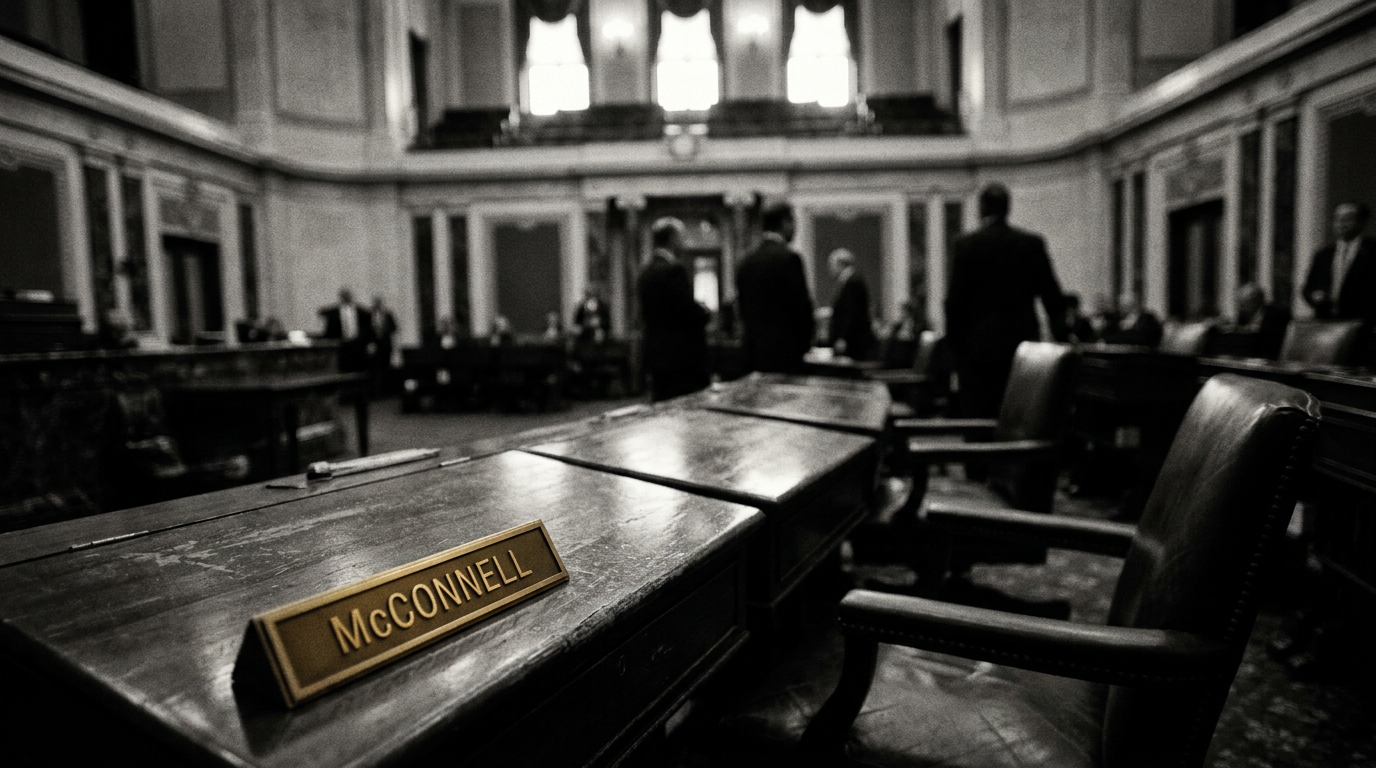
Mitch McConnell faces a demand from Kentucky Gov. Andy Beshear to prove he can serve after a fall and a seven-week absence.
Beshear sets capacity test
Beshear, a Democrat, called on McConnell, a Republican senator from Kentucky, to show his “capacity to serve” or step down from the seat. The demand turns a health-related absence into a direct political test for one of the state’s most powerful federal officials.
The governor’s criticism centered on what he described as limited communication between McConnell and Kentucky residents after the senator’s fall. Beshear’s position is not framed as a medical diagnosis; it is a demand for public proof that McConnell can keep doing the job.
The timing matters because the absence has reached a seventh week, according to the source material. A short recovery period can be managed quietly in Washington, but a prolonged stretch without clear public communication raises sharper questions about representation, accountability and succession pressure.
Seven weeks raise pressure
McConnell has long been a central figure in Senate Republican politics and previously led Senate Republicans. That history makes his health and availability more than a local concern, because his role has shaped party strategy, judicial confirmations and legislative bargaining over multiple Congresses.
McConnell has said he was hospitalized after a fall and contracted pneumonia. That attribution matters: the available facts establish his own account of the medical episode, but they do not provide an independent medical assessment or a detailed timetable for his return.
For Kentucky voters, the issue is practical as much as partisan. A Senate office handles constituent services, federal funding requests and communication with agencies, so uncertainty around a senator’s working status can quickly become a question about access to government.
For Beshear, the move also carries political risk. Pressing an ailing senator can be cast by opponents as opportunistic, while silence could expose the governor to criticism that he failed to demand clarity for Kentucky residents.
Kentucky seat enters spotlight
The immediate effect falls on McConnell’s office, which now faces pressure to provide clearer evidence of the senator’s ability to perform his duties. That could take the form of direct public remarks, a detailed update from his team or a more visible return to official work.
The wider Senate consequence is a renewed focus on how much information elected officials owe the public when illness interrupts service. The institution has no easy political formula for balancing personal medical privacy with voters’ need to know whether an officeholder can represent them.
If McConnell provides a convincing public update and resumes regular duties, the pressure on his seat is likely to ease. The national effect would be limited, McConnell’s office would regain operational confidence, and Senate Republicans could treat the episode as a contained health matter.
If communication remains sparse, Beshear’s demand may become a reference point for further calls for disclosure. In that scenario, the macro effect would be another strain on confidence in federal governance, McConnell would face intensifying questions about authority, and the Senate would confront a broader debate over age, illness and transparency.
The central uncertainty is what McConnell’s current working capacity actually is. Until that is answered with more than brief assurances, the Kentucky dispute will keep linking one senator’s recovery to a larger question about public office and public proof.