

Lopez cousins advance business split through two share deals
The Philippine family dispute now turns on valuation, board authority and protections for shareholders outside the Lopez clan.
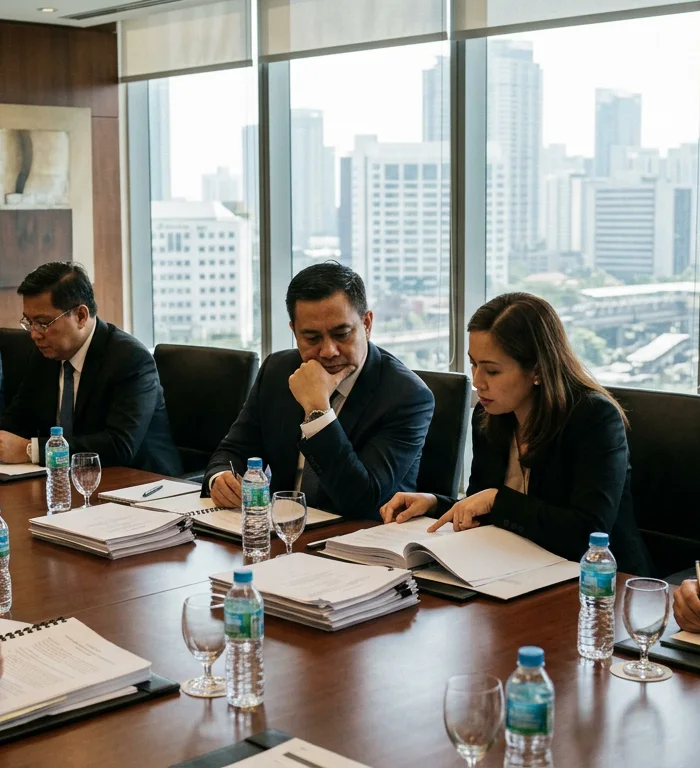
Lopez family branches are separating businesses after two 2026 share transactions worth ₱27.48 billion, Rappler reported in a Nov. 19 article on the Philippine clan’s corporate dispute.
The dispute reaches beyond the cousins because Lopez Inc., Lopez Holdings, First Philippine Holdings and Rockwell Land include listed-company layers, creditors, employees and minority shareholders; one branch sold a 25.68% stake in Lopez Inc. for ₱11.56 billion.
Between August and November, Rappler said Eugenio “Gabby” Lopez III’s branch sold that Lopez Inc. stake to Ramon Ang and agreed to buy First Philippine Holdings’ controlling stake in Rockwell Land for ₱15.92 billion.
In the same period, Federico “Piki” Lopez secured the chairmanship of Lopez Holdings and First Philippine Holdings by September, while Benjamin “Jay” Lopez became president, chief operating officer and chief finance officer of Lopez Holdings.
Rappler said those changes placed the main leadership roles in Piki’s family circle and increased his influence over the group’s energy and industrial core.
The split highlights a recurring problem in family-controlled companies: relatives can be family members, shareholders, directors and executives at the same time. Family-business advisers Josh Baron and Rob Lachenauer’s Four-Room Model separates those roles into family, owners, board and management functions.
In that framework, ownership rights do not automatically confer management authority, and a board seat does not settle family expectations. Rappler said the Lopez disagreement became a contest over authority when the cousins clashed over investments, valuation and corporate direction.
Other Philippine business families have used governance structures to contain those tensions. In a 2017 interview cited by Rappler, the late Jon Ramon Aboitiz said, “Never fall in love with your business,” describing a family approach that allowed the Aboitizes to sell shipping assets and shift capital toward power.
Rappler also cited the Po family, whose businesses include Century Pacific Food, as an example of a clan that created formal arrangements for family participation, including a family council chaired by Nanette Medved-Po.
The Lopez family did not finalize a family constitution, according to Rappler. Efforts were made while Oscar Lopez was patriarch and again after the third generation took over, but neither produced a completed document before the cousins’ dispute intensified in 2026.
A constitution would not necessarily have prevented the feud. Family-business adviser Enrique Soriano has said families may also need shareholders’ agreements spelling out how shares can be sold, how value is determined and how relatives get a chance to buy.
For the Lopez group, the reported separation leaves valuation, approvals by corporate boards and protections for outside shareholders at the center of the dispute.
More stories
- Deal Sheet: Fortis shutdown costs over 400 jobs
- The Week in Games: GTA 6 turns attention into cash
- US data centres emit 25.7m tonnes of CO2, Harvard says
- German founders need 3,942 hours to open small business
- Leaked Deutsche Bank files test Sewing's reform narrative
- UAE employers plan 2.8% pay rises for 2027
- Morgan Stanley says Japan’s banks face a 30-year shift in how they price corporate services
- Boston Dynamics names Alexa veteran Rohit Prasad as CEO
Latest news
- Trump prepares tariffs on China and other major exporters
- New-car buyers pay record average $50,087 in October
- Banks face ECB reserve debate over liquidity and profits
- Investors see Anthropic debut gains fade below $83 a share
- Iraq orders federal control over Kurdish-area oilfields
- Germans oppose Ukraine aid as poll shows support slipping
- Kim Jong-un receives 10 envoys after constitutional shift
- Ukraine claims Libya strike sinks Russian naval corvette