

LILAK boycotts COP31 over indigenous rights concerns
The Philippine collective said UN climate talks remain too corporate-driven and should give indigenous communities more control over land and food systems.
LILAK boycotted the 31st United Nations Climate Change Conference after it concluded Nov. 22 in Antalya, Turkey, its members told Rappler in a Nov. 23 newsletter interview.
The Philippine indigenous women’s rights collective framed COP31 against earlier talks, including COP27 in Egypt in 2022, saying the process sidelined communities while corporate interests shaped negotiations.
LILAK, or Purple Action for Indigenous Women’s Rights, is a collective of feminists, activists and indigenous women focused on ancestral lands, indigenous women’s rights and the environment. The group has criticized previous Conferences of the Parties and boycotted some earlier climate talks, Rappler reported.
Che Polutan, LILAK’s program officer, attended COP27 in Sharm el-Sheikh in 2022. She told Rappler the process was overwhelming for communities and lacked meaningful space for them, describing the negotiations as corporate- and capital-driven.
Judy Pasimio, LILAK’s overall coordinator, attended the People’s COP in Belém, Brazil, in 2025. “COP should be about the Conference of Peoples, where genuine solutions are discussed,” she said. “However, what is being discussed [at] COP are solutions for profit.”
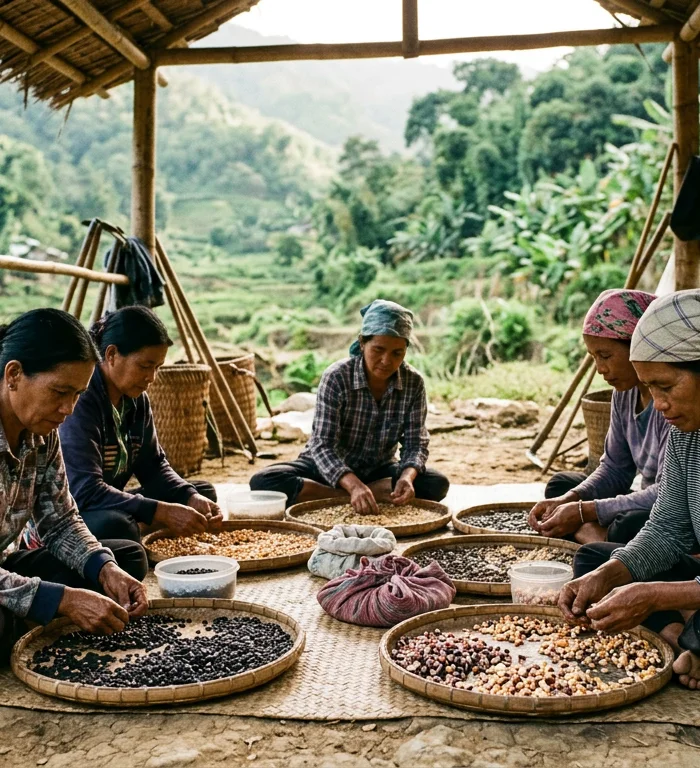
LILAK linked its position to the role of indigenous women in food production and community care. The group said climate disasters increase care burdens on indigenous women and threaten local food systems.
Pasimio criticized corporate-backed approaches such as climate smart agriculture and green transition projects. Rappler described climate smart agriculture as using high-tech methods including lab-bred seeds, chemical inputs and automated tools; critics cited in the article argue it can make farmers dependent on costly corporate products rather than traditional seeds.
Pasimio also said some green transition projects drive mining and deforestation, damaging ecosystems while benefits flow to wealthy nations. “The Philippines, for one, is very strong on climate solutions and its negotiations on these platforms, but this strong stand does not translate here in our country,” she said.
Che Polutan said climate action should recognize indigenous rights and support traditional knowledge, systems and practices. “If we recognize these, we will be able to stop the encroachment and destruction of development industries,” she said.
Pasimio called for a Philippine development plan centered on local needs rather than foreign investment, and cited seed banking and community seed exchanges as examples of food sovereignty practices. “Dapat ’yong mga communities ang sinusuportahan (It’s communities that should be supported),” she said.
Source: newsletter interview, Rappler, Nov. 23, 2026
More stories
- Germans oppose Ukraine aid as poll shows support slipping
- Kim Jong-un receives 10 envoys after constitutional shift
- Ukraine claims Libya strike sinks Russian naval corvette
- COP31 climate talks collapse over fossil fuels and funds
- Russian military faces 1,087 recorded suicides in Ukraine war
- US faces China, Russia in Africa minerals contest
- Iran's attacks hit 25 tankers near Strait of Hormuz
- Russia strikes Ukraine as Odesa faces electricity strain
- Pyongyang rejects sanctions push on labor, military ties
- US approves $2.1 billion Patriot missile sale for Ukraine
Latest news
- Trump prepares tariffs on China and other major exporters
- New-car buyers pay record average $50,087 in October
- Banks face ECB reserve debate over liquidity and profits
- Investors see Anthropic debut gains fade below $83 a share
- Iraq orders federal control over Kurdish-area oilfields
- Nvidia shares retreat as AI rally cools before PCE data
- Macy’s parade faces balloon limits as storm winds approach