

Libya declares force majeure as output drops by 350,000 barrels daily
The National Oil Corporation suspended exports after a political standoff shuttered key fields, threatening global supply stability.
Shutdown at major energy hubs
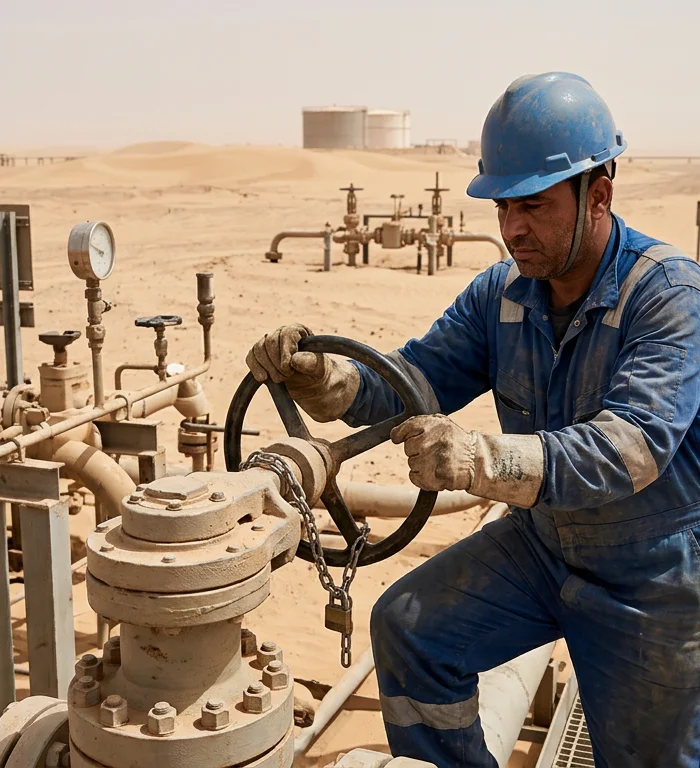
Libya’s National Oil Corporation (NOC) declared force majeure this week, halting production across several key fields as a domestic political impasse intensified. The state-owned entity reported a daily loss of 350,000 barrels, effectively removing a significant portion of the nation's output from global markets. The disruption follows the forced closure of major infrastructure, including the El Feel and Sharara fields, which have historically served as linchpins for the country’s export capacity.
Standoff over central bank control
The production cuts follow an escalation in the power struggle between the Tripoli-based Government of National Unity (GNU) and the House of Representatives-backed administration based in the east. At the center of the dispute is the control of the Central Bank of Libya and the management of sovereign oil revenues. The contested leadership of the bank has effectively paralyzed the mechanism for distributing state funds, prompting eastern factions to enforce field closures as a tool for political leverage.
Libya remains a volatile component within the OPEC+ framework, holding a status that has historically granted it exemptions from the group's rigid production quotas due to its internal instability. While the country is a key supplier to Mediterranean refiners, its output has been subject to frequent, unpredictable interruptions for over a decade. The current standoff highlights the fragile nature of the existing ceasefire and the persistent challenge of separating energy infrastructure from the country’s underlying executive crises.
Global market implications
The removal of 350,000 barrels per day from the market comes as global stakeholders assess the tightness of current supplies ahead of the winter season. Continued disruption risks further straining regional supply chains, potentially forcing refiners to seek alternative crudes to replace the high-quality light sweet oil typically exported from Libyan ports. The situation puts additional pressure on international mediators who have struggled to reconcile the conflicting demands of the GNU and its eastern rivals.
Scenarios for output recovery
The near-term impact on global prices depends largely on the duration of the current blockade and the ability of intermediaries to force a compromise on the Central Bank's leadership. Should negotiations yield a resolution by October 31, 2024, production at the affected fields may stabilize, preventing a sustained price escalation for Mediterranean crude benchmarks. Conversely, if the standoff continues through the fourth quarter, Libya faces a severe fiscal deficit, likely necessitating intervention from external stakeholders to prevent a total collapse of its oil-dependent economic infrastructure.
More stories
- Trump prepares tariffs on China and other major exporters
- Banks face ECB reserve debate over liquidity and profits
- Investors see Anthropic debut gains fade below $83 a share
- Iraq orders federal control over Kurdish-area oilfields
- Nvidia shares retreat as AI rally cools before PCE data
- Nvidia board gets Trump input on Jensen Huang return as CEO
- Singapore core inflation eases to 1.5% in October
- Greece targets 2.3% growth in 2027 budget
- Citi gets China securities license, now faces scale test
- French vandals face compensation under Senate-backed riot bill