

Hazardous Air Quality Levels Persist Across Punjab Province
Hazardous air quality levels across Punjab persist despite aggressive government enforcement actions against industrial polluters and significant financial…
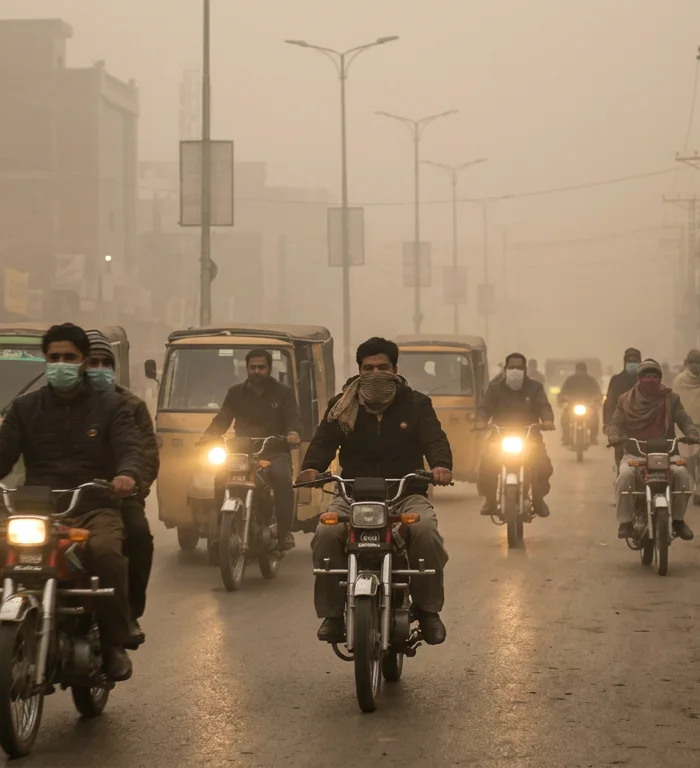
Air quality in Punjab has reached hazardous levels, with major urban centers recording Air Quality Index (AQI) readings exceeding 600. Gujranwala and Multan reported peak readings of 661 and 641 respectively, while Lahore recorded levels reaching 465. These concentrations of fine particulate matter (PM2.5) present significant public health risks, particularly for vulnerable populations with pre-existing respiratory or cardiovascular conditions.
The provincial government has intensified enforcement operations to mitigate pollution sources, specifically targeting non-compliant brick kilns. Between January 1 and November 18, authorities conducted over 84,000 inspections, resulting in the demolition of 1,429 units and the sealing of 968 facilities. Total fines imposed during this period reached approximately $640,000, with additional legal actions taken through the registration of 1,248 First Information Reports (FIRs).
Data from 2025 indicates that Pakistan’s average PM2
Despite these regulatory interventions, pollution levels remain significantly above international safety standards. Data from 2025 indicates that Pakistan’s average PM2.5 concentration is nearly 14 times the annual guideline established by the World Health Organization. This systemic environmental challenge persists despite a zero-tolerance policy and sustained field enforcement by the provincial Environment Protection and Climate Change Department.
Institutional risks remain high as the current enforcement strategy faces limitations in curbing regional smog. Policymakers should monitor the efficacy of repeated inspections and the potential for industrial non-compliance to undermine state-led mitigation efforts. The ongoing deterioration of air quality suggests that current regulatory measures are insufficient to address the broader environmental factors contributing to the crisis.
More stories
- Dietitians advise small swaps for plant-based eating
- TikTok dementia videos mislead in 66.4% of sample, researchers say
- Aberdeen Royal Infirmary faces police inquiry call over 19 deaths
- Bariatric surgery group loses 28.2% after GLP-1 use
- TOFA boosts mouse energy use 18% while preserving muscle
- ICO probes NHS therapy notes accessible to up to 140,000 staff
Latest news
- David Parr House to honor Victorian art-workman with blue plaque
- Iran's attacks hit 25 tankers near Strait of Hormuz
- FCC approves prison cellphone jamming despite 2.5-mile warning
- Russia strikes Ukraine as Odesa faces electricity strain
- Bahrain reports two injuries after Iranian aerial attacks
- Congress tests Black Democrats' growing policy influence
- Baltic responders fight Sparta II fire after drone strike
- Europe faces attribution gap after 16 cyber, physical incidents