Kuwait facilities damaged as Iranian attacks hit plants
Kuwait said Iranian attacks damaged power and desalination facilities, forcing precautionary shutdowns and repairs across parts of the utility system.
Amira Hassan ·
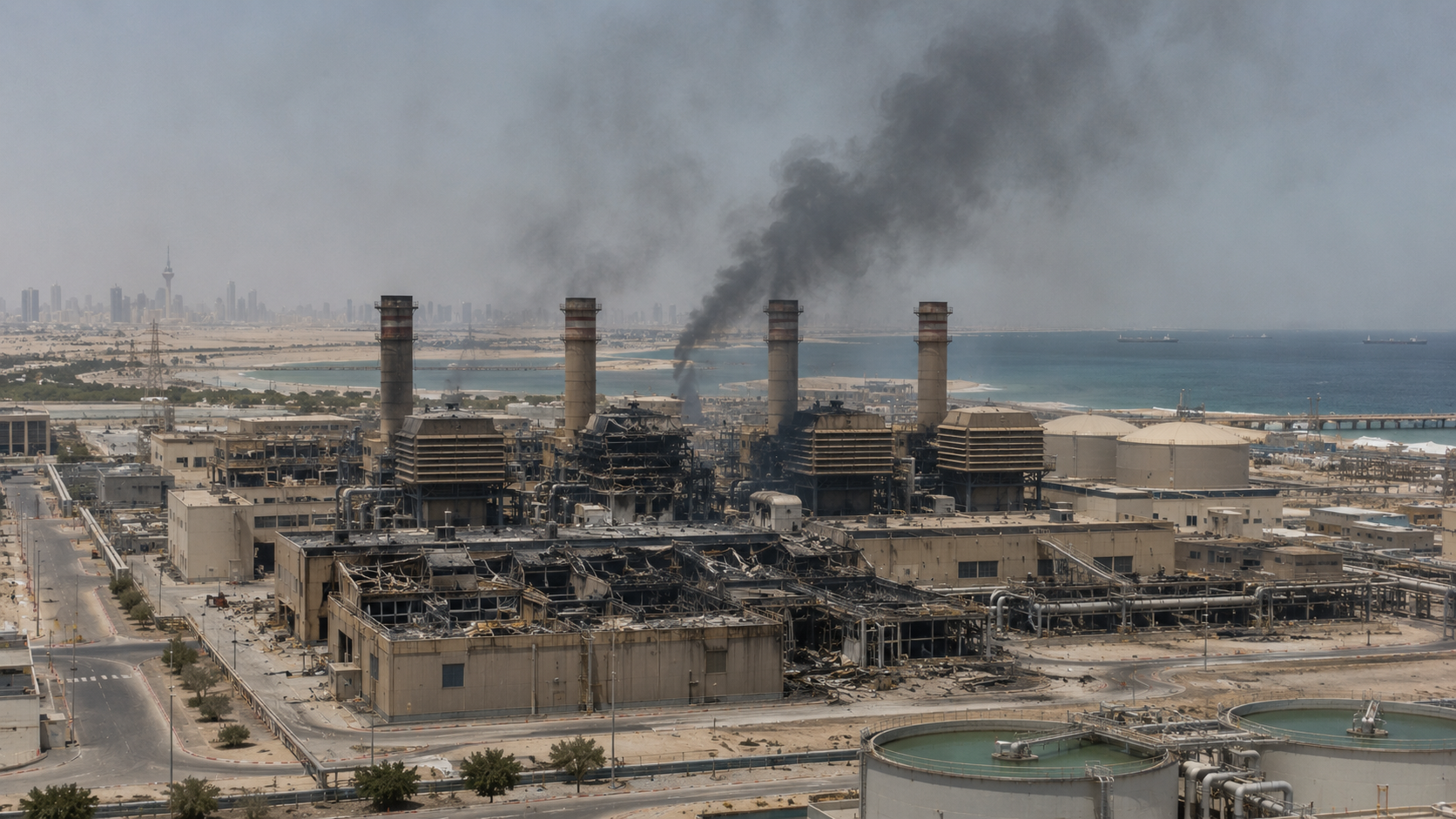
Kuwait said Iranian attacks damaged power and desalination facilities, prompting precautionary shutdowns while repair teams assess the grid.
The Ministry of Electricity, Water and Renewable Energy said Tuesday that the strikes hit utility sites on Monday evening and caused fires at an unspecified number of facilities. The ministry said crews brought the fires under control and began reviewing the extent of the damage.
Generation units taken offline
The immediate operational move was defensive: some power generation units were removed from service to protect equipment and preserve system stability, according to the ministry. It did not identify the plants affected, disclose their capacity, or give a timetable for returning the units to operation.
The ministry described the incident as the fourth straight day of “fierce Iranian aggression attacks,” language that frames the damage as part of a continuing security crisis rather than a one-off infrastructure failure. Kuwait’s statement did not report casualties, water shortages, or nationwide power cuts.
In its statement, the ministry said, “Teams are working to implement plans to repair the damage and rehabilitate the facilities.” It added that the shutdowns were carried out under standard precautionary procedures because of concern for equipment safety and the reliability of electrical and water systems.
Desalination raises the stakes
The inclusion of water desalination plants makes the damage more sensitive than an ordinary power-sector disruption. In Gulf economies, electricity and water infrastructure are closely linked because desalination depends on energy-intensive operations and steady plant availability.
Kuwait’s statement did not quantify the hit to water output, but the reference to both electricity and desalination points to a dual-service risk. If repair work is short and reserve capacity is sufficient, the effect may stay inside operational planning rather than reach households or industry.
If damage assessments show a deeper impact, the pressure point would be reliability. Taking generation units offline reduces flexibility in the power system, while damaged desalination assets can narrow the cushion available to water managers during periods of high demand.
Regional utilities face new scrutiny
The attack claim puts critical infrastructure at the center of a wider Gulf security concern. Power stations and water plants are not only domestic service assets; they are also symbols of state resilience in a region where energy, shipping, and water security often overlap.
For Kuwait’s utility authorities, the near-term test is operational transparency. The key unanswered questions are how many facilities were affected, whether backup systems are carrying the load, and when the sidelined generation units can return safely.
For the wider sector, the episode may sharpen attention on physical protection, redundancy, emergency staffing, and fire-control readiness at power and water sites. Utilities across the region will read Kuwait’s experience less as a technical outage than as a reminder that infrastructure security can become an operating constraint.
Three paths for repairs
If the damage is limited and the offline units return quickly, the macro effect is likely to remain contained, with Kuwait’s ministry able to present the event as a managed disruption. The wider industry impact would be a review of emergency procedures rather than a major shift in operating assumptions.
If repairs take longer, Kuwait’s utility system could face a tighter operating balance because equipment taken offline for safety cannot support normal generation needs. That would make the ministry’s next updates important for power reliability, water output, and confidence in the resilience of Gulf infrastructure.
If attacks continue, the mechanism changes from repair management to repeated infrastructure stress. In that scenario, Kuwait would face higher operational strain, Gulf utilities would have stronger reasons to harden key sites, and the regional macro picture would absorb another channel of uncertainty around essential services.