Pakistan offers mediation as Iran tensions risk widening
Pakistan's prime minister urged restraint during talks with Iran's interior minister, keeping open Islamabad's mediator role as regional risks rise.
Lauren Collins ·
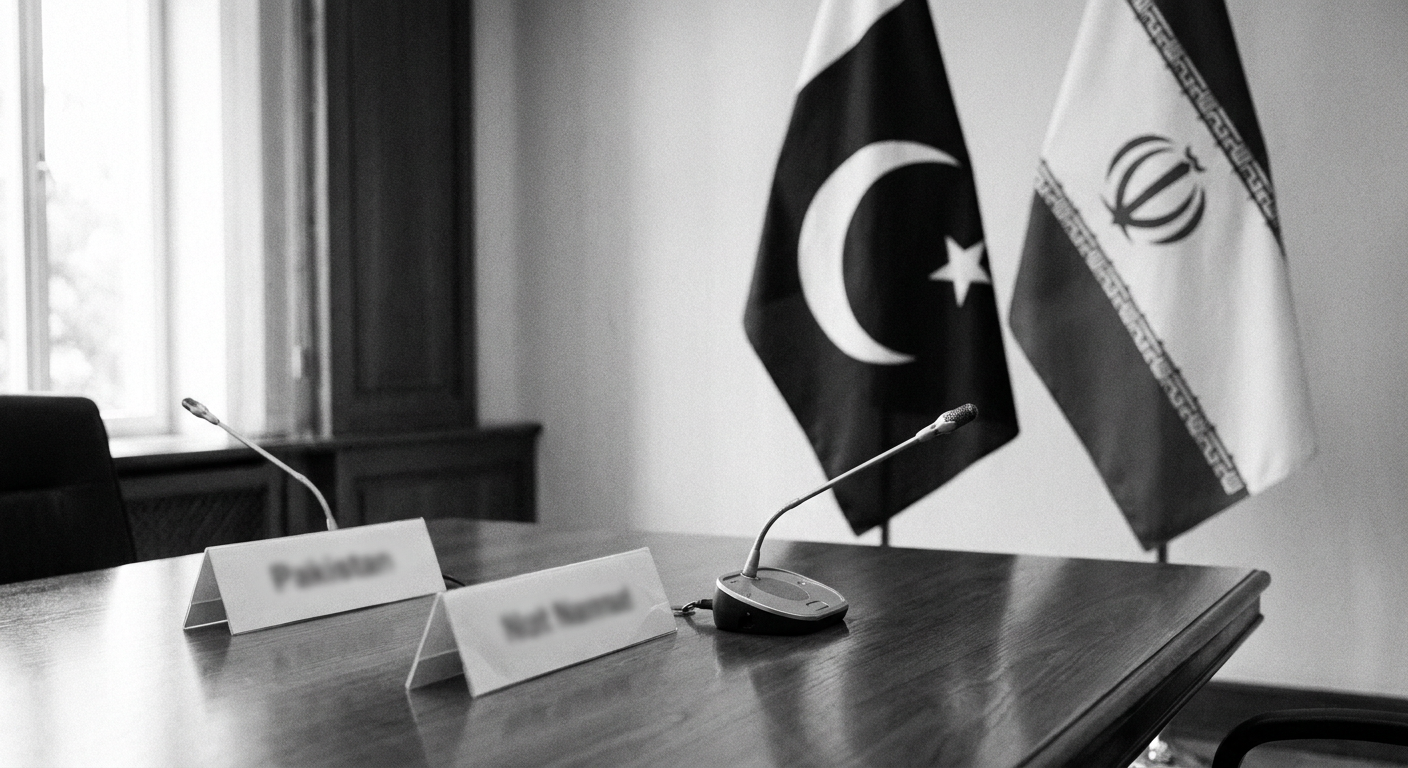
Pakistan's prime minister urged restraint in talks with Iran's interior minister, keeping Islamabad's mediator role in focus as regional risks rise.
Prime Minister Shehbaz Sharif delivered the message on Tuesday during a meeting with Iranian Interior Minister Eskandar Momeni, Sharif's office said. The statement said Sharif “urged all sides to exercise restraint and refrain from actions that could further destabilize the region.”
The meeting placed Pakistan in a cautious diplomatic position: close enough to seek dialogue with Tehran, but careful not to frame itself as a party to the conflict. Sharif told Momeni that Pakistan would continue acting as a mediator between the U.S. and Iran, according to the prime minister's office.
Sharif keeps mediation channel open
The core shift was not a new policy declaration, but a public restatement of Islamabad's preferred role at a moment of heightened danger. By stressing restraint and mediation in the same meeting, Sharif tied Pakistan's message to two goals: limiting escalation and preserving room for talks.
The wording matters because the statement did not assign blame or identify one side as responsible for regional instability. Instead, it used the broader phrase “all sides,” giving Pakistan diplomatic space to communicate with Iran while still leaving open a channel to Washington.
Momeni's visit also gave Pakistan a formal setting to deliver that message directly to an Iranian cabinet-level official. The source material did not specify the full agenda of the talks, the duration of Momeni's visit, or whether any written proposal was exchanged.
Naqvi signals hope for progress
Pakistani Interior Minister Mohsin Naqvi, Momeni's counterpart, said he was optimistic the discussions would lead to progress. His comment suggested that Islamabad viewed the visit as more than a courtesy call, though the available statement did not describe any concrete agreement.
Interior ministries can play a role in border management, internal security coordination and crisis communication, but the statement provided no operational details. That leaves the immediate impact limited to diplomacy rather than a measurable change in security policy.
For Pakistan, the affected institution is the federal government led by Sharif, which is trying to project itself as a channel for de-escalation. The specific diplomatic risk is that a failed mediation effort could reduce Islamabad's credibility with one side or both if tensions continue to rise.
Regional calm carries economic stakes
The wider sector effect sits first in diplomacy and security, not in corporate balance sheets. If Pakistan can help keep talks alive, governments and businesses exposed to regional uncertainty may face fewer abrupt shifts in planning assumptions.
The global macro link is indirect but real: conflicts involving Iran can influence investor risk appetite, energy-market anxiety and shipping-related caution, even when the source statement provides no market data. Without verified figures, the honest conclusion is that the economic channel is risk transmission rather than a quantified shock.
Three paths now frame the next stage. If restraint holds, Pakistan's government can present the Momeni meeting as evidence that mediation remains viable; the wider diplomatic sector would gain time for further contacts, and the global macro effect would likely be reduced pressure from conflict risk.
If the conflict intensifies, Pakistan's mediator role would become harder to sustain because each side could demand clearer alignment. In that scenario, global markets could place greater weight on geopolitical risk, while regional governments and security agencies would face heavier pressure to prepare for spillovers.
A third path is a slow diplomatic process with no immediate breakthrough. That would keep Pakistan in the conversation but expose Sharif's government to questions over what mediation can deliver, while the wider region remains vulnerable to sudden changes caused by any new military or political move.
The key open questions are specific: whether Sharif's message reaches decision-makers beyond Tehran, whether Washington accepts Pakistan's role, and whether Momeni's visit produces follow-up talks. Until those answers are public, Islamabad's position is best read as a bid to keep channels open rather than proof of a pending settlement.