Tankers near Bab el-Mandeb reverse after Houthi warning
Bab el-Mandeb traffic shifted as at least five vessels reversed course after a Houthi threat against Saudi-linked ships.
Omar Farouk ·
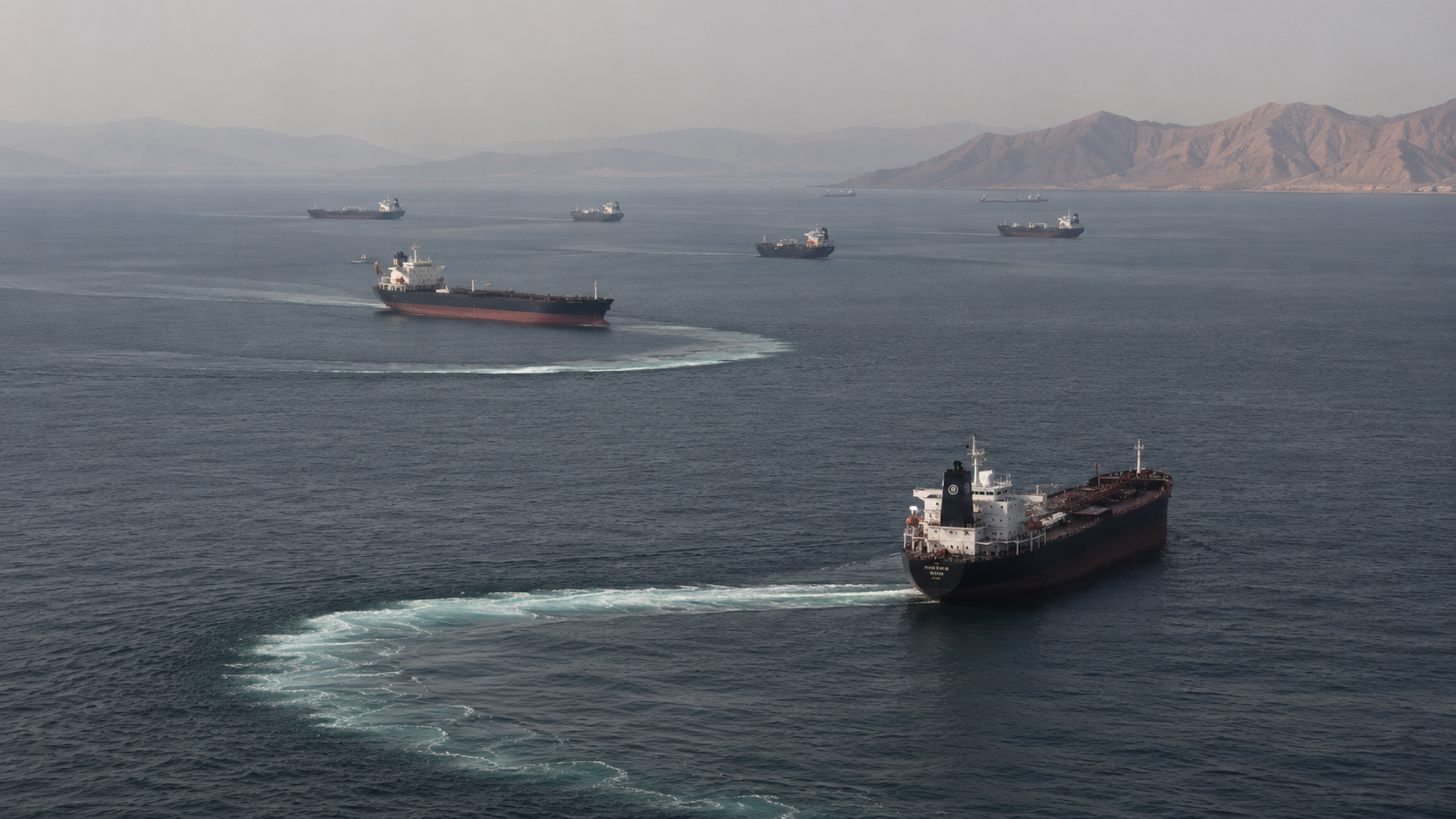
Bab el-Mandeb traffic shifted Tuesday as five ships or more reversed before the strait after a Houthi threat against Saudi-linked vessels.
Five vessels turn back
Vessel-position data for Tuesday showed the group included four tanker-class ships and one cargo carrier. The movement occurred before the vessels reached the strait that links the Gulf of Aden with the Red Sea.
Two ships were identified as crude carriers with cargo on board. Both departed Saudi ports; one had China as its stated destination, while the other was headed for Pakistan.
A third ship was recorded as a loaded oil or chemical tanker moving from Saudi Arabia toward Oman. A fourth, an empty vehicle carrier, was traveling from Saudi Arabia toward Sri Lanka before it also changed course.
Saudi-linked warning changes calculations
The immediate trigger was a declaration by Yemen's Houthi movement, which is aligned with Iran, that Saudi-linked ships would be prevented from using Bab el-Mandeb. The source material does not identify the owners, operators or charterers of the vessels, which limits any company-specific assessment.
The fifth case differed from the Saudi-origin voyages. It was an empty crude carrier arriving from Myanmar that reversed near Socotra, the Yemeni island close to the Gulf of Aden.
Bab el-Mandeb matters because it is the southern entrance to the Red Sea, not simply another waypoint. Ships using it connect Asian, Middle Eastern and European trade lanes, so even a small number of diversions can signal a shift in perceived route safety.
Oil cargoes face timing risk
For oil markets, the available facts point first to operational risk rather than a confirmed supply loss. The two crude carriers were still at sea in tracking records, and the source does not state whether their cargoes were delayed, rerouted, insured at higher cost or discharged elsewhere.
The immediate exposure is clearest for shipowners, cargo buyers and refiners waiting for scheduled arrivals. If a tanker turns away before the strait, the cargo may need a new route, a holding plan or fresh security assessment before counterparties commit to the next leg.
Saudi Arabia is present in the available data as the origin of several affected voyages, but the records do not show a formal Saudi government response. That distinction matters: the shipping decisions were visible in vessel movements, while any policy response remains unreported in the source.
Three paths for the strait
If the Houthi threat stays focused on Saudi-linked vessels and no further disruption is recorded, the macro effect may be contained to freight timing and risk premia. For the individual vessels, the practical issue would be schedule recovery; for shipping and energy traders, the signal would be a narrower risk zone around Red Sea entry.
If more ships avoid Bab el-Mandeb, the mechanism changes from isolated caution to route avoidance. That could lengthen voyages, tighten available tanker capacity and raise delivered costs for buyers, while vessel operators would face harder choices between delay, diversion and security arrangements.
If the threat escalates into repeated interference with traffic, the global effect would depend on how many cargoes are forced off their planned routes. The company-level picture cannot be pinned to a named firm from the available material, but the wider sector would likely price in higher insurance, slower scheduling and greater uncertainty around Red Sea transits.
The key unanswered questions are who controls each cargo, whether insurers alter terms, and whether regional governments or naval forces issue new guidance. Until those details are available, the turnarounds show a measurable change in behavior rather than a quantified shock to trade flows.