Kuwait air defenses destroy Iranian drones near escalation
Kuwait air defenses destroyed Iranian drones Saturday as President Trump weighed further military action against Iran.
Omar Farouk ·
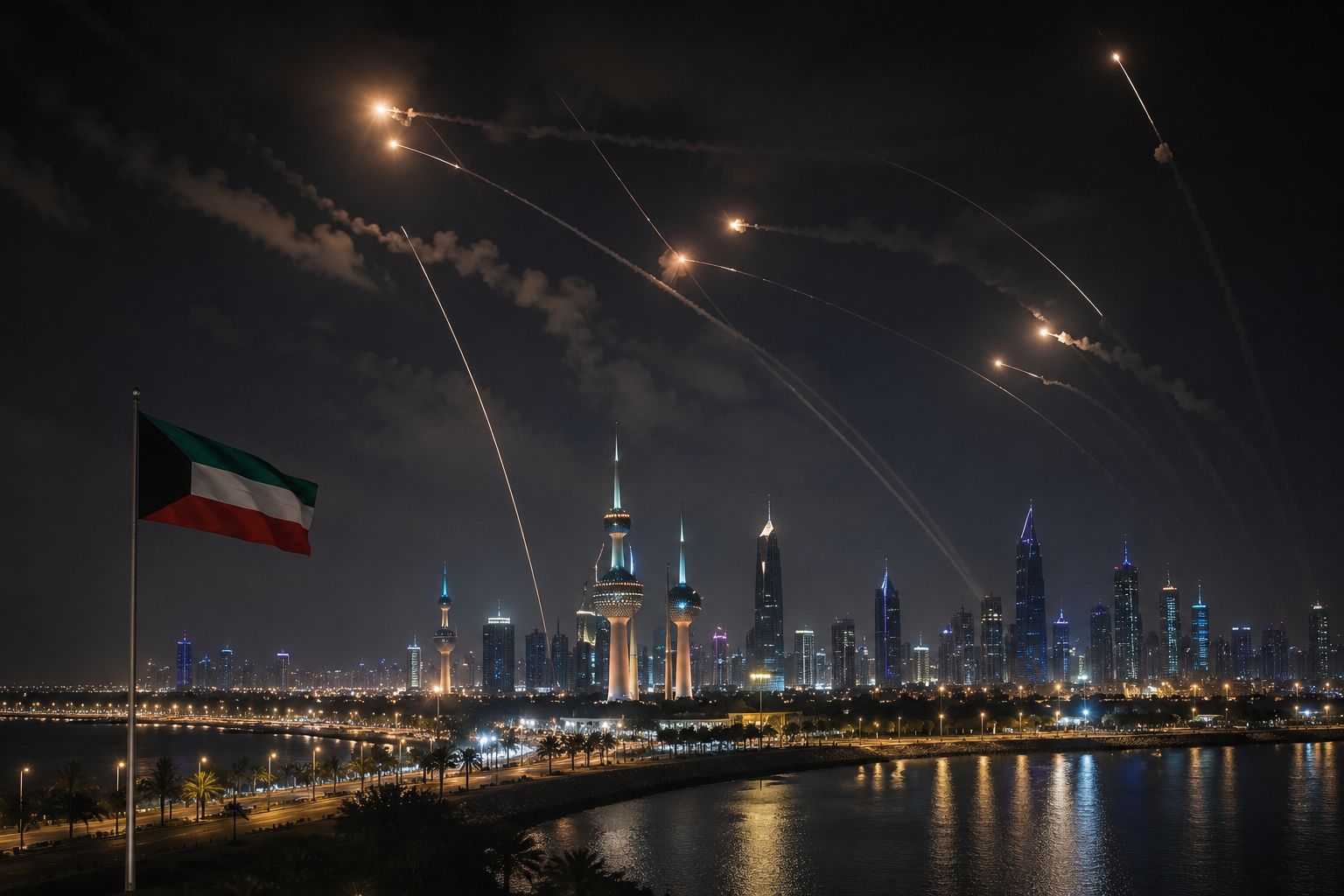
Kuwait air defenses destroyed Iranian drones Saturday, putting the Gulf state on alert as President Trump considered new Iran strikes.
The Kuwaiti military told residents that blasts heard in the country came from its own systems engaging the drones, according to the statement described in the source material. The warning was aimed at preventing confusion as explosions were reported during a fast-moving regional confrontation.
The episode matters because Kuwait was not described as the main battlefield in the source text, yet its airspace became part of the operational picture. In a conflict where aircraft, drones and missiles can quickly cross borders or force defensive responses, even a successful interception can widen the zone of risk.
Kuwait explains the blasts
Kuwait’s account, as presented in the source, was direct: its air defenses detected and destroyed Iranian drones. The military linked the sounds heard by residents to defensive fire rather than a separate attack inside the country.
No casualty figures, damage assessment or drone count was provided in the source text. That leaves the scale of the incident unclear, but the public warning shows that authorities considered the episode serious enough to address civilians quickly.
The timing sharpened the significance. The drone engagement came after a separate report citing unnamed US officials said President Trump had ordered the military to prepare another attack on Iran as soon as the weekend, with the stated aim of pressuring Tehran to surrender.
Trump hardens the US line
President Trump had already cast doubt on whether talks with Iran could continue, according to the source. His remarks followed an attack on a US base in Jordan, after which he repeated threats of forceful retaliation.
"We’ll be hitting them very hard," Trump said. "And at some point they’ll say we just can’t take it anymore."
The comments place diplomacy and military escalation on the same track rather than in separate lanes. If Washington believes pressure can force a concession, each new strike or threatened strike raises the chance that Iran answers through drones, missiles or allied forces.
A separate report said US officials were weighing attacks on Iranian energy infrastructure, including oil refineries and power plants. The source text said advocacy groups warned that deliberate attacks on civilian targets could be considered war crimes, making target selection a military, political and legal decision at once.
Energy sites raise escalation risk
Energy infrastructure is not just another target category. Refineries and power plants sit at the junction of military pressure, civilian welfare and global market psychology, because damage to those assets can affect fuel supply, electricity access and perceptions of regional stability.
For Kuwait, the immediate operational issue is air defense readiness. If Iranian drones continue to move through or near Kuwaiti airspace, the country may face repeated intercept decisions, public-safety warnings and pressure to coordinate closely with US forces while avoiding becoming a direct participant in the war.
For the wider Gulf, the incident is a reminder that defensive systems can become part of the conflict even when governments are not launching attacks. Airspace management, early warning, base security and energy-site protection become more urgent when military action spreads beyond a single border.
The macro channel runs through energy and risk pricing, even though the source provided no market data. If strikes remain limited to military assets, the global effect is likely to be driven by short-term uncertainty and defensive positioning; if energy sites are hit, the mechanism shifts toward possible supply disruption, insurance risk and higher costs for businesses exposed to fuel or shipping.
Three paths now matter
If Kuwait’s interception proves isolated, the global impact may stay contained, while Kuwait can present its systems as effective and the regional defense industry gains another proof point for air-defense demand. Under that path, the key company-level effect is indirect because the source names no specific contractor or operator at the center of the incident.
If US strikes expand and Iran responds with more drones, Kuwait faces a heavier security burden, Washington faces a harder escalation-management problem and regional defense suppliers could see demand for interceptors, sensors and command systems rise. The macro effect would come through higher geopolitical risk rather than verified supply losses.
If energy infrastructure becomes a target, the consequences would be sharper. Kuwait would need to protect critical assets and reassure residents, the unnamed companies operating energy facilities in the region would confront greater physical and legal risk, and the broader energy sector would have to price in the possibility that military objectives are moving closer to civilian economic systems.
The largest open questions remain unresolved in the source text: how many drones were destroyed, whether any debris caused damage, whether Kuwait was the intended target and whether President Trump has given a final order for new strikes. Those gaps define the next stage more than rhetoric alone.