Drone Attack on UAE Nuclear Site Signals Wider Conflict
A drone attack on the UAE's Barakah nuclear plant highlights escalating regional risks amid ongoing conflict.
Lauren Collins ·
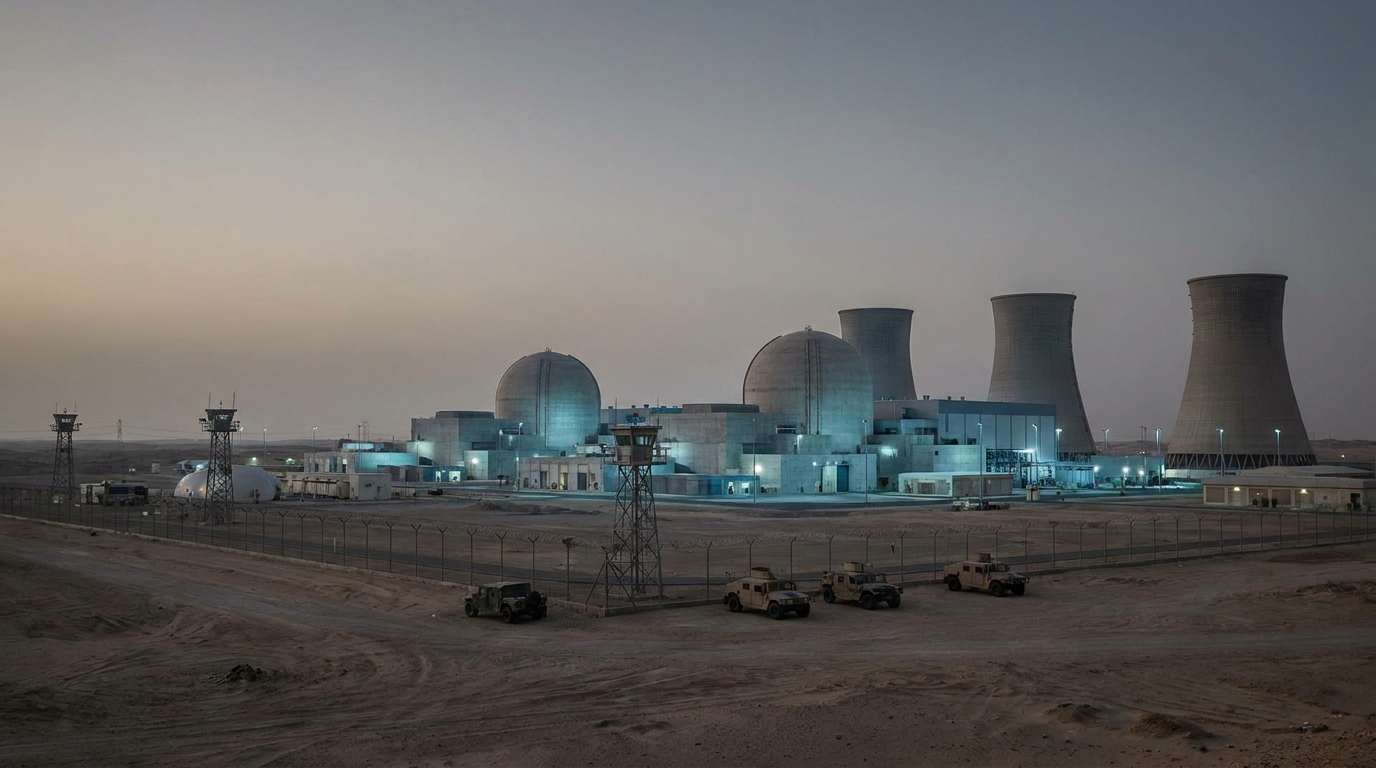
A harrowing incident near the United Arab Emirates’ Barakah nuclear power plant has underscored the intensifying collateral dangers of the protracted regional conflict. The pre-dawn drone assault, which ignited a fire at an external generator, demonstrated the growing reach of non-state actors and the perilous proximity of critical infrastructure to escalating geopolitical fault lines.
The Incident and Its Immediate Significance
On February 14, 2024, a coordinated drone attack targeted the United Arab Emirates, with one projectile breaching air defenses to strike an electrical generator near the Barakah Nuclear Power Plant, approximately 175 miles west of Abu Dhabi. While the plant's reactors remained secure and unaffected, the blaze at the external facility served as a stark symbol of vulnerability.
UAE defense officials reported intercepting two drones launched across the nation's western border, with a third evading detection and causing the fire. The swift response from UAE authorities, who stated their air defenses successfully engaged the threats, prevented a potentially catastrophic scenario. However, the incident’s occurrence at a facility housing the Arab world’s first operational nuclear power station amplified concerns about regional stability and the potential for miscalculation.
The immediate significance lies in the psychological impact and the demonstration of capability by proximate forces. The Barakah plant, a symbol of the UAE’s diversification away from fossil fuels and its technological advancement, became the focal point of fear. Expert analysis suggests that such attacks, even if resulting in minor damage, are designed to sow discord and exert pressure.
The UAE’s condemnation, articulated by Presidential Diplomatic Advisor Anwar Gargash, labeled the act a "dangerous escalation" and a violation of international law, pointing towards the potential involvement of state-sponsored proxies. The incident undeniably elevates the risk calculus for nuclear facilities in conflict-prone regions.
Deep Background: Shifting Dynamics of Asymmetric Warfare
The drone strike on Barakah is not an isolated event but rather a manifestation of evolving Middle Eastern security dynamics, deeply intertwined with the prolonged conflict in Yemen and the broader shadow war with Iran. For years, Iran and its allied militias in Iraq and Yemen have honed their capabilities in deploying unmanned aerial vehicles and ballistic missiles, often targeting strategic infrastructure in Saudi Arabia and the UAE.
These tactics became a cornerstone of their asymmetric warfare strategy, designed to inflict economic damage and project power without direct state confrontation. The successful penetration of UAE air defenses, even if limited to an external facility, suggests a refinement and potential repositioning of these assets.
The historical context of escalating tensions between Iran and its Gulf adversaries, particularly the UAE and Saudi Arabia, provides a crucial backdrop. The attacks on oil facilities in Saudi Arabia, such as the 2019 strikes on Abqaiq and Khurais attributed by Riyadh to Iran, showcased the devastating potential of drone and missile barrages. The UAE, a key player in the Saudi-led coalition in Yemen, has been a consistent target of Houthi projectiles emanating from Yemen.
This latest incident, however, suggests a widening of the operational theater and a potential shift in launch points or tactics, with the UAE’s western border being identified as the entry vector. The sophistication implied by the near-simultaneous launch and targeting adds another layer to the evolving threat landscape.
Stakeholder Analysis: Power Dynamics at Play
The Barakah drone incident places several key stakeholders under intense scrutiny, revealing complex power dynamics and competing interests. The primary beneficiary of such an incident, if intended to disrupt, would be any actor seeking to destabilize the UAE’s economic and political standing or to retaliate for its regional policies. Iran, though not officially claiming responsibility, is the prime suspect, given its historical use of proxies and its ongoing strategic rivalry with the UAE.
The drones’ trajectory from the western border implicates Iran-backed groups operating in neighboring Iraq, which have demonstrated increasing long-range strike capabilities.
The principal loser in this scenario is undoubtedly the UAE, facing a direct threat to its critical infrastructure and a challenge to its perceived security. The incident undermines public confidence and potentially deters foreign investment, both crucial for the nation's economic ambitions.
The global community, particularly nations reliant on stable energy markets and concerned about nuclear proliferation and safety, also stands to lose if such incidents escalate into wider conflict or cause an actual nuclear event.
Neighboring Saudi Arabia, a close ally of the UAE and a frequent target itself, shares the burden of regional instability, while international powers with strategic interests in the Gulf, such as the United States, witness a concerning escalation that demands diplomatic and military attention.
Economic and Geopolitical Implications
The economic implications of the Barakah drone attack, though currently contained, carry significant weight, particularly for a nation heavily invested in its energy future and global trade. The UAE has positioned itself as a stable investment hub and a leader in nuclear energy adoption in the Arab world, with Barakah aiming to supply a quarter of the country's electricity needs by 2030.
Any perceived threat to such critical infrastructure can negatively impact investor confidence, increasing the cost of capital and potentially slowing planned expansions. Furthermore, the global perception of the Gulf as a volatile region, already heightened by broader conflicts, could be exacerbated, affecting tourism and non-oil sector growth.
Geopolitically, the incident represents a dangerous escalation of the proxy conflicts and the undeclared war simmering across the Middle East. It underscores the challenge of differentiating between state-sponsored aggression and actions by non-state actors, creating a complex diplomatic and military response landscape for regional states and international powers. Dr.
" The trajectory of the drones from the western border potentially implicates actors in Iraq, complicating Tehran’s diplomatic relations with Baghdad and raising questions about Iraqi sovereignty and its ability to control militias operating within its territory.
Comparative Analysis: Lessons from Other Nuclear Near-Misses
The near-miss at Barakah echoes historical concerns surrounding the safety of nuclear facilities in zones of conflict. While direct attacks on operational nuclear power plants are rare, several incidents and near-misses, particularly during the Cold War and more recent conflicts, offer valuable precedents. During the Iran-Iraq War (1980-1988), both sides targeted each other’s nuclear facilities, raising international alarm.
The Bushehr Nuclear Power Plant in Iran faced numerous threats, and its construction was repeatedly delayed due to security concerns and external pressures.
More recently, the conflict in Ukraine has brought the safety of nuclear power plants into sharp focus. Russian forces’ occupation and shelling around the Zaporizhzhia Nuclear Power Plant, Europe's largest, has led to repeated incidents of damage to external infrastructure and fears of a catastrophic meltdown. International Atomic Energy Agency (IAEA) Director General Rafael Grossi has consistently warned of the extreme danger of military activity near nuclear sites.
The Barakah incident, while less severe in its immediate impact, shares the fundamental characteristic of critical nuclear infrastructure being targeted or endangered by proximate conflict, highlighting a persistent global vulnerability that requires stringent international oversight and de-escalation efforts.
Forward-Looking Analysis: Scenarios and Risks
The future trajectory following the Barakah drone incident hinges on several critical factors, including the UAE's response, Iran's strategic calculus, and the agency of regional proxy groups. One scenario suggests a calibrated retaliatory response from the UAE, possibly through covert means or diplomatic pressure, aimed at deterring future attacks without triggering a full-blown conflict. -UAE security cooperation and intelligence sharing to bolster defenses and disrupt relevant networks.
Tehran, if indeed responsible, would likely continue its policy of plausible deniability while reassessing its approach based on the UAE's reaction and the broader regional balance of power.
A more concerning scenario involves escalation. If proxy groups, emboldened by perceived success or encouraged by Tehran, launch further, more impactful attacks, the UAE might be compelled to respond more assertively, potentially drawing other regional actors deeper into confrontation. This could lead to a wider regional conflagration, with devastating consequences for global energy markets and international security.
Alternatively, the incident could serve as a wake-up call, prompting renewed diplomatic engagement and a concerted international effort to de-escalate tensions. Key indicators to watch will include further drone or missile activity, shifts in military readiness in the Gulf, and any overt diplomatic overtures or condemnations from key international players like the United States and European powers.