

Kigali wetlands to cut flood risk for 220,000, Rwanda PM says
The $195 million urban-resilience push is being presented at COP31 as Rwanda seeks financing for wider adaptation and emissions goals.
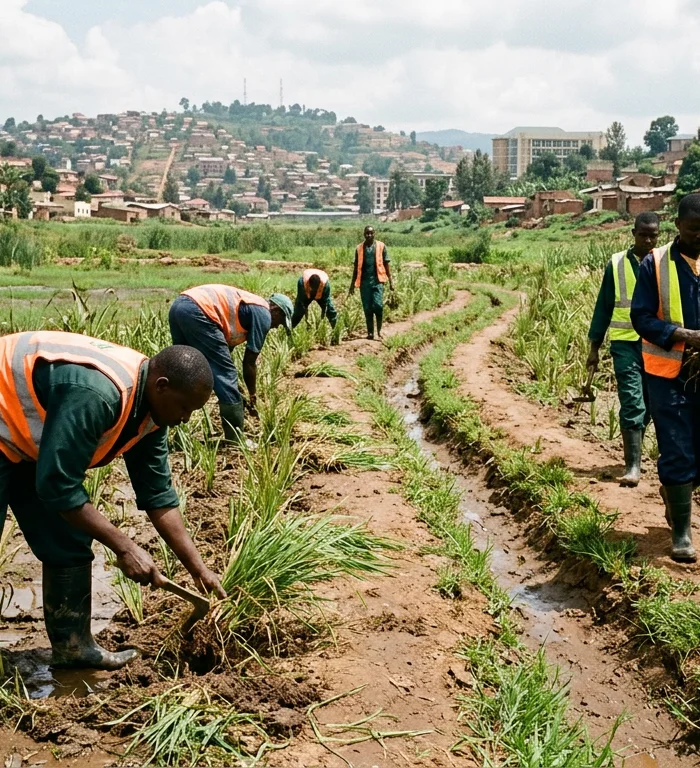
Rwanda’s Prime Minister Justin Nsengiyumva said on Nov. 13 that five rehabilitated Kigali wetlands will lower flood exposure for over 220,000 people, according to The New Times newspaper.
The programme puts an approximately $195 million urban-resilience investment before negotiators at COP31 in Türkiye, with Rwanda tying flood protection in its capital to a wider financing push for developing economies.
Nsengiyumva said Rwanda, working with domestic and foreign partners, has directed the money into flood control, informal-neighbourhood upgrades, access roads and wetland work across almost 500 hectares in Kigali.
"These investments are reducing flood risks for more than 220,000 residents while creating public green spaces, jobs and livelihood opportunities. Nature-based solutions can deliver resilience at scale," he said.
The Prime Minister said Rwanda wants to take the approach beyond the capital to secondary and satellite cities under NDC 3.0, its third Nationally Determined Contribution, the climate pledge submitted through the UN process.
He framed financing as the main constraint. "Developing countries will need more than $300 billion annually for adaptation by 2035, up to 14 times the current support," he said.
Rwanda has welcomed Türkiye’s Sustainable Urban Resilience Financing Facility, introduced under the COP31 Action Agenda. The facility is designed to help cities convert climate plans into investable projects, attract funding and deliver projects.
Nsengiyumva also pointed to the Green Gicumbi project in Gicumbi District, backed by the Green Climate Fund, which targeted stronger resilience for about 249,000 people, close to two-thirds of the district’s population.
Under its current climate plan, Rwanda has pledged to cut emissions by 53% by 2035 against a business-as-usual pathway. Nsengiyumva said reaching that goal needs $12 billion in investment, with 80% dependent on international support.
He said governments and private investors must work together so viable projects can attract capital on terms developing economies can afford, without adding to unsustainable debt. Rwanda is due to chair the G77 and China in 2027.
Source: newspaper report, The New Times via AllAfrica, Nov. 13, 2026
More stories
- Monrovia mayor-designate seeks $14.5m city budget
- Iran's attacks hit 25 tankers near Strait of Hormuz
- Russia strikes Ukraine as Odesa faces electricity strain
- Bahrain reports two injuries after Iranian aerial attacks
- Baltic responders fight Sparta II fire after drone strike
- Estonia to close 5 Russia road crossings for six months
- Kallas warns Russia seeks to redirect Ukraine talks
- Europe to join next Ukraine talks, Kushner says
- Aigner nears German presidency before Jan. 30 vote
- Iran secures Chinese oil sites for sanctioned crude, letter says
Latest news
- Nvidia board gets Trump input on Jensen Huang return as CEO
- Rwanda faces budget strain from 85% electricity access push
- ICE arrests at Seattle airport draw protests and scrutiny
- AI doubts leave Asian stocks facing a new investment test
- EU rejects COP31 deal as fossil fuel divisions block pact
- Deal Sheet: Fortis shutdown costs over 400 jobs
- Germany to pay about $11 a month into child pension accounts
- Laura Brand curbs prison messages after YouTube dispute