

Jordan scales up southern border intervention against militia networks
Amman is shifting to an aggressive security posture in southern Syria, targeting Iran-aligned groups to curb escalating drug trafficking and border violence.
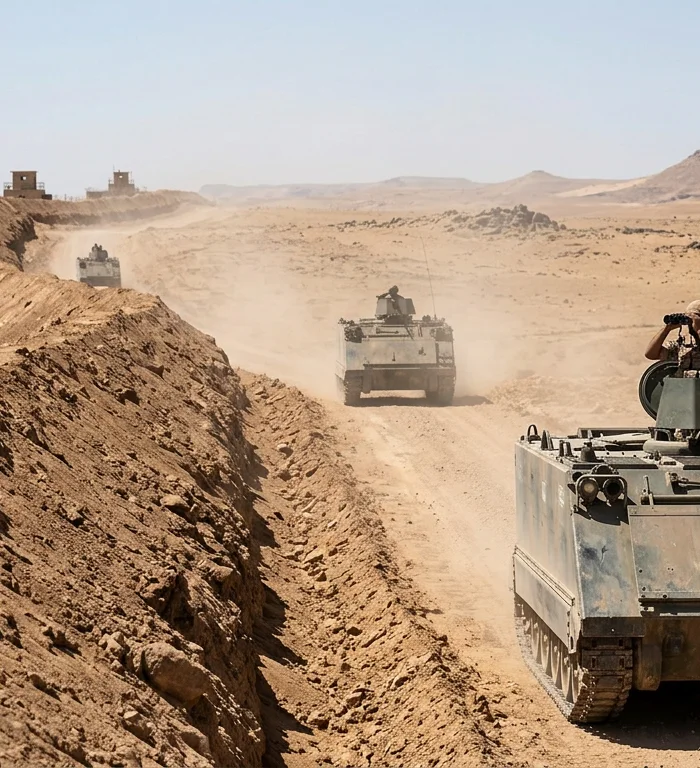
Amman shifts to tactical intervention
Jordan has transitioned to a more assertive military stance along its northern border, conducting targeted aerial operations inside Syrian territory against groups it identifies as immediate threats. The move signals a departure from Amman’s previous strategy of containment, replacing passive border observation with preemptive action to disrupt entrenched militia networks.
The escalation follows persistent reports of organized criminal activity, specifically the flow of narcotics, which Jordanian officials have long attributed to militias operating under the protection of established security structures in southern Syria. Jordan maintains that the most recent strikes eliminated more than 20 combatants, characterizing the operation as a defensive necessity to prevent regional destabilization.
Security vacuum fuels local friction
The border region has served as a volatile buffer zone since the onset of the Syrian civil war, complicating efforts by regional powers to re-establish territorial control. While diplomatic normalization efforts sought to integrate the Syrian state back into regional forums, the reality on the ground has been defined by the expansion of Iranian-aligned proxy groups that operate largely independently of Damascus.
Jordanian policymakers have increasingly expressed concern that these networks, often linked to the Islamic Revolutionary Guard Corps (IRGC), are leveraging the porous border to orchestrate illicit trade and gather intelligence. The failure of the Syrian regime to exercise effective sovereignty in the south has left Amman with limited options, forcing a shift toward unilateral kinetic measures to protect its internal security perimeter.
Regional stability at the border
The hardening of the border carries significant consequences for the broader Levant, particularly as shipping lanes and supply routes in the Red Sea remain under intense pressure. Continued military friction between Jordan and Syrian-based actors threatens to disrupt the fragile diplomatic ties restored within the Gulf Cooperation Council (GCC) framework, potentially forcing regional neighbors to choose between supporting Jordanian security or maintaining the current normalization trajectory with the Assad regime.
Islamic Revolutionary Guard Corps
The formation of a joint security committee between the two nations appears to be a reactive measure designed to prevent a total collapse of bilateral communication. However, the efficacy of this mechanism remains unproven as long as Tehran-backed proxies maintain tactical autonomy within the Syrian frontier.
Tracking the security committee trajectory
The next several months will test whether the joint committee can establish a sustainable protocol for buffer zone management or if the border will revert to a theater of sustained, low-intensity conflict. Analysts will be monitoring the frequency of Jordanian cross-border incursions through May 15, 2025; should the kinetic operations continue at their current pace, it would signal that the diplomatic committee has failed to mitigate the underlying threats posed by non-state militia activity.
More stories
- Germans oppose Ukraine aid as poll shows support slipping
- Kim Jong-un receives 10 envoys after constitutional shift
- Ukraine claims Libya strike sinks Russian naval corvette
- COP31 climate talks collapse over fossil fuels and funds
- Russian military faces 1,087 recorded suicides in Ukraine war
- US faces China, Russia in Africa minerals contest
- Villa Vie disembarks 203 passengers in Cambodia over fuel costs
- NEITI faces methane data questions over 18 incomplete records
- Mali attacks kill at least 48 as civilians flee to Menaka
- Ryanair warns European fares may rise 20% in 2027
Latest news
- Trump prepares tariffs on China and other major exporters
- New-car buyers pay record average $50,087 in October
- Banks face ECB reserve debate over liquidity and profits
- Investors see Anthropic debut gains fade below $83 a share
- Iraq orders federal control over Kurdish-area oilfields
- Nvidia shares retreat as AI rally cools before PCE data
- Macy’s parade faces balloon limits as storm winds approach