Mahrang Baloch condemns Sorab bombing that killed 27
Mahrang Baloch condemned the Sorab bombing reports said killed 27, saying peace in Balochistan cannot come without justice amid curfews claims.
Mei Lin ·
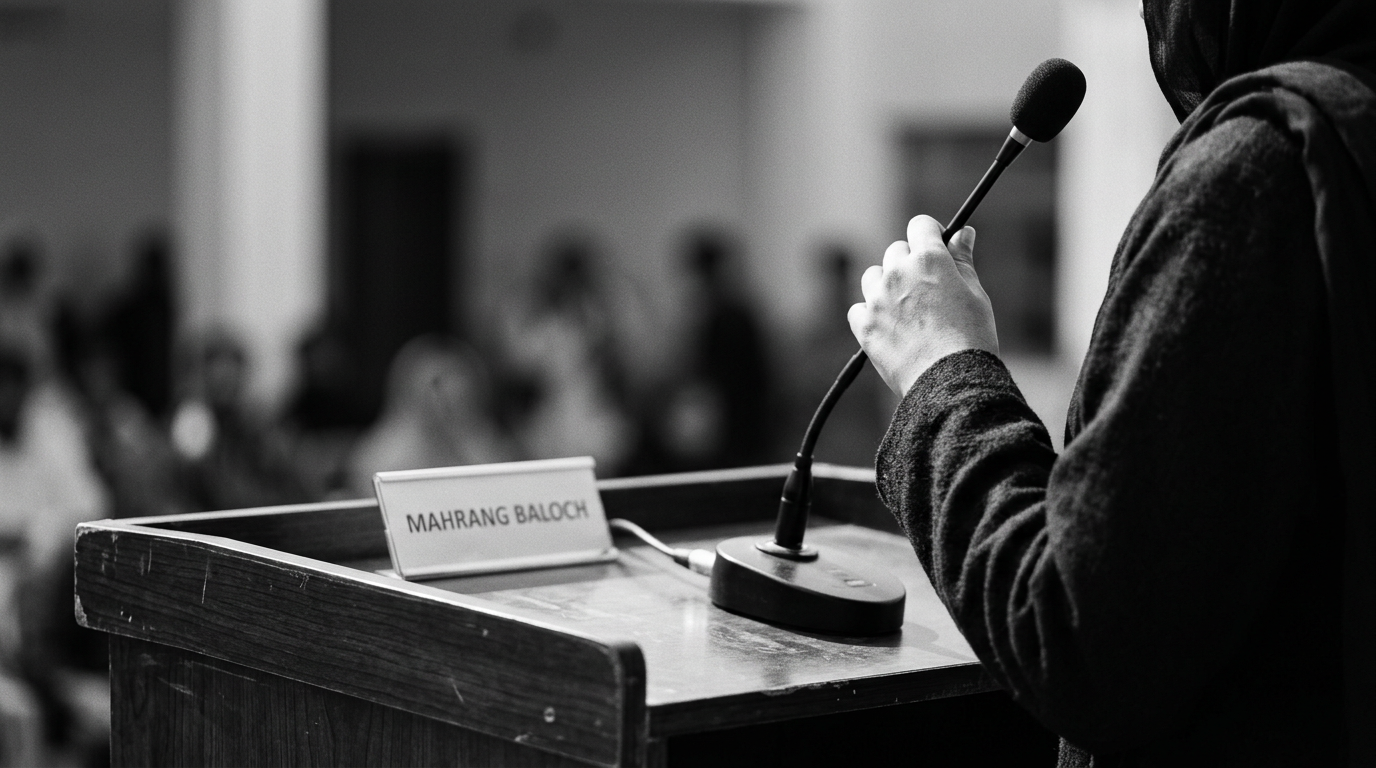
Jailed Baloch activist Mahrang Baloch has condemned a bombing in Sorab that reports said killed 27 people, and argued that durable peace in Pakistan’s Balochistan province requires justice.
Her remarks, reported in recent days, came as accounts described curfews in parts of the province and allegations of enforced disappearances. The reports did not attribute additional operational details about the Sorab attack beyond the death toll and her condemnation.
Balochistan conflict frames the security backdrop
Balochistan is Pakistan’s largest province by area and among its least populated. The province has faced decades of insurgency and state counterinsurgency linked in reports to separatist demands, disputes over control of local resources, and broader political grievances.
In this context, officials and armed groups have repeatedly cited major infrastructure and development plans as sources of tension. Security measures such as curfews and intensified operations have been reported alongside allegations of enforced disappearances, a human-rights dimension that activists frequently highlight.
Calls for justice alongside restrictions and allegations
Baloch’s statement connected the latest violence to wider grievances in the province, according to the same reports. Those accounts said her comments focused on condemnation and a call for justice, without laying out further specifics.
Reports describing curfews and allegations of enforced disappearances were presented as part of the broader environment in which the Sorab bombing occurred. The available material did not detail where curfews were imposed or how long they would last.
Regional geography raises stakes beyond Pakistan
Balochistan borders Iran and Afghanistan and sits along the Arabian Sea, a location that places internal security conditions in a wider regional frame. Stability in the province has therefore been described as a continuing concern beyond Pakistan’s borders where security dynamics intersect with trade routes and maritime activity.
Reports also pointed to risks that instability could spill across borders through trade corridors, supply chains, and security conditions in the northern Arabian Sea. Any deterioration, the same accounts said, can raise transport and insurance costs, complicate overland connectivity plans, and add pressure to Pakistan’s internal security posture.
CPEC-linked projects tied to security risks
The conflict has also been linked in reports to projects associated with China’s Belt and Road Initiative, including the China-Pakistan Economic Corridor (CPEC), a network of energy and transport investments. Pakistani authorities and militant groups have repeatedly described CPEC-linked projects as a central point of contention.
Security forces have been tasked with protecting key nodes and workers connected to these investments, reflecting how infrastructure security has become part of the wider challenge. Reports said disruption risks for CPEC-linked infrastructure can influence China’s investment calculus and affect regional logistics.
Indicators highlighted ahead of 2024-08-30
Reports described the province as sitting at the intersection of wider Indo-Pacific strategic competition, and said India watches developments closely due to Balochistan’s proximity to its western approaches and the broader Pakistan security environment.
By 2024-08-30, the same material pointed to indicators to monitor for potential escalation or de-escalation: additional militant attacks in or near Balochistan, official statements by Pakistan’s civilian government or military about the Sorab incident and related security measures, and any formal reaction from China regarding CPEC security.
Uncertainty remains high in the near term, according to the reports, because the trajectory depends on whether violence continues alongside tighter restrictions and expanded security operations, or whether authorities signal dialogue steps and violence drops measurably for several weeks.