

Israeli Settlers Seize Eight Homes in Jericho, Displacing Residents
Israeli settlers seized eight homes in Jericho using force, leading to the displacement of residents and the subsequent closure of the area by the Israeli…
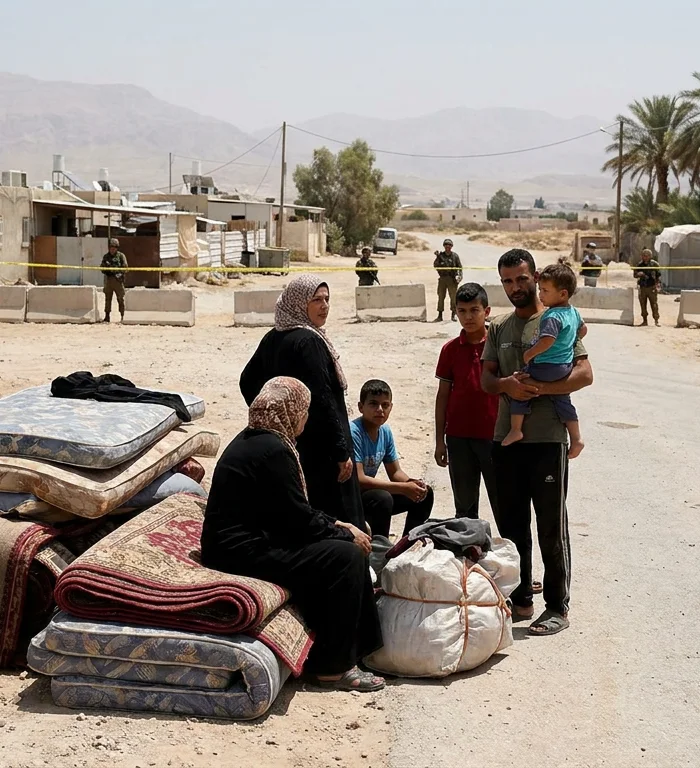
Israeli settlers have seized eight Palestinian homes in the Ein a-Duyuk a-Tahta area on the outskirts of Jericho, resulting in the displacement of dozens of residents. Reports indicate that approximately 30 settlers utilized live ammunition and physical force to secure the properties. The incident has prompted international condemnation regarding the use of violence against local populations.
Following the seizure, the Israeli military designated the area a closed military zone. This action has effectively blocked humanitarian organizations from providing assistance to the displaced families, many of whom currently lack adequate shelter. The restriction of movement and access remains a primary concern for regional stability and humanitarian oversight.
Settler representatives claim the homes were purchased legally
Disputes regarding the legality of the property transfers have emerged. Settler representatives claim the homes were purchased legally through the organization Nachala, which advocates for the expansion of settlements in the West Bank. Conversely, Palestinian officials maintain that the documentation provided is forged and assert that the land remains under the jurisdiction of the Palestinian Authority.
West Bank
The site of the seizure is located in Area C of the West Bank, a territory under Israeli administrative and security control since the 1990s. The incident reflects a broader trend of increasing settler activity and displacement within the region. Observers note that such actions often lead to heightened friction, increased military presence, and long-term restrictions on Palestinian freedom of movement, similar to established patterns in other West Bank cities.
Institutional risk remains elevated as these events exacerbate tensions in the West Bank. The involvement of organizations dedicated to settlement expansion suggests a potential for further land acquisitions and subsequent confrontations. Policymakers should monitor the area for potential escalations in violence and the impact of military-imposed access restrictions on regional governance and humanitarian conditions.
More stories
- Germans oppose Ukraine aid as poll shows support slipping
- Kim Jong-un receives 10 envoys after constitutional shift
- Ukraine claims Libya strike sinks Russian naval corvette
- COP31 climate talks collapse over fossil fuels and funds
- Russian military faces 1,087 recorded suicides in Ukraine war
- US faces China, Russia in Africa minerals contest
- War-zone water attacks triple to more than 135 incidents in 2025
- Lulu Retail posts 2% Q3 revenue gain with 53% online sales growth
- Boakai seeks Liberia mining investment with $30m survey
- South Africa health department faces call on boys' HPV shots after 3.6M girls vaccinated
Latest news
- Trump prepares tariffs on China and other major exporters
- New-car buyers pay record average $50,087 in October
- Banks face ECB reserve debate over liquidity and profits
- Investors see Anthropic debut gains fade below $83 a share
- Iraq orders federal control over Kurdish-area oilfields
- Nvidia shares retreat as AI rally cools before PCE data
- Macy’s parade faces balloon limits as storm winds approach