

South Korea says Iranian missile likely hit HMM ship
South Korea’s Foreign Ministry attributes a May 4 cargo ship attack in the Strait of Hormuz to an Iranian anti-ship missile, based on debris analysis.
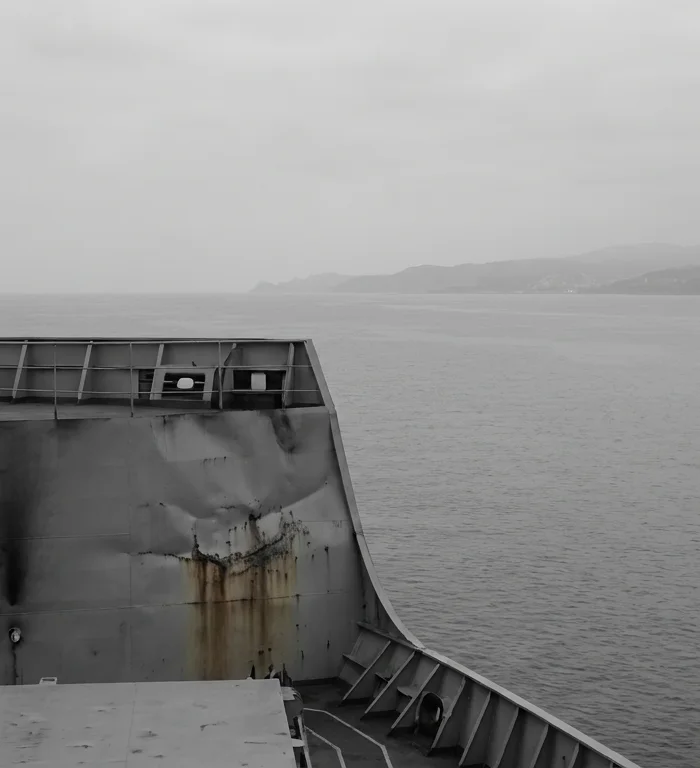
South Korea’s Foreign Ministry said Wednesday, May 27, that an Iranian anti-ship missile was likely involved in an attack on a cargo vessel operated by HMM in the Strait of Hormuz earlier this month. The ministry said the May 4 incident involved two strikes on the bulk carrier Namu and caused a fire and damage to the lower stern hull.
Officials said the assessment followed an investigation that examined debris recovered from inside the ship. Iran’s ambassador to South Korea denied Iran’s involvement.
Officials said the attack was carried out by two objects, and that one warhead did not explode while a second did. The ministry said it has not conclusively determined who was responsible or whether the attack was intentional. Still, it said multiple pieces of evidence pointed to Iranian origin.
The ministry said its findings were presented at a briefing by First Vice Foreign Minister Park Yoon-joo. Park said investigators compared debris components, including engine parts and warhead fragments, with known systems.
Debris analysis points to Iranian manufacturing
Park said the objects’ engines appeared similar to turbojet engines made in Iran. He added that one component had markings that appeared to be used by an Iranian manufacturer. Officials said the warheads also resembled those used in Iranian anti-ship missiles.
Park specifically cited the Noor or Qader models as similar to the warheads assessed in the investigation. The ministry said the overall pattern of damage and debris was consistent with a missile attack.
Diplomatic protest as Tehran denies involvement
Following the investigation, South Korea summoned Saeed Koozechi, Iran’s ambassador in Seoul, to share the findings and deliver a protest message, officials said. The ministry said it communicated its position directly to the ambassador in light of the evidence it reviewed.
Koozechi denied responsibility, saying Iran “took no part” in the attack, according to the ministry’s account. The ministry said the incident has raised concerns about shipping security through the Strait of Hormuz, a key route for global energy and trade flows.
Officials said further information would depend on additional analysis and any future findings on who carried out the attack and what prompted it.
More stories
- Eisenkot secures first coalition deal but lacks majority
- Germans oppose Ukraine aid as poll shows support slipping
- Kim Jong-un receives 10 envoys after constitutional shift
- Ukraine claims Libya strike sinks Russian naval corvette
- COP31 climate talks collapse over fossil fuels and funds
- Russian military faces 1,087 recorded suicides in Ukraine war
- Rubio: Iran Talks Could Last Days; Strait of Hormuz Access Remains U.S. Priority
- US-Iran Deal Looms: Hormuz Strait Ceasefire Talks Continue
Latest news
- Morocco targets 2030 World Cup final with new stadium bid
- Barclays puts AI bust risk at center of US growth debate
- US inflation reaches 3.8% before December Fed rate meeting
- Türkiye Desk: GTA 6 drains UK mobile spend as Turkish studios feel pressure
- Global stocks fall 0.4% as tariffs and US inflation loom
- CIA hack affects unclassified data; scope remains unclear
- Trump prepares tariffs on China and other major exporters
- New-car buyers pay record average $50,087 in October