

Kataeb Hezbollah Rejects Iraqi Government Order to Vacate Jurf al-Sakher
Kataeb Hezbollah has defied an Iraqi order to vacate its Jurf al-Sakher stronghold, challenging state authority and complicating regional security.
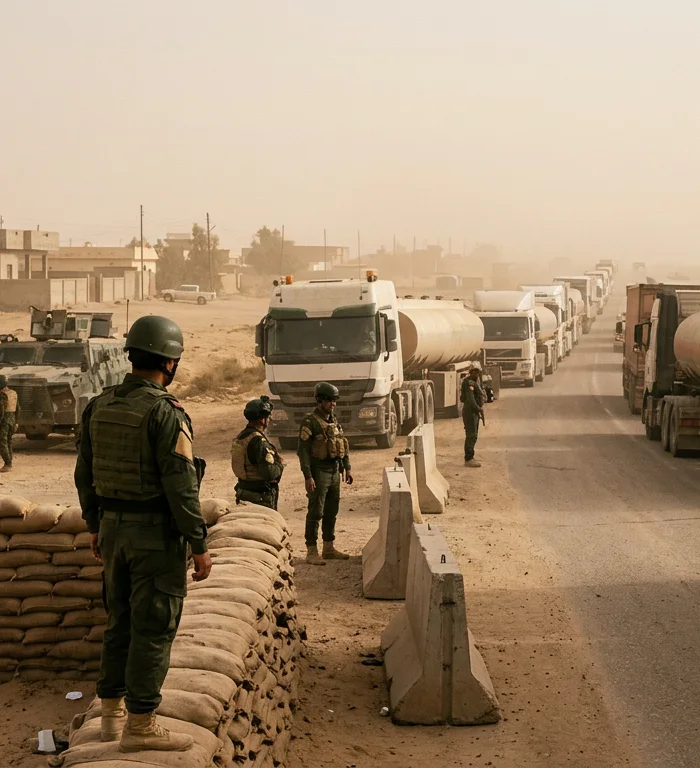
Kataeb Hezbollah has formally refused a directive from the Iraqi Prime Minister to withdraw from its stronghold in Jurf al-Sakher, located south of Baghdad. The government had issued an ultimatum for the paramilitary group to vacate the area, citing findings from an investigative committee that linked the faction to illicit oil smuggling operations. The group has denied these allegations and maintains a permanent presence in the territory.
The refusal to comply with the government’s order highlights a significant challenge to the authority of the Iraqi state and its security apparatus. By defying the Prime Minister’s demand to allow army to assume control of the region, the group has signaled a continued autonomy that undermines central governance. This standoff complicates ongoing efforts by the administration to consolidate control over strategic areas and curb unauthorized paramilitary activities.
While the group’s leadership has stated that it
While the group’s leadership has stated that it seeks to avoid direct kinetic confrontation with the Iraqi armed forces, the rejection of the withdrawal deadline creates a persistent security friction point. The area remains a sensitive zone due to its strategic location and the reported economic activities that have drawn government scrutiny. The inability of the state to enforce its mandate in Jurf al-Sakher underscores the limitations of current executive power in managing Iran-aligned factions.
Future developments will likely focus on whether the government attempts to enforce the withdrawal through military or diplomatic pressure, or if the status quo persists. The situation serves as a barometer for the influence of non-state actors within Iraq’s security architecture and the government’s capacity to regulate territory under the control of powerful paramilitary organizations. Stakeholders should monitor for potential escalations or shifts in the government’s approach to asserting sovereignty in contested regions.
More stories
- Germans oppose Ukraine aid as poll shows support slipping
- Kim Jong-un receives 10 envoys after constitutional shift
- Ukraine claims Libya strike sinks Russian naval corvette
- COP31 climate talks collapse over fossil fuels and funds
- Russian military faces 1,087 recorded suicides in Ukraine war
- US faces China, Russia in Africa minerals contest
- Russian strikes leave many Kyiv homes with 4 hours of power
- Cebu groups seek probe into protest dispersal with more than 20 hurt
- Singapore lifts retirement age to 65 from 2029
- Young French households reach 90.1% of national median income
Latest news
- Trump prepares tariffs on China and other major exporters
- New-car buyers pay record average $50,087 in October
- Banks face ECB reserve debate over liquidity and profits
- Investors see Anthropic debut gains fade below $83 a share
- Iraq orders federal control over Kurdish-area oilfields
- Nvidia shares retreat as AI rally cools before PCE data
- Macy’s parade faces balloon limits as storm winds approach