

Security Instability in Nigeria Driven by Socioeconomic Displacement
Nigeria’s ongoing banditry crisis is driven by socioeconomic displacement and resource scarcity rather than religious extremism, complicating international…
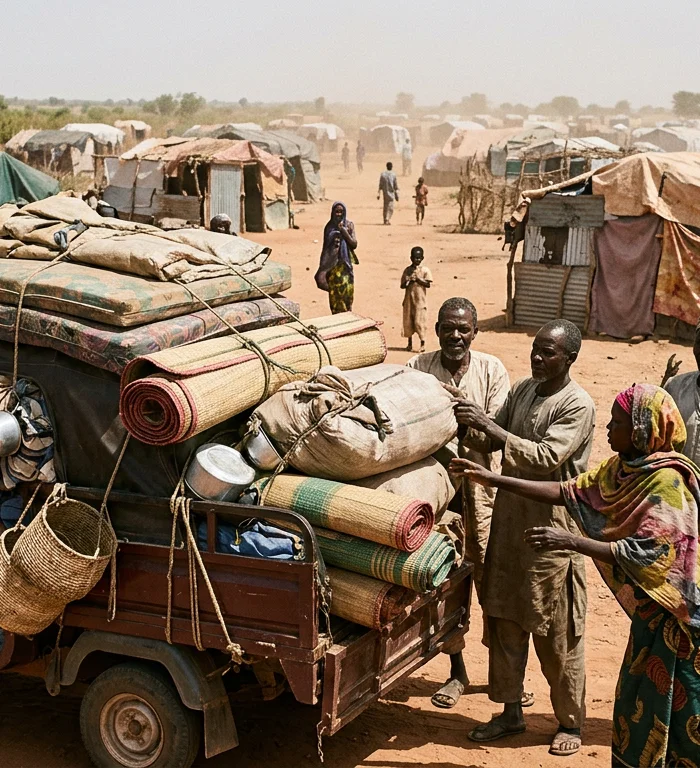
Nigeria faces a persistent security crisis involving approximately 30,000 armed individuals, locally identified as bandits, who operate across the nation’s northwestern and central regions. These groups utilize motorcycle-based raids to conduct looting, property destruction, and mass kidnappings for ransom. The violence has resulted in thousands of fatalities and the displacement of hundreds of thousands of civilians, significantly destabilizing rural governance and local economies.
International policy discourse has frequently characterized this conflict through the lens of religious extremism, with some foreign entities labeling the violence as a targeted genocide against Christians. However, empirical data suggests that the majority of victims are Muslim, and only a small fraction of incidents are motivated by religious identity. Analysts indicate that the conflict is primarily driven by a complex intersection of climate change, resource scarcity, historical grievances, and systemic governance failures.
For many participants, the transition to armed activity is rooted in the collapse of traditional pastoralist livelihoods. The historical practice of transhumance—the seasonal migration of livestock—has been disrupted by environmental degradation and shifting land-use patterns. As traditional grazing routes have become inaccessible or contested, many pastoralists have lost their economic independence, creating a recruitment pool for armed gangs.
This security environment presents a significant challenge for policymakers, as the conflict lacks a singular ideological driver that would respond to conventional counter-terrorism strategies. The absence of formal records or centralized leadership among these groups complicates diplomatic and military intervention. Future stability will likely depend on addressing the underlying socioeconomic factors, including the management of land resources and the restoration of rural infrastructure, rather than relying solely on kinetic military operations.
More stories
- Germans oppose Ukraine aid as poll shows support slipping
- Kim Jong-un receives 10 envoys after constitutional shift
- Ukraine claims Libya strike sinks Russian naval corvette
- COP31 climate talks collapse over fossil fuels and funds
- Russian military faces 1,087 recorded suicides in Ukraine war
- US faces China, Russia in Africa minerals contest
- Russian strikes leave many Kyiv homes with 4 hours of power
- Cebu groups seek probe into protest dispersal with more than 20 hurt
- Syria rejects Yemen role after 600-troop Saudi border report
- Pangilinan questions Davao assessor on 379 sqm SALN lot
Latest news
- Trump prepares tariffs on China and other major exporters
- New-car buyers pay record average $50,087 in October
- Banks face ECB reserve debate over liquidity and profits
- Investors see Anthropic debut gains fade below $83 a share
- Iraq orders federal control over Kurdish-area oilfields
- Nvidia shares retreat as AI rally cools before PCE data
- Macy’s parade faces balloon limits as storm winds approach