

Indian Space Startups Face Scrutiny Over International Expansion and Security Risks
Indian space startups are expanding internationally to improve cash flow and scale, sparking domestic concerns over potential foreign access to sensitive…
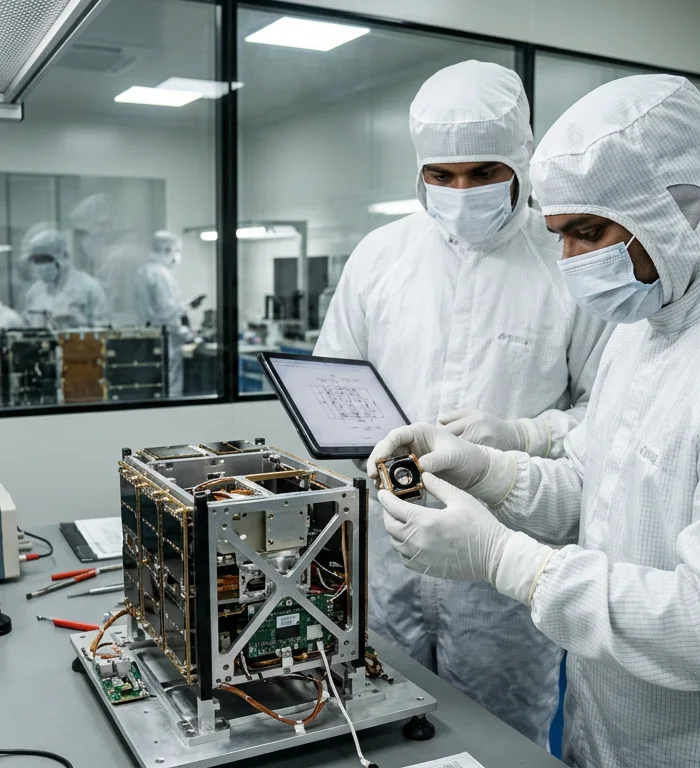
Indian space technology startups are increasingly establishing international subsidiaries to access global markets, triggering domestic debate regarding national security, intellectual property control, and foreign influence. The controversy centers on whether companies operating in both the Indian government sector and foreign defense markets can adequately protect sensitive technology and data from external oversight.
Recent scrutiny was prompted by a Bengaluru-based satellite firm’s expansion into the United States defense and intelligence sector. Critics have raised concerns that such cross-jurisdictional operations could potentially expose sensitive information linked to Indian state-led projects, such as Earth-observation networks. While company leadership maintains that their entities remain Indian-headquartered and controlled, the debate highlights the tension between national security mandates and the commercial necessity of global integration.
Industry analysts note that international expansion is often a financial imperative for Indian startups. Domestic government contracts frequently involve delayed payment cycles and high capital requirements for bank guarantees, which can strain liquidity. Consequently, startups often seek international revenue streams and foreign venture capital to achieve the scale and cost efficiencies required for long-term viability.
United States
Other firms, including rocket manufacturers and high-altitude platform developers, have similarly pursued partnerships in Europe, Africa, and North America. Industry representatives argue that national security and commercial expansion are not inherently contradictory, provided that regulatory frameworks assess each case individually. However, the trend underscores a growing need for clear governance regarding technology transfers and data sovereignty as Indian space firms integrate further into the global supply chain.
Policymakers and investors should monitor potential regulatory shifts as the Indian government balances the need for a globally competitive space industry with the requirement to safeguard strategic assets. Future oversight may focus on stricter compliance protocols for startups that simultaneously hold domestic defense contracts and foreign commercial or intelligence-related agreements.
More stories
- Germans oppose Ukraine aid as poll shows support slipping
- Kim Jong-un receives 10 envoys after constitutional shift
- Ukraine claims Libya strike sinks Russian naval corvette
- COP31 climate talks collapse over fossil fuels and funds
- Russian military faces 1,087 recorded suicides in Ukraine war
- US faces China, Russia in Africa minerals contest
- Iran's attacks hit 25 tankers near Strait of Hormuz
- Russia strikes Ukraine as Odesa faces electricity strain
- Serbian MiG-29 crashes near Belgrade, killing military pilot
- Zelenskiy says Crimea bridge hit in Ukrainian operation
Latest news
- Trump prepares tariffs on China and other major exporters
- New-car buyers pay record average $50,087 in October
- Banks face ECB reserve debate over liquidity and profits
- Investors see Anthropic debut gains fade below $83 a share
- Iraq orders federal control over Kurdish-area oilfields
- Nvidia shares retreat as AI rally cools before PCE data
- Macy’s parade faces balloon limits as storm winds approach