India Deploys Flood Teams Amid Nepal Devastation
India has deployed 20 National Disaster Response Force teams to Uttar Pradesh and Bihar in anticipation of flood risks from Nepal's recent deluge, where hundreds are missing.
Mei Lin ·
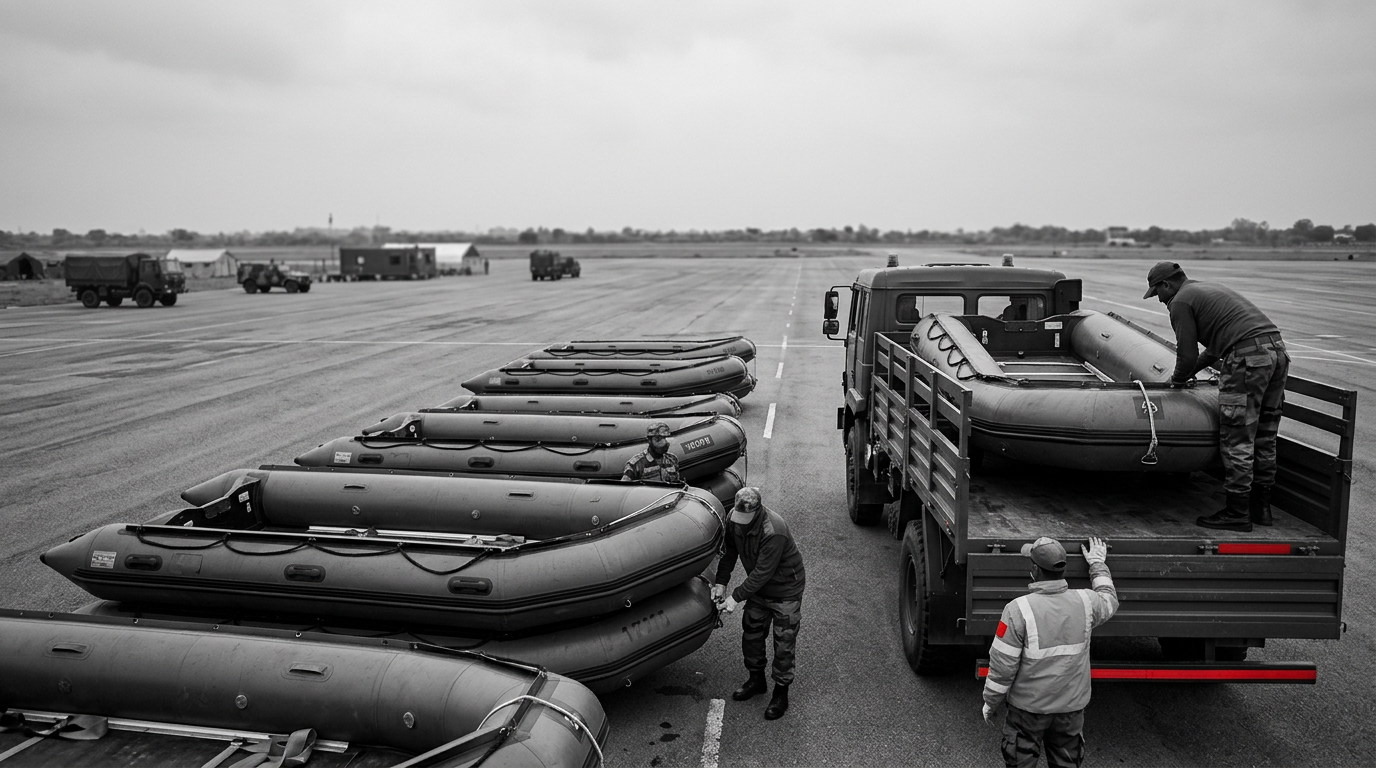
India's National Disaster Response Force (NDRF) has positioned 20 teams across the states of Uttar Pradesh and Bihar, comprising 11 units in the former and nine in the latter. This strategic deployment aims to prepare for potential flooding and waterlogging scenarios that could arise from the severe flash floods recently experienced in neighboring Nepal. The action comes as Nepal faces extensive destruction, with hundreds of individuals, including Indian tourists, reported missing following the recent deluge, according to NDRF Inspector General Narendra Bundela.
The annual monsoon season, typically active from June through September, brings intense rainfall to Nepal's mountainous regions. This precipitation frequently causes rapid increases in river levels, with major waterways such as the Kosi, Gandak, and Ghaghara flowing southwards into India. These rivers commonly inundate low-lying areas in states like Uttar Pradesh and Bihar, leading to significant challenges. Historical records consistently show that monsoon-driven flooding displaces thousands and causes widespread damage to infrastructure and agricultural livelihoods in both nations, underscoring the critical need for coordinated responses.
Monsoon Challenges and Transboundary Impacts
The region's vulnerability to monsoon flooding is well-documented. During the 2017 monsoon season, for instance, extensive flooding across Nepal and India impacted over 40 million people, according to data from the United Nations. Uttar Pradesh and Bihar are particularly susceptible to recurrent challenges due to their geographical position downstream of Nepal’s primary river systems. This makes them prone to sudden water surges and prolonged periods of waterlogging, which can severely disrupt local economic activities and public health services.
The NDRF, established in 2006 as India's specialized humanitarian response agency, plays a vital role in disaster mitigation and relief operations. The force, composed of 16 battalions, is equipped for search, rescue, and evacuation across various disaster types, including floods. Its placement near the Nepal border, with units like the one in Kushinagar district, Uttar Pradesh, highlights India's preparedness for potential cross-border repercussions, even as officials state there are no immediate adverse effects on the Indian side.
Regional Cooperation and Economic Ripple Effects
Cooperation between India and Nepal regarding water management has historically been complex, featuring both collaborative initiatives and ongoing discussions over shared resources. Mechanisms such as the Joint Committee on Water Resources exist to foster dialogue on flood forecasting, water sharing, and infrastructure development. However, substantial hurdles remain, particularly concerning the effective implementation of long-term flood control projects and early warning systems across the shared border.
The severe floods in Nepal inevitably create ripple effects for India beyond immediate rescue efforts. Disruptions to vital trade routes, including critical road networks, can impede cross-border commerce, impacting agricultural markets and the movement of essential goods between the two countries. Such events also strain regional supply chains, especially for goods manufactured in or transported through affected areas, potentially leading to localized price increases. Mass migration from flood-affected regions in Nepal to bordering Indian states can also exert pressure on public services and infrastructure in recipient areas.
Broader Climate and Water Resource Implications
Furthermore, significant damage to Nepal's hydropower projects, a crucial energy source for both nations, could affect energy security and future investment prospects. These interconnected vulnerabilities highlight the economic and social interdependence between the Himalayan nation and its southern neighbor. From a macro perspective, the recurring flood events in the Nepal-India transboundary river basins underscore the broader challenges of climate change and sustainable water resource management across South Asia. The region is experiencing more frequent and intense rainfall, exacerbating existing vulnerabilities. A 2021 World Bank report indicated that shifts in monsoon patterns pose considerable risks to agricultural productivity and water availability across the Indo-Gangetic plain. Effective flood mitigation and preparedness require a harmonized approach to river basin management that transcends national borders, necessitating sustained political will and financial commitment.