In AI We Trust
Behind the dream of an all-knowing machine is the hope that our hardest choices have already been settled.
Selin Akköse ·
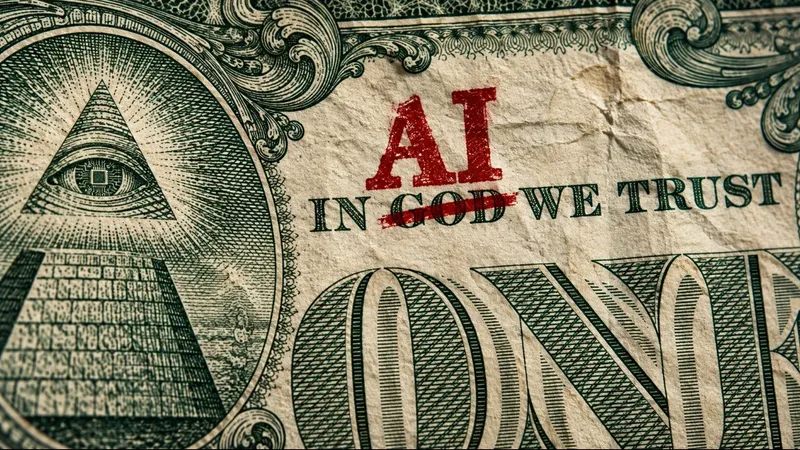
There is a peculiar comfort in imagining that someone knows everything. Whatever remains unresolved for us is already resolved somewhere else. Our uncertainty becomes a limitation of our position, rather than a sign that the world itself may contain questions with no final verdict.
In classical monotheism, God embodies this complete knowledge. The world may be opaque to us; but it is fully known to her. Omniscience can also be joined to an authority over how life should be lived. Knowing everything and thus being entitled to judge become imaginable as properties of the same subject.
AI can inherit this position without anyone declaring it divine. An intelligence that appears able to grasp what eludes us becomes a plausible place to seek direction, even if the user does not notice that instantly. Each improvement encourages the hope that the distance between our confusion and its understanding is about to close. The fantasy acquires a technological future.
An error need not destroy that future. A mistake can be assigned to the limitations of the present model, leaving the promise of a later one intact. Complete knowledge is possible, it has simply not arrived yet. The possibility that some questions will remain open can disappear from consideration.
Jacques Lacan’s “subject supposed to know” offers a way to read this attachment. The supposition of knowledge can organise a relationship even when someone does not possess the knowledge attributed to them. Applied to AI, the concept directs our attention to what we expect before we establish what the system knows.
The conversational interface makes that expectation easier to sustain. A list of search results can leave disagreement visible as different voices. A chatbot can bring them into a single account. The same apparent speaker moves from history to our future, suggesting someone who already understands how everything fits together. We can know there is no person behind the answer and still address it as though someone knows what our situation means.
The decisive moment comes when a request for knowledge becomes a request for a verdict. Asking what will happen if we make a choice can slide into asking which choice we should make. The conversation continues, concealing a change in what would count as an adequate answer.
Consider a system asked to identify the best candidate for a job. It might predict performance under the organisation’s current conditions with extraordinary accuracy. But those conditions already reward some ways of living over others. Uninterrupted employment and constant availability can be easier for someone whose care responsibilities are carried by somebody else.
Even a perfect prediction would leave a further question: are these the conditions a workplace should reproduce? Prediction cannot supply its own justification for treating the existing organisation of work as desirable. The meaning of “best” depends on a judgment about the world in which that performance occurs.
The fantasy of omniscience encourages us to treat a question about what we want as one to which someone sufficiently knowledgeable must already have the answer. Human disagreement starts to look like incomplete information. A different social arrangement becomes something a more advanced intelligence is expected to adjudicate for us.
The attraction reaches beyond certainty. It offers a kind of innocence. If the right decision can be discovered, following it feels like recognising a truth rather than taking a position for which we must answer. We can become the implementers of a recommendation while leaving its purposes insufficiently examined.
Donna Haraway’s feminist critique of the “god trick” helps explain what disappears here. In her 1988 essay “Situated Knowledges” , she challenged the claim to see everything from nowhere. Knowledge had to remain accountable for the conditions from which it was produced. Claims to completeness could conceal those conditions.
In the hiring example, accuracy does not settle whether paid output should outweigh care, or whether a workplace should adapt to the people it disadvantages. When the framework disappears from view, a particular arrangement of social life can return to us as the judgment of intelligence itself.
Donald Trump’s enthusiasm for “super intelligence” gives this temptation a political expression. At the United Nations on 22 September 2026, he complained that “artificial” makes intelligence sound fake. His executive order of 29 September directed the US executive branch to use Super Intelligence and SI instead of AI in official communications, where permitted by law, initially covering the same technologies as the existing legal definition.
Artificial names the system’s human manufacture. Super places it above a human standard. Read through the fantasy of an all-knowing subject, the promotion invites us to imagine authority emerging from superiority while the people defining the system’s purposes become less conspicuous.
Real achievement gives this fantasy credibility. Reliability in one task provides grounds for trust within that domain. In a general conversational interface, this trust can travel into judgments about how people ought to live. The system’s usefulness can prepare the ground for expectations that usefulness alone cannot justify.
A powerful intelligence could also make assumptions visible and show how different purposes produce different recommendations. We would have more to think with, including reasons to challenge our own questions. Knowledge could grow without turning its source into a final authority.
The world we inhabit is partly made through decisions about what deserves protection and what can be demanded of other people. Those decisions create consequences that become facts. The dream of an all-knowing AI promises relief from this unfinished world: somewhere, an answer exists that would release us from having to decide.
The fantasy is that a world we still have to make is already waiting to be known.