

Hungary opens 58,000-name informer database Nov. 4
The Tisza government’s archive move turns Cold War files into a live political issue before the 70th anniversary of the 1956 uprising.
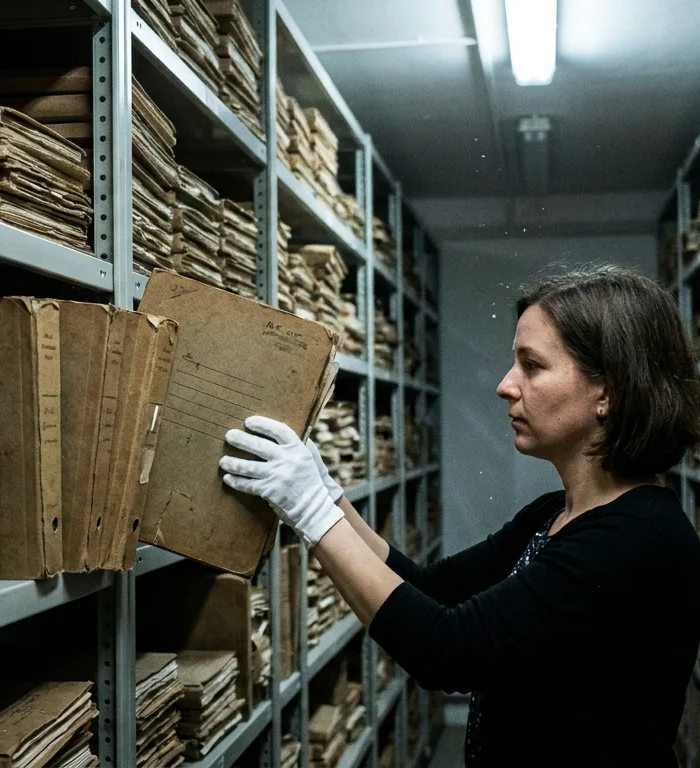
Hungary’s Historical Archives of the Hungarian State Security will put a 58,000-name communist-era informer database online on Nov. 4, Balkan Insight said in an article published Tuesday.
The Tisza party government’s release will widen access beyond in-person rights available since 1997 and comes before about 9,000 surviving detailed informant files scheduled for February 2027, Balkan Insight said.
The archive opening was first scheduled for Oct. 22, the eve of the 70th anniversary of the 1956 anti-Soviet uprising, but was delayed to allow more time to redact sensitive data covering health and sexual orientation, Balkan Insight said. Nov. 4 marks the beginning of the Soviet invasion and the re-establishment of authoritarian rule in Hungary.
The first publication will focus on ABTL’s existing holdings, especially the H-Database, which Balkan Insight said was derived from magnetic tapes created in 1989 and contains 58,000 names. Basic paper records known as “6-Cards” and “B Logs” will also be released in November.
“Most of the big, national names who were agents are already out in the public domain,”
Abel Bede, a University College London PhD student researching late Cold War dissident movements, told BIRN. The online access means people may be able to check whether “your priest, your teacher, your classmate, or your local shopkeeper was an agent,” he said.
Hungary’s parliament passed a law in July requiring security services to review still-classified material for possible release. The law also created an independent expert commission to examine classification decisions and, where it disagrees, make recommendations to ministers; the commission is due to start work on Nov. 4, Balkan Insight said.
The Interior Ministry told HVG magazine it had marked 85% of its previously classified holdings for release to ABTL, though Balkan Insight said in the article that the physical transfer of files is moving more slowly. Material newly declassified by the security services will be handled after the publication of ABTL’s current records.
Archivists and historians caution that the record is fragmentary because large volumes were destroyed before, during and after Hungary’s 1989-90 democratic transition. “The current magnetic tapes record data on only one-third of the former agent body,” ABTL Director General Gergo Bendeguz Cseh told Valasz Online, according to Balkan Insight.
The source material also warns against treating a database entry as proof of active informing. A person recorded as a “network contact” may have agreed in name but never produced reports, while broader confirmation may require cross-checking with B-files, or detailed informant personnel dossiers, or surveillance reports; the latter remain closed to the general public to protect people who were monitored.
The archive opening comes as political arguments over the 1956 uprising return to Hungarian politics. Balkan Insight said Fidesz has described the new National Asset Recovery and Protection Office, which is examining corruption during Viktor Orban’s 16 years in power, as “AVH,” the name of the 1956-era secret police, and that Orban has described recent arrests of former ministers Balazs Hanko and Miklos Sesztak as “neo-communist tactics.”
Andrea Peto, a history professor at Central European University in Vienna, told BIRN that Fidesz is using a national-sovereignty framing around 1956. She said the framing allows Fidesz “to avoid the uncomfortable contradiction between its historical anti-Soviet rhetoric and its current Russia-friendly foreign policy” and shifts the focus to “protecting the nation from external actors, whether Brussels, migrants or geopolitical pressures.”
Bede told BIRN that Fidesz may struggle to mobilise around the anniversary as it did in 2006. He said a planned “peace march” was cancelled soon after it was announced, “likely because they knew they would not have the numbers.”
ABTL is scheduled to publish the H-Database and related basic records online on Nov. 4, when the independent classification-review commission is due to start work. About 9,000 surviving B-files are scheduled to follow in February 2027.
Source: trade-press article, Balkan Insight, Oct. 13
More stories
- Two ships hit by drones off Bulgaria, one sinks
- IMF puts Turkey 2026 inflation at 31.2%
- Traffic fears keep 1 in 6 Irish parents wary of play
- Marwynn lines up 18-month AI computing trial with OmniX
- Publicis Reports 5% Q3 Revenue Growth, Confirms Guidance
- Robert Hall and Michael Woodford Win 2026 Nobel Prize in Economics
- Goldman succession points to Waldron in 2028 handoff plan
- Housing stocks fall as 30-year yields reach 5.6%
Latest news
- God of War uses Avatar tech in 2 games as film ties deepen
- SAFE-QE cuts unsupported search terms to 4.3 in tests
- Menopause symptoms expose sports-medicine evidence gap
- Trump says Iran talks falter after strikes kill leaders
- TabMF may improve AI dataset retrieval across six tasks
- Turkish fruit exports put Russia trade back in Washington sanctions frame