

God of War uses Avatar tech in 2 games as film ties deepen
Panelists said virtual cameras, LED volumes and audience testing are reshaping production, while warning that interactivity and AI rights remain unresolved.
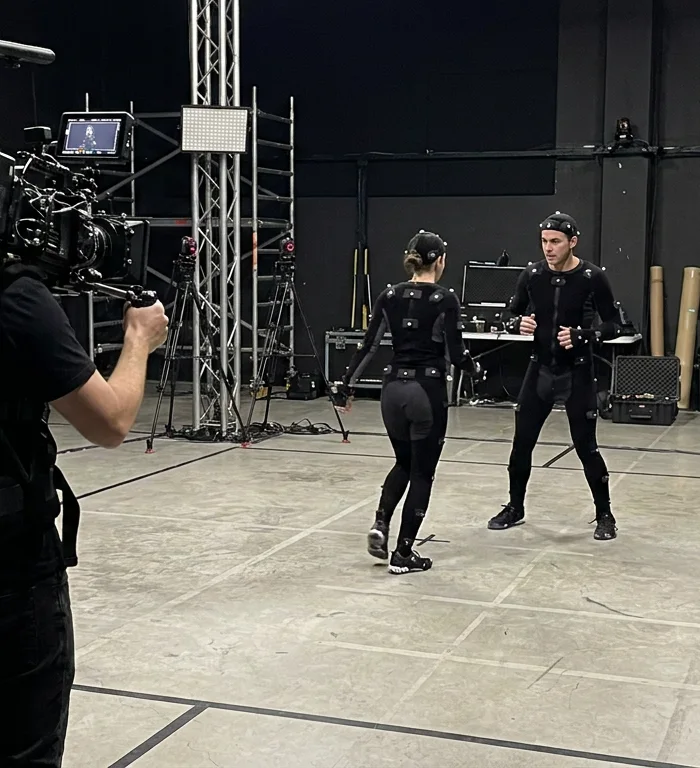
Sony Santa Monica Studio used “Avatar”-linked virtual-camera technology in 2 recent mainline “God of War” games, an Oct. 13 Variety article said after an Oct. 12 View Conference panel.
The discussion matters because big-budget games and screen projects now share cameras, rendering tools and talent, a shift from the 1990s cycle of movie-licensed games cited at the panel.
Bruno Velazquez, game director on “God of War,” said Sony Santa Monica wanted the newer mainline entries to play as continuous shots, using film language to make the virtual camera feel more physical. “We take inspiration from films,” he said.
Velazquez said the studio brought one of James Cameron’s “Avatar” cameras onto its motion-capture stage, where actors’ performances are recorded for animation, and used it while shooting scenes with performers.
Jan-Bart van Beek, studio director at Guerrilla Games, said production pipelines are increasingly overlapping. “Arguably, it’s almost the same job these days,” he said, pointing to shared rendering, motion capture and LED volumes, large screen stages used for virtual production.
That comparison cuts across several production layers. The panel placed a game studio’s virtual-camera work beside film tools such as LED volumes and virtual-reality scouting, while contrasting today’s game-to-screen flow with the 1990s period when movie-based games were more common.
Tara DeMarco, a Paramount VFX supervisor, said the film adaptation of “Tomorrow, and Tomorrow, and Tomorrow” is consulting gaming historians to recreate video games from the 1990s and early 2000s. The team is preparing guidance on pixel art, resolution and gameplay, she said. The film is directed by Siân Heder, stars Daisy Edgar-Jones and adapts Gabrielle Zevin’s novel about game developers.
The panel also framed adaptation as a two-way flow that has changed over time. Van Beek cited “The Last of Us” and “Fallout” as examples of video game properties moving into television, while saying, “The other way around, it almost doesn’t really happen anymore.” He added that adaptations can struggle because games rely on agency, the player’s ability to choose actions and influence the experience.
Velazquez said “God of War” production uses scheduled play-tests, facial recordings, eye tracking and surveys to test whether players understand the story and difficulty. Eye tracking records where players look on screen. “We actually have eye tracking software where we actually see where their eyes are going,” he said, adding that the system helps developers check whether attention lands where they intend at certain moments.
Hal Hickel, animation director at Industrial Light & Magic, said “The Mandalorian and Grogu” weighs when to keep Grogu as a physical puppet and when to use digital work. “Sometimes the puppetiness is exactly the effect you want on the audience’s brain,” he said, adding that digital fixes are still needed for some movements.
Hickel said the production also used virtual reality to scout digital sets and test viewing positions inside an IMAX auditorium. He said Apple Vision Pro helped the team judge set scale before construction and decide which parts would be built practically.
The AI discussion was less settled. Velazquez compared current worries to earlier fears about computer animation and motion capture, saying creative teams still matter: “But if you don’t have the soul behind it, it’s not going to matter.” Van Beek warned that AI could be used well or badly, including through appropriation of artists’ work.
Panelists also tied career prospects to collaboration rather than tools alone. Velazquez said he would prefer a teammate who works well with others over a stronger technician with a poor attitude, while DeMarco emphasized communication, feedback and adaptability across disciplines.
Source: trade-press article, Variety, Oct. 13, 2026
More stories
- Nvidia China share falls to 34% as Huawei gains
- SAFE-QE cuts unsupported search terms to 4.3 in tests
- TabMF may improve AI dataset retrieval across six tasks
- Xbox tests streak badge tied to 3 weekly plays
- Robot method lifts benchmark success to 74.8%
- IDW starts Sonic road to issue 100
- Disney layoffs signal a margin shift as AI boosts HR and tech efficiency
- UP corporate buyers push rooftop solar toward capex-to-opex shift in energy procurement
Latest news
- Federal Investigation Targets Congressional Representative Ahead of Midterms
- Etihad, Qatar halt Saudi flights after airport attack
- Presidential Approval Ratings Decline Across Key Battleground States
- Logistics Expansion Targets India’s Emerging Semiconductor Supply Chain
- Bumble in Advanced Acquisition Negotiations Valued at $1 Billion
- Omron to Acquire Industrial PC Maker OnLogic for $675 Million
- China Accelerates AI Infrastructure Expansion to Offset Computing Disadvantages
- Energy Markets Surge as Ceasefire Hopes Collapse