Goldman succession points to Waldron in 2028 handoff plan
Goldman succession planning centers on a reported 2028 Solomon-to-Waldron handoff, with the bank entering the process after a consumer retreat and stock gains.
Jurgen Goldmeier ·
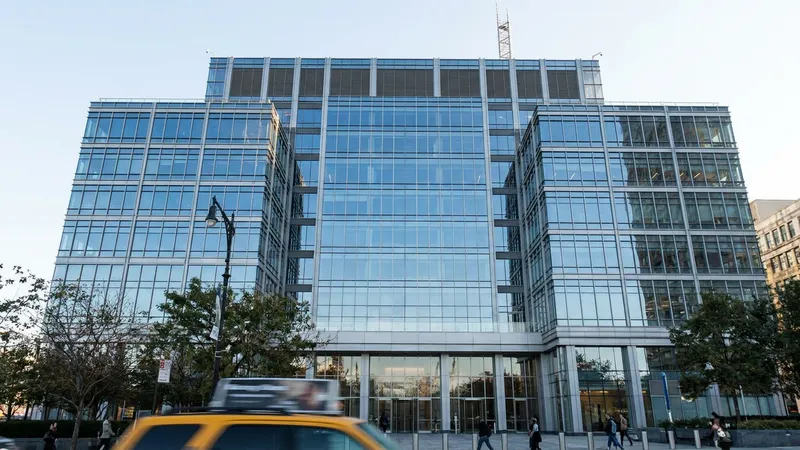
Goldman succession planning has put 2028 around David Solomon’s possible handoff to John Waldron, setting up a rare orderly transition.
The timing, described in a recent report as loose rather than fixed, would give Solomon several more years to define his record at Goldman Sachs. The account did not describe a board vote or a formal company announcement, making the timetable a reported planning window rather than a completed decision.
Waldron’s long Goldman runway
Waldron’s case rests on a professional link with Solomon that dates to the 1990s, beginning at Bear Stearns and continuing through Goldman’s banking business. During Solomon’s tenure as CEO, Waldron has been portrayed as the clear internal successor without the public rivalry that has marked earlier Goldman transitions.
The same account said Apollo tried in 2024 to recruit Waldron with an offer valued at about $500 million and a broad mandate. The report presented his decision to stay as evidence that Goldman had given him reason to expect a credible path to the top job.
Solomon’s consumer banking overhang
The potential handoff carries an echo of Lloyd Blankfein’s exit planning, which began in 2017 after roughly a decade as Goldman CEO. Blankfein’s often-cited view was that leaders struggle to leave in bad periods and hesitate to leave in good ones, a frame now being applied to Solomon’s later years.
Solomon’s early tenure was shaped by a consumer banking push that started before he became CEO but expanded under his leadership. The strategy later became a drag on internal confidence and regulatory relations, according to the account, before Goldman pulled back from much of that ambition.
The bank is now described as more centralized and more disciplined than it was before the financial crisis. Goldman’s share price has roughly quadrupled since Solomon took the CEO role, an anchor that strengthens his position even as the consumer episode remains part of his record.
Goldman’s succession scars
Goldman has often made succession look harder than its reputation for internal discipline would suggest. John Thain and John Thornton did not succeed Hank Paulson, while Gary Cohn’s long wait under Blankfein ended without the CEO title.
Waldron’s position differs because he has held the heir-apparent role throughout Solomon’s run, according to the report. If the 2028 window holds, he would inherit a firm that has already absorbed Solomon’s restructuring rather than one still fighting over its strategic direction.
AI, China and dealmaking
Waldron has associated himself with artificial intelligence and China, two themes likely to shape Goldman’s clients and revenue mix. He is also described as a dealmaker, which would place mergers, advisory work and capital allocation closer to the center of any future agenda.
If markets remain open and China tensions are contained, a Waldron tenure could emphasize advisory and financing tied to technology spending. That path would support Goldman’s fee pools, channel more cross-border capital and push Wall Street rivals to deepen AI and Asia coverage.
If regulation tightens or China access narrows, the same agenda would become more defensive. Goldman would rely more on domestic banking and markets revenue, global capital flows would become more regional, and the industry would face higher compliance costs.
The main question before 2028 is whether Solomon uses the remaining window for a large transaction or a quieter handoff. In the first case, Waldron inherits a changed platform; in the second, he inherits a cleaner bank whose next test is growth rather than repair.