

Indian Government Restricts Entry for Foreign Delegates Attending Opposition-Led Summit
The Indian government blocked over 100 international delegates from an opposition summit, continuing a pattern of using visa restrictions to limit.
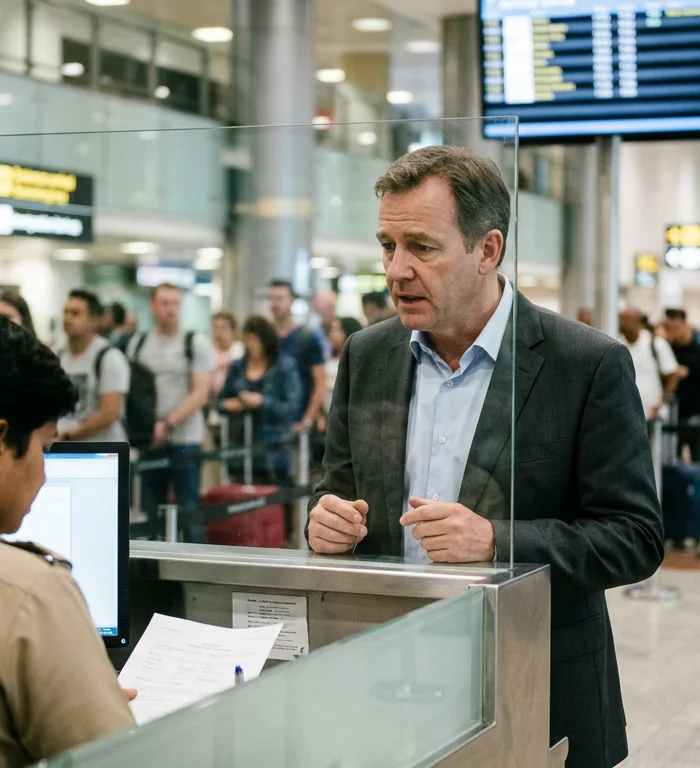
The Indian government denied entry to approximately 115 of 315 pre-cleared international delegates scheduled to attend the Bharat Summit in Hyderabad on November 13-14. The event, organized by the Congress party-led government of Telangana, hosted discussions on global inequality, authoritarianism, and media freedom. While the Ministry of External Affairs maintained that visa issuance remains a sovereign function, reports indicate that the Ministry of Home Affairs intervened to cancel or block the travel documents of specific participants.
Institutional scrutiny of foreign nationals has intensified, with government officials citing concerns over "foreign interference" and "anti-India activities." In one instance, a European political representative was denied entry after local consular officials identified the individual's public support for opposition political figures as a point of contention. Other denied delegates included journalists and academics who had previously engaged in public criticism of the current administration's policies or human rights record.
This administrative approach extends to the revocation of This administrative approach extends to the revocation of Overseas Citizenship of India (OCI) status for critics residing abroad. The government has increasingly utilized visa denials, deportations, and the withdrawal of residency privileges to manage the presence of international observers and researchers. These actions follow a broader trend of increased regulatory pressure on foreign correspondents and academics, contributing to a decline in international press freedom rankings for the country.
For institutional stakeholders, these developments signal a hardening of border governance and a narrowing of space for international policy discourse. The use of visa policy as a tool for political management suggests that foreign entities and individuals engaging with opposition-led state governments or critical research may face heightened risks of entry denial or long-term travel restrictions. Observers should monitor whether these measures continue to target specific ideological groups or expand to broader categories of international engagement.
More stories
- Germans oppose Ukraine aid as poll shows support slipping
- Kim Jong-un receives 10 envoys after constitutional shift
- Ukraine claims Libya strike sinks Russian naval corvette
- COP31 climate talks collapse over fossil fuels and funds
- Russian military faces 1,087 recorded suicides in Ukraine war
- US faces China, Russia in Africa minerals contest
- Russian strikes leave many Kyiv homes with 4 hours of power
- Cebu groups seek probe into protest dispersal with more than 20 hurt
- England hospital consultants pause 48-hour strike
- Gibran resignation starts Indonesia's 60-day VP replacement clock
Latest news
- Trump prepares tariffs on China and other major exporters
- New-car buyers pay record average $50,087 in October
- Banks face ECB reserve debate over liquidity and profits
- Investors see Anthropic debut gains fade below $83 a share
- Iraq orders federal control over Kurdish-area oilfields
- Nvidia shares retreat as AI rally cools before PCE data
- Macy’s parade faces balloon limits as storm winds approach