

HDB cuts planned homes by 1,200 in Maju, Gillman revisions
Singapore’s public housing agency will retain more greenery at two proposed housing sites, while nature groups say safeguards remain essential.
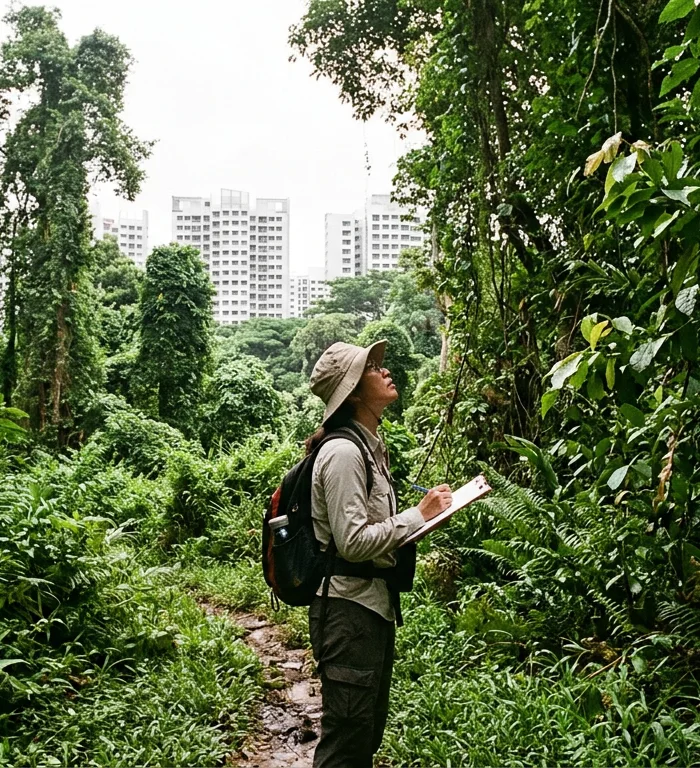
Singapore's Housing and Development Board revised Maju Forest and Gillman Barracks housing plans, reducing proposed homes by 1,200, a Channel NewsAsia news report said on Oct. 28.
The revised plans would allow about 11,000 units at the two sites, the Oct. 28 report said. Retained greenery at Maju Forest rises to about 10 hectares from around 8 hectares, while Gillman Barracks increases to about 12 hectares from around 8 hectares.
The changes follow public feedback and give Singapore’s planners a larger conservation buffer in two land-scarce areas marked for housing. Nature groups cited in the report welcomed the added space, while saying the projects should follow environmental management and monitoring plans.
At Maju Forest, retained greenery will cover about 45% of the 23-hectare site, compared with about 35% under the earlier plan, the report said. At Gillman Barracks, the green area will be about 60% of the 20 hectares of existing greenery, up from about 40%.
Lester Tan of Nature Society Singapore said the enlarged retained areas represented a “compromise” because development pressure would stay within the same sites rather than move to another forest patch. “Nature park means there will be trails. Residents can also go in and join the nature spaces.
So basically, creating more green spaces for the residents around as well, on top of enhancing the connectivity that's already existing,” he said.
The report said the retained areas will be safeguarded as new nature parks, with scope for community involvement in habitat enhancement. Nature Society Singapore president Leong Kwok Peng had previously proposed keeping two-thirds of Maju Forest for conservation and using the remaining third for housing, according to the report.
Shawn Lum, a lecturer at Nanyang Technological University’s Asian School of the Environment and a Nature Society Singapore member, said he was “pleasantly surprised” and “greatly heartened” by the changes. “There is still a considerable clearance, but by retaining roughly half, in theory, most of the diversity that was present in the original space can still be maintained in the slightly reduced ... space,” he said.
The environmental trade-off remains unresolved. Lum said a smaller forested area could intensify competition among animals for food and shelter, and said works should limit noise and light at times when animals are active in the evening and early morning.
Ho Xiang Tian, co-founder of LepakInSG, said the added space was “good enough as a connectivity corridor”, but not as a habitat. “Essentially because there's less space for (animals) to live, so it’s like survival of the fittest. Whoever can fight and survive in the remaining 10ha is what will live.
Then the rest will die or be forced out into the adjacent blocks,” he said.
More stories
- Germans oppose Ukraine aid as poll shows support slipping
- Kim Jong-un receives 10 envoys after constitutional shift
- Ukraine claims Libya strike sinks Russian naval corvette
- COP31 climate talks collapse over fossil fuels and funds
- Russian military faces 1,087 recorded suicides in Ukraine war
- US faces China, Russia in Africa minerals contest
- Spain reports at least 30 dead in high-speed train crash
- Villa Vie disembarks 203 passengers in Cambodia over fuel costs
- ECB faces 6.1% Lithuania inflation with 2.50% rate
- Philippine Supreme Court bars Congress budget increases
Latest news
- Trump prepares tariffs on China and other major exporters
- New-car buyers pay record average $50,087 in October
- Banks face ECB reserve debate over liquidity and profits
- Investors see Anthropic debut gains fade below $83 a share
- Iraq orders federal control over Kurdish-area oilfields
- Nvidia shares retreat as AI rally cools before PCE data
- Macy’s parade faces balloon limits as storm winds approach