

Google Secures 2029 Launch for Orbital Data Center Project
Google has contracted Blue Origin for a 2029 satellite launch, but the company faces long-term risks regarding launch costs and orbital access dependency.
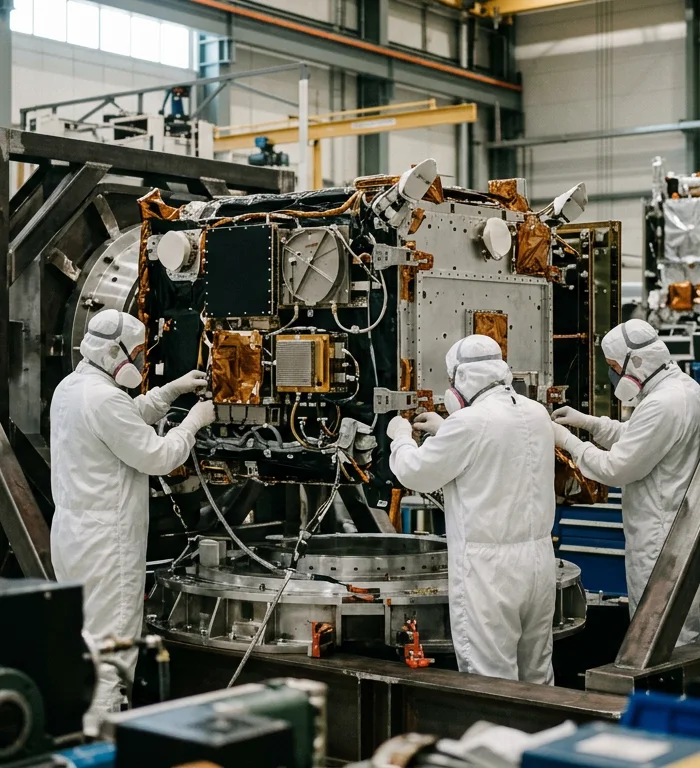
Google has finalized an agreement with Blue Origin to launch satellites for its Project Suncatcher initiative in 2029. The mission will utilize the New Glenn 7x2 rocket to deploy orbital hardware designed to test AI-integrated computing and solar energy harvesting. This deployment serves as a technology demonstration for the company’s long-term goal of scaling AI infrastructure in space.
The project faces significant economic hurdles regarding the cost of orbital access. To remain competitive with terrestrial data centers, Google requires launch costs to reach approximately $200 per kilogram by the mid-2030s. Current market projections suggest that only high-capacity, fully reusable vehicles can achieve these price points.
Strategic risk remains high due to the limited availability of heavy-lift launch capacity through 2030. SpaceX, the primary provider of the necessary heavy-lift capability, is expected to prioritize its own internal orbital computing infrastructure, potentially restricting access for external firms. This dependency creates a conflict of interest, as Google may be forced to rely on competitors for the launch services essential to its infrastructure roadmap.
Alternative launch providers currently lack the super-heavy-lift capabilities
Blue Origin, while a current partner, is also developing its own orbital data center constellation, Project Sunrise. This creates a scenario where Google may inadvertently subsidize a direct competitor while paying premium launch rates. Alternative launch providers currently lack the super-heavy-lift capabilities required to meet Google’s cost targets, and the capital expenditure required to develop such vehicles exceeds $15 billion based on industry benchmarks.
Google’s long-term options for maintaining control over its orbital infrastructure remain constrained. The company must decide whether to continue relying on third-party launch providers with competing interests, acquire smaller launch firms, or invest in internal rocket development. Given the 25-year head start held by established launch providers, any move toward vertical integration would require significant capital and time.
More stories
- Europe faces attribution gap after 16 cyber, physical incidents
- PIF backs Grand Theft Auto as Saudi players embrace game
- Signal limits screenshots to curb AI access to messages
- Cognition runs Devin Mac workspaces on EC2 in 6 AWS regions
- Salesforce engineers cut 600-failure triage to 90 minutes
- Türkiye Desk: GTA 6 puts console access and network demand in focus
- Robot IPOs in China face checks after Unitree stock slide
- Anthropic wet lab moves AI startup into biology testing
Latest news
- Trump prepares tariffs on China and other major exporters
- New-car buyers pay record average $50,087 in October
- Banks face ECB reserve debate over liquidity and profits
- Investors see Anthropic debut gains fade below $83 a share
- Iraq orders federal control over Kurdish-area oilfields
- Germans oppose Ukraine aid as poll shows support slipping
- Kim Jong-un receives 10 envoys after constitutional shift
- Ukraine claims Libya strike sinks Russian naval corvette