Anthropic wet lab moves AI startup into biology testing
Anthropic has confirmed wet-lab biology work in the Bay Area, moving its life-sciences effort beyond computer testing while limiting detail on drug discovery.
Jason Kwon ·
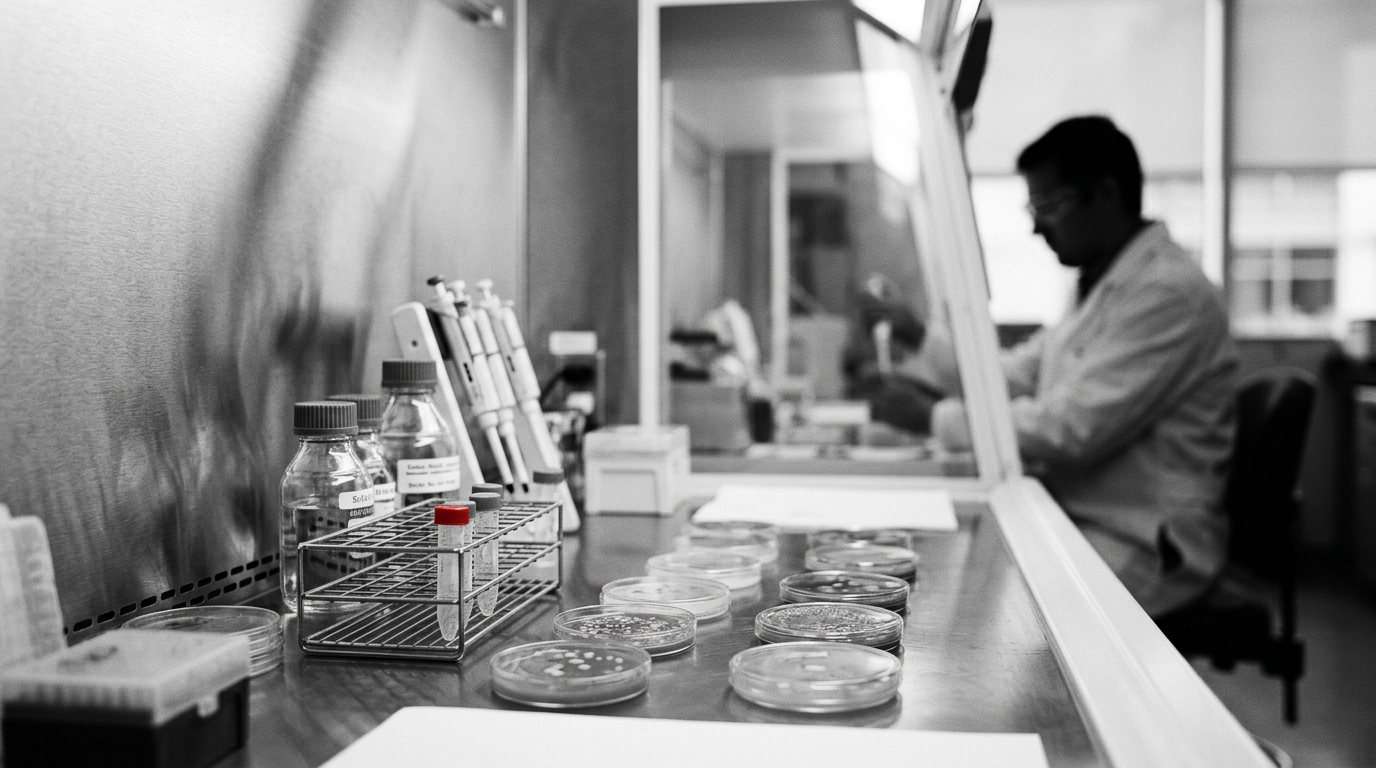
Anthropic wet lab work has moved the AI startup into one Bay Area facility, extending its biology ambitions beyond software.
The company has set up a site for physical biology experiments in the San Francisco Bay Area, according to two people familiar with the matter. The effort marks a step beyond computer-based testing for a business best known for building artificial intelligence models.
A lab beyond software
Eric Kauderer-Abrams, Anthropic's head of life sciences, confirmed in an interview Tuesday that the company is doing wet-lab work. He said the company is combining work inside its own facilities with projects handled by outside partners.
"We believe that to do biology, the final test is still and will be for a while in real lab work," Kauderer-Abrams said. The statement places Anthropic's biology program closer to the operating model of biotechnology companies, where digital design is tested against laboratory evidence.
A company spokesperson later said the lab is not specifically dedicated to finding medicines and declined to give more detail. That caveat leaves the scope of Anthropic's research unclear, including whether the facility is meant mainly for model validation, biological safety work or longer-term therapeutic research.
Rare-disease ambitions meet limits
Anthropic has said it wants to help unlock treatments for rare diseases, an area where small patient populations can make conventional drug development harder to scale. The company has not provided a verified figure for investment in the lab, staffing levels or the number of experiments under way.
The shift matters because artificial intelligence systems used in biology still need experimental checks before their outputs can carry weight in scientific or commercial decisions. A wet lab gives researchers a way to compare model-generated ideas with observed biological results, shortening the feedback loop if the experiments are well designed.
The move also comes as public scrutiny of AI has widened from chatbots and copyright disputes into safety, health care and scientific use. Anthropic's entry into physical biology work will therefore be judged not only on technical progress but also on how clearly it explains controls around biological materials, research aims and external partnerships.
Biotech model creates scrutiny
For Anthropic, the near-term effect is likely operational rather than financial, since the company has not said the facility is tied to a specific drug program. The direct benefit would be better data for life-sciences models if lab results can be fed back into model training or evaluation.
For the wider biotech and pharmaceutical sector, the mechanism is more competitive. If AI companies can pair large models with repeatable wet-lab validation, they may become more useful partners to drugmakers that already rely on contract research groups, academic labs and computational screening tools.
If Anthropic keeps the facility focused on validation, the global macro effect would be indirect: productivity gains would depend on whether better experiments reduce wasted research time across life sciences. Anthropic would gain credibility with researchers, while the industry would see another AI vendor trying to move from software claims to measured laboratory results.
If the work expands toward therapeutic discovery, the stakes would rise for the company and for regulators. Anthropic would face longer timelines, clinical and safety hurdles, and more disclosure pressure; the biotech sector would have to assess whether AI-native labs are partners, suppliers or future competitors.
The main open question is the lab's actual mandate. Until Anthropic gives more detail on the facility's size, safeguards and research targets, the clearest fact is narrower but important: its biology strategy now includes physical experiments, not only simulations.