AI power costs plan tests data center growth in US grid
Trump expanded a nonbinding AI power costs pledge meant to make data center developers fund grid upgrades instead of shifting costs to households.
Jason Kwon ·
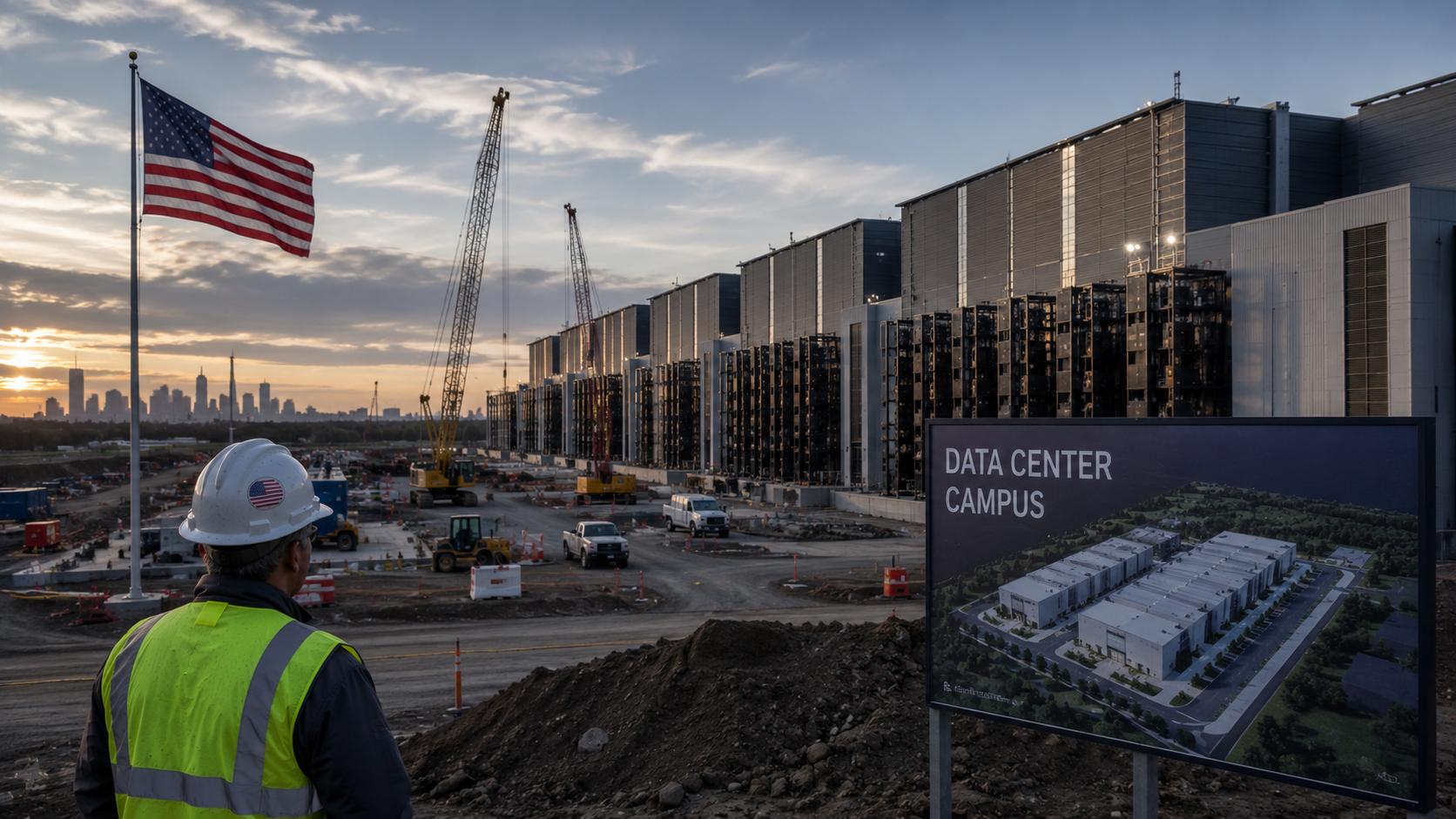
AI power costs moved into Trump's election-year energy agenda as utilities and data center developers backed a pledge to fund grid upgrades.
Utilities join Trump's pledge
President Donald Trump used a Thursday event to announce new support for his Ratepayer Protection Pledge, a voluntary initiative aimed at shifting AI-related power expenses onto the companies creating the demand. The pledge asks data center builders and users to cover added generation and transmission needs rather than leaving those costs with ordinary electricity customers.
"Data centers and AI are dramatically increasing the demand for electricity. It’s only fair that the cost of building the new infrastructure required to meet this demand should be borne by the corporations themselves, not by the American consumers," Trump said at the event.
The White House said the latest group of signatories expands the pledge to entities tied to 80% of electricity supplied to US homes and businesses. Trump said more than 220 utilities, technology companies, state governments and other partners have now joined the effort.
The new participants follow earlier backing from Amazon.com Inc., Meta Platforms Inc., Alphabet Inc.'s Google and four other technology companies. Their participation gives the pledge political weight, but the arrangement remains nonbinding, which makes enforcement the central unresolved issue.
Data centers strain the grid
The policy push reflects a broader clash between the AI buildout and the power system needed to support it. Large data centers require reliable, round-the-clock electricity, and their growth has added pressure to grids already managing electrification, aging infrastructure and local permitting fights.
The expansion has also become a consumer-cost issue. The source material links AI-related data center growth to rising electricity demand and higher power prices nationwide, a combination that has helped turn grid planning into a pocketbook debate.
Political resistance has followed. Some communities have moved to restrict new data center construction, reflecting concerns over electricity use, land demand and the prospect that residential customers could shoulder part of the bill for corporate infrastructure.
Trump framed the pledge as a way to keep AI investment moving while limiting backlash from households. He also said technology companies would be allowed to build their own power plants, a step that could change how large data center operators secure energy for future projects.
Corporate funding shifts the burden
Under the pledge, companies building or using data centers would pay charges beyond ordinary rates to finance grid improvements and new generation. The mechanism is designed to prevent utilities from spreading AI-driven infrastructure costs across the full customer base.
For utilities, the pledge could offer a clearer path to serving very large customers without drawing the same ratepayer criticism. For technology companies, it raises the direct cost of AI expansion but may provide more certainty around power access, which is becoming a competitive constraint.
The wider data center industry faces a trade-off. If companies can absorb added energy costs, projects may keep moving in regions where grids can be upgraded quickly; if the costs become too steep, developers may slow construction or shift investment toward locations with cheaper power and smoother permitting.
The macro channel is straightforward. If corporate funding limits pass-through to households, electricity bills could become less exposed to the AI boom; if the pledge fails to control cost allocation, power-price pressure could feed broader voter anxiety over living expenses.
For Amazon, Meta and Google, the pledge creates both protection and exposure. Paying for dedicated power infrastructure could reduce political resistance to data centers, but it also turns electricity procurement into a larger capital-planning issue alongside chips, servers and real estate.
The next test is whether voluntary commitments translate into contracts, tariffs and projects that regulators can evaluate. The unanswered questions are who defines which grid upgrades are caused by AI demand, how costs are audited, and whether state utility commissions accept the pledge's cost-allocation model.