

France and Germany Finalize European Central Bank Executive Board Appointments
France and Germany have finalized a deal for key ECB board roles, positioning new leaders to influence future monetary policy and debt interventions.
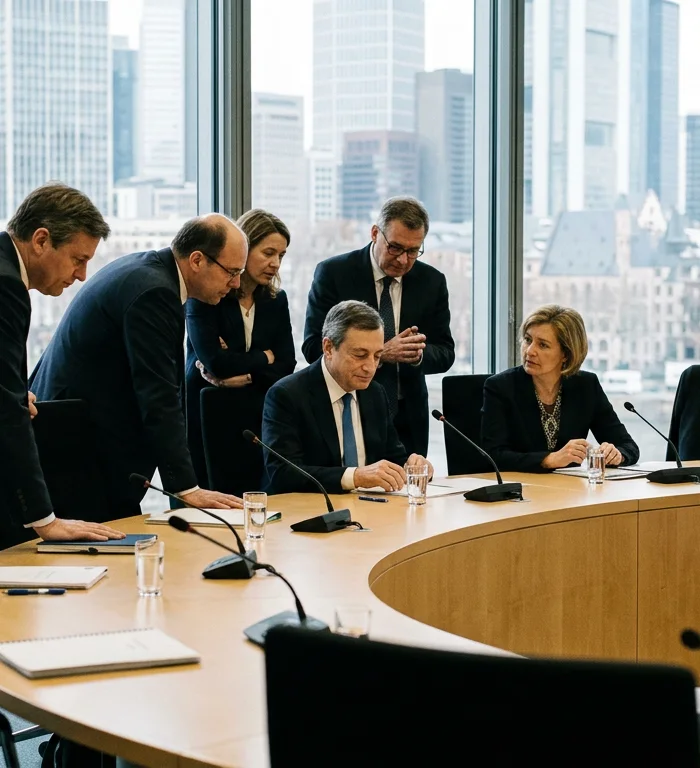
France and Germany have reached a political agreement to fill two upcoming vacancies on the European Central Bank (ECB) Executive Board. Berlin has nominated Markus Brunnermeier, a Princeton University professor, to succeed Philip Lane as chief economist upon the conclusion of his term on May 31. Paris has nominated Laurence Boone, a former government minister and current investment banking executive, to assume the markets operations portfolio following the departure of Isabel Schnabel on January 4.
This arrangement facilitates the transition of former Spanish central bank governor Pablo Hernández de Cos to the ECB presidency, succeeding Christine Lagarde on February 7. The selection process effectively sidelined Dutch candidates, as the appointment of both a Dutch and a German monetary hawk to the institution's most influential roles was deemed politically untenable by southern eurozone member states.
Boone’s appointment to the markets portfolio is particularly significant given the current fiscal instability in France and other eurozone nations. As budget deficits across the bloc face upward pressure, the markets role becomes critical in managing potential ECB interventions in sovereign bond markets. Analysts note that this position grants France substantial influence over the bank's operational response to debt market volatility.
European Central Bank
The incoming board composition signals a shift toward increased technical expertise, moving away from the previous reliance on career politicians for the presidency and vice-presidency. With a Spanish president and a French official overseeing market operations, market observers suggest the institutional bias may shift toward a more dovish monetary policy stance.
This leadership transition occurs during a period of heightened economic and political uncertainty within the eurozone. The new board will be tasked with navigating complex inflationary pressures and the structural challenges posed by widening fiscal deficits among member states. The appointments are viewed as a strategic consolidation of influence that will define the ECB’s policy trajectory for the coming years.
More stories
- Singapore core inflation eases to 1.5% in October
- Greece targets 2.3% growth in 2027 budget
- US stocks face Goldman warning on further forced selling
- Bitcoin falls below $57,742 as investors seek other bets
- Nvidia SEC probe examines chipmaker’s accounting issues
- Rwanda women-owned exports fall 51% from 2021 peak
- Anthropic falls 10% as investors reassess AI stock prices
- Kenya women farmers out-earn men by 18% per hectare
- Asian LNG demand slides as Gulf supply crunch lifts prices
- AirAsia market share plan tests Malaysia airline capacity
Latest news
- Nigeria's family-planning budget falls 97%
- Peter Attia reviews cold therapy claims on longevity
- Social Security raises 2027 benefits 3.6%
- Hull City 2–0 Brighton: When Resilience Beat Reputation
- David Parr House to honor Victorian art-workman with blue plaque
- Iran's attacks hit 25 tankers near Strait of Hormuz
- FCC approves prison cellphone jamming despite 2.5-mile warning
- Russia strikes Ukraine as Odesa faces electricity strain