

Post-Conflict Reconstruction Challenges in Syria Following Regime Change
Syria faces significant reconstruction challenges as millions remain displaced and urban areas struggle with informal, unregulated renovation efforts…
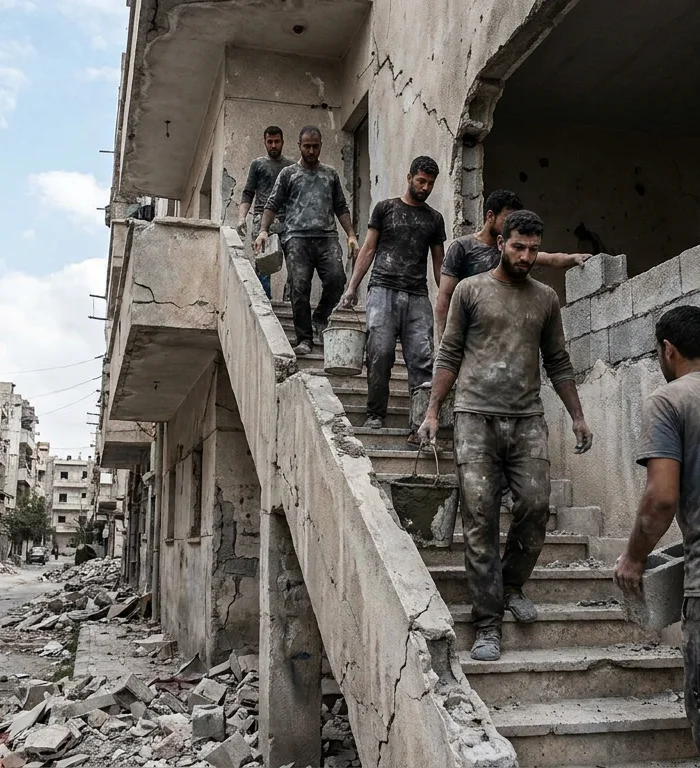
Following the collapse of the Syrian regime in December 2024, the nation faces a complex recovery process characterized by widespread destruction and significant demographic displacement. Over 13 million people were displaced during the conflict, with 6.7 million fleeing the country. Despite the change in government, hostilities persist in various regions, and millions of internally displaced persons remain in temporary housing, particularly in northern Syria.
Urban infrastructure in the outskirts of Damascus sustained severe damage, with satellite assessments identifying over 34,000 damaged buildings. The reconstruction of these areas is complicated by the intersection of urgent humanitarian housing needs and unresolved issues regarding property rights, governance, and accountability. Historical precedents in other post-conflict zones suggest that reconstruction is frequently leveraged for political and economic interests, often at the expense of addressing social trauma and spatial memory.
In neighborhoods such as Jobar and Harasta al-Ajami, the process of residential renovation has become a focal point for governance. Residents currently face a state of legal suspension due to a lack of formal renovation permits, which complicates the restoration of destroyed properties. The informal nature of these repairs highlights a disconnect between the immediate necessity for shelter and the formal regulatory frameworks required for long-term urban recovery.
Policymakers should note that the transition from conflict to stability is hindered by the lack of clear legal mechanisms for property restitution and building permits. The current reliance on informal renovation suggests that without centralized governance and transparent reconstruction policies, the built environment will remain fragmented. Future stability will depend on the state's ability to reconcile the physical rebuilding of urban centers with the complex social realities of a displaced population and the need for institutional legitimacy.
More stories
- Germans oppose Ukraine aid as poll shows support slipping
- Kim Jong-un receives 10 envoys after constitutional shift
- Ukraine claims Libya strike sinks Russian naval corvette
- COP31 climate talks collapse over fossil fuels and funds
- Russian military faces 1,087 recorded suicides in Ukraine war
- US faces China, Russia in Africa minerals contest
- Bundeswehr faces misconduct gap as few as one-sixth reported
- Megaspeed’s 2024 affiliate filings widen Nvidia chip scrutiny
- Burnham faces Brexit test over 55% EU return support
- Swedish agency opened 50 cases tied to Microsoft datacentres
Latest news
- Trump prepares tariffs on China and other major exporters
- New-car buyers pay record average $50,087 in October
- Banks face ECB reserve debate over liquidity and profits
- Investors see Anthropic debut gains fade below $83 a share
- Iraq orders federal control over Kurdish-area oilfields
- Nvidia shares retreat as AI rally cools before PCE data
- Macy’s parade faces balloon limits as storm winds approach