

Identification of Beetle Larvae Threatens North Carolina Blueberry Production
The identification of *Prionus imbricornis* as a blueberry pest in North Carolina highlights a critical lack of approved insecticides to manage the…
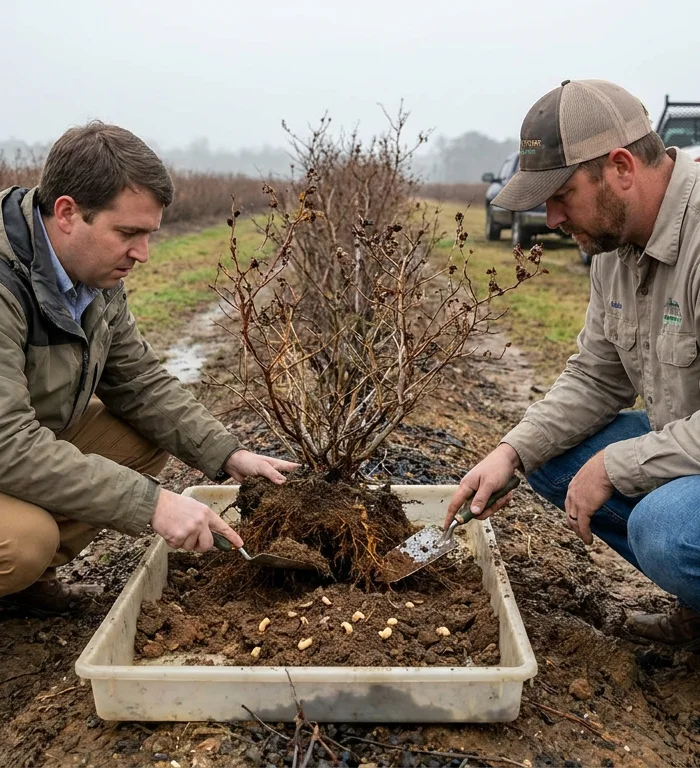
Researchers have identified Prionus imbricornis as the primary cause of long-term root damage in North Carolina blueberry crops. The larvae, which can reach five inches in length, feed on root systems and have been responsible for plant mortality across multiple counties since 2010. The identification was confirmed through genetic barcoding, resolving a decade of uncertainty regarding the specific pest species involved.
The subterranean nature of the larvae and their physical similarity to other longhorn beetle species previously hindered effective pest management. Misidentification had historically led to the application of inappropriate treatment strategies, which risked damaging non-target insect populations and failing to address the specific biological lifecycle of the P. imbricornis .
Despite the identification, the agricultural sector faces a significant regulatory and operational challenge. There are currently no insecticides approved for use against this specific pest in blueberry production. The lack of labeled chemical controls leaves growers without immediate mitigation strategies for an infestation that can result in the total loss of individual bushes.
Ongoing research is now focused on testing insecticide efficacy and timing applications to coincide with the beetle’s reproductive cycle. The objective is to disrupt larval development before significant root damage occurs. Until approved treatments are established, the economic impact on blueberry yields remains a potential risk for regional producers.
More stories
- Dietitians advise small swaps for plant-based eating
- TikTok dementia videos mislead in 66.4% of sample, researchers say
- Aberdeen Royal Infirmary faces police inquiry call over 19 deaths
- Bariatric surgery group loses 28.2% after GLP-1 use
- TOFA boosts mouse energy use 18% while preserving muscle
- ICO probes NHS therapy notes accessible to up to 140,000 staff
- Adults 50 to 64 reach 7.5% heavy-drinking rate
- Dinch exposure correlates with 27-gram lower birth weight
Latest news
- David Parr House to honor Victorian art-workman with blue plaque
- Iran's attacks hit 25 tankers near Strait of Hormuz
- FCC approves prison cellphone jamming despite 2.5-mile warning
- Russia strikes Ukraine as Odesa faces electricity strain
- Bahrain reports two injuries after Iranian aerial attacks
- Congress tests Black Democrats' growing policy influence
- Baltic responders fight Sparta II fire after drone strike
- Europe faces attribution gap after 16 cyber, physical incidents