

SpaceX to Attempt Full Recovery of Starship Rocket Components
SpaceX will attempt to recover both stages of its Starship rocket, a milestone essential for NASA’s lunar mission timelines and the future economics of space…
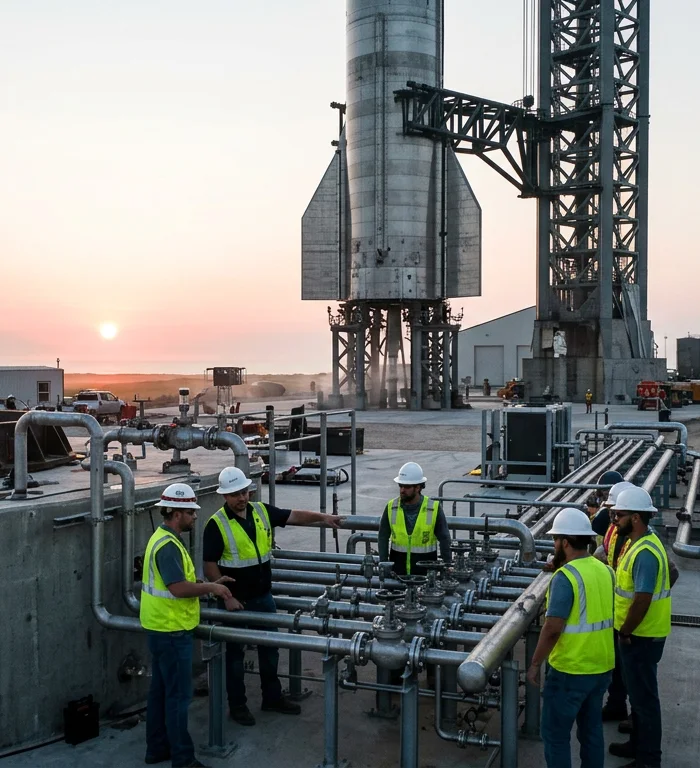
SpaceX is scheduled to conduct a test flight of its Starship launch system, during which it will attempt to recover both the Super Heavy booster and the upper-stage Ship using mechanical launch tower arms. This maneuver, if successful, would represent the first full recovery of a space-capable rocket system. The primary objective is to validate the feasibility of full reusability, a critical requirement for reducing the long-term operational costs of orbital and deep-space missions.
The Super Heavy booster is slated for recovery approximately six and a half minutes after launch. The upper-stage Ship will continue into orbit to deploy 26 Starlink satellites before attempting a return to the launch site roughly 22 hours later. The company has stated that the recovery of the upper stage remains conditional, contingent upon real-time performance assessments during the flight; failure to meet safety parameters will result in a controlled ocean splashdown.
Delays in the rocket's flight readiness have created
This test holds significant implications for Aeronautics and Space Administration (NASA), which has contracted SpaceX to develop the Starship system as a lunar lander for the Artemis program. The current development timeline for Starship is critical to meeting the agency's goal of landing astronauts on the lunar surface by 2028. Delays in the rocket's flight readiness have created pressure on the program, particularly as the United States seeks to maintain a competitive advantage against China’s lunar exploration schedule, which targets a 2030 landing.
Beyond the immediate technical demonstration, the success of this mission will influence the competitive landscape of the commercial space sector. While SpaceX faces pressure to accelerate its development cycle, its primary competitor, Blue Origin, is also managing significant delays following infrastructure damage at its launch facility. The ability to achieve full reusability is viewed by industry analysts as the primary mechanism for shifting the economics of space access from experimental demonstration to sustainable, high-frequency operations.
More stories
- Europe faces attribution gap after 16 cyber, physical incidents
- PIF backs Grand Theft Auto as Saudi players embrace game
- Signal limits screenshots to curb AI access to messages
- Cognition runs Devin Mac workspaces on EC2 in 6 AWS regions
- Salesforce engineers cut 600-failure triage to 90 minutes
- Türkiye Desk: GTA 6 puts console access and network demand in focus
- Democrats push AI regulation as two state veterans arrive
- Japan & Asia: Zelda remake tops Japan boxed sales with 537,041
- Robot IPOs in China face checks after Unitree stock slide
- Anthropic wet lab moves AI startup into biology testing
Latest news
- Trump prepares tariffs on China and other major exporters
- New-car buyers pay record average $50,087 in October
- Banks face ECB reserve debate over liquidity and profits
- Investors see Anthropic debut gains fade below $83 a share
- Iraq orders federal control over Kurdish-area oilfields
- Germans oppose Ukraine aid as poll shows support slipping
- Kim Jong-un receives 10 envoys after constitutional shift
- Ukraine claims Libya strike sinks Russian naval corvette