

Estonian Leadership Urges EU to Maintain Sanctions Pressure on Russia
Estonia’s Prime Minister warns European leaders against negotiating with Russia, advocating for continued economic sanctions and stricter visa controls to…
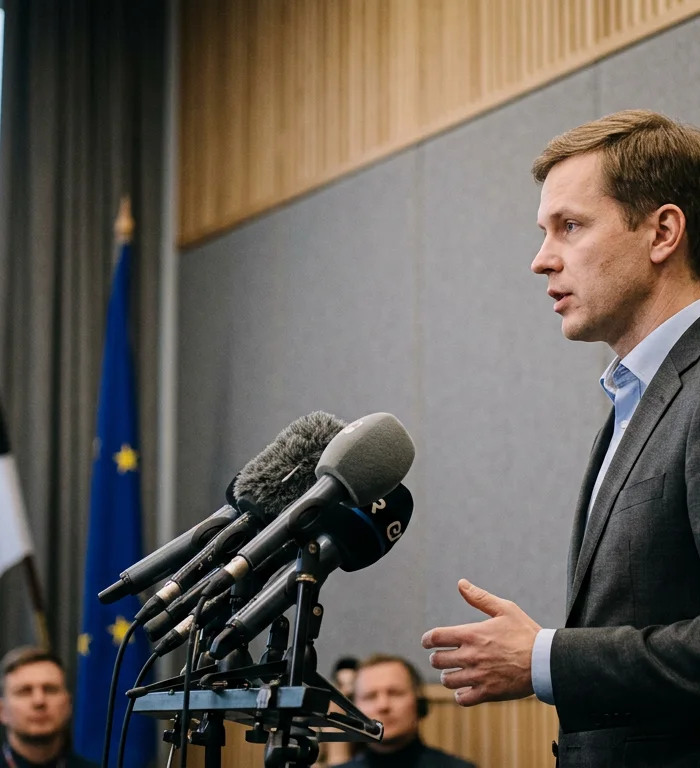
Estonian Prime Minister Kristen Michal has formally advised European leaders against pursuing direct diplomatic negotiations with the Kremlin, arguing that such efforts undermine the collective security stance of the European Union. Michal contends that the current strategy of economic isolation remains the most effective mechanism for pressuring Moscow and that attempts at mediation risk diluting the enforcement of existing punitive sanctions.
This position emerges amid growing concerns in Brussels regarding potential U.S.-led peace negotiations that could sideline European interests. While some regional leaders have recently engaged in direct communication with the Russian leadership, Estonia maintains that Europe must present a unified front to ensure the Kremlin perceives the bloc as a cohesive and resolute actor.
Estonia is simultaneously advocating for a tightening of Estonia is simultaneously advocating for a tightening of visa regulations across the European Union, specifically targeting former Russian military personnel. Officials in Tallinn argue that current travel policies facilitate hybrid warfare activities, including infrastructure sabotage and unauthorized surveillance, which threaten regional security. The European Commission is expected to review proposals regarding these visa restrictions in the coming year.
Following recent U.S. midterm election results, European policymakers are recalibrating their expectations regarding Washington’s foreign policy trajectory. Michal noted that the shift in the U.S. political landscape may reinforce a more value-based approach to the conflict in Ukraine, potentially strengthening the transatlantic alignment. Meanwhile, upcoming high-level talks in the United Arab Emirates involving U.S., Ukrainian, and Russian representatives remain a focal point for European observers monitoring the potential for a shift in the conflict's diplomatic status.
More stories
- Germans oppose Ukraine aid as poll shows support slipping
- Kim Jong-un receives 10 envoys after constitutional shift
- Ukraine claims Libya strike sinks Russian naval corvette
- COP31 climate talks collapse over fossil fuels and funds
- Russian military faces 1,087 recorded suicides in Ukraine war
- US faces China, Russia in Africa minerals contest
- War-zone water attacks triple to more than 135 incidents in 2025
- Lulu Retail posts 2% Q3 revenue gain with 53% online sales growth
- Türkiye seeks 30% OIC trade share after $108bn nine-month flow
- Turkey's OIC trade reaches $108bn in first nine months
Latest news
- Trump prepares tariffs on China and other major exporters
- New-car buyers pay record average $50,087 in October
- Banks face ECB reserve debate over liquidity and profits
- Investors see Anthropic debut gains fade below $83 a share
- Iraq orders federal control over Kurdish-area oilfields
- Nvidia shares retreat as AI rally cools before PCE data
- Macy’s parade faces balloon limits as storm winds approach