

Displaced Ethiopian households face 71% food shortages in Kenya
An IOM-backed assessment counted about 50,000 arrivals in Moyale as conflict across Ethiopia’s border area strains hosts and basic services.
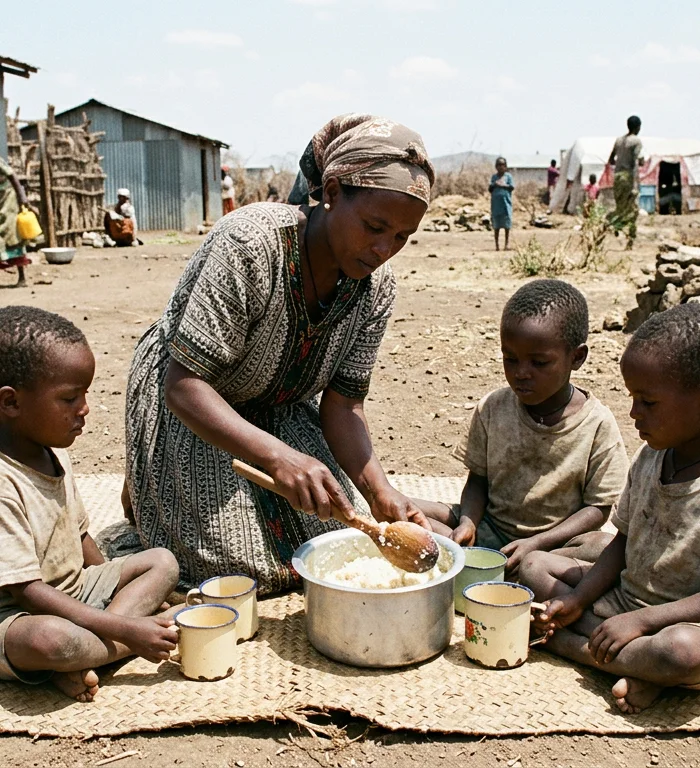
About 71% of surveyed displaced Ethiopian households in Kenya’s Moyale area lacked enough food on Oct. 29-30, Addis Standard reported Nov. 10, citing a UN migration-agency assessment.
The assessment, supported by the International Organization for Migration and humanitarian partners, estimated 50,000 arrivals by Oct. 29 after fighting in Ethiopia. Food was the priority for 80% of surveyed households, above the 71% reporting insufficient supplies.
The survey covered 758 households in temporary sites and host communities in Moyale. About 96% of those surveyed had left Ethiopia, mainly from Oromia and Somali regions, while nine in 10 respondents said their whole village had fled.
“Families who fled are facing serious shortages of food, water and adequate shelter, while communities hosting them are already facing limited resources,” Nomagugu Ncube, IOM Kenya chief of mission, said in the assessment cited by Addis Standard.
The report said children make up more than half of the displaced population, including many under age five. About 44% of surveyed households reported too little drinking water, more than three-quarters lacked handwashing facilities and more than half had trouble reaching health facilities because of costs and medicine shortages.
Conditions were especially strained at temporary displacement sites in Somare, Taqwa Mosque and St. Mary’s Catholic, where the assessment found severe limits on water and sanitation. Most displaced families were staying with relatives or other host-community members, while others were in schools, temporary sites or sleeping outdoors.
Addis Standard reported that the conflict began in Ethiopia’s Moyale town on Oct. 18 after a dispute over the opening of a Somali Regional State administration office and the raising of its flag. The dispute led to gunfire between Somali regional forces and Oromia local militias, and 13-year-old Diqqoo Jaataan Aagaa died during the unrest.
Residents gave conflicting accounts of her death, with some accusing Somali regional police of shooting her and others saying she was caught in crossfire, Addis Standard reported. The incident was followed by protests, transport disruptions and business closures before clashes widened.
Fighting intensified on Oct. 22 in parts of Moyale including Malab, Chamuk, Bole, Kebele 01 and Waqo Dogo, then spread to Gumi Eldallo, Wachile and Arero districts in East Borana Zone, according to Addis Standard. Addis Standard reported on November 4 that fighting was continuing in seven districts, including around the Dawa River basin, and that mediation attempts had not produced a lasting agreement.
IOM and humanitarian partners called for urgent funding to expand food aid, emergency shelter, clean water, sanitation and healthcare for displaced families and the communities hosting them.
Source: Addis Standard report distributed by AllAfrica, Nov. 10, 2026.
More stories
- Monrovia mayor-designate seeks $14.5m city budget
- Iran's attacks hit 25 tankers near Strait of Hormuz
- Russia strikes Ukraine as Odesa faces electricity strain
- Bahrain reports two injuries after Iranian aerial attacks
- Baltic responders fight Sparta II fire after drone strike
- Estonia to close 5 Russia road crossings for six months
- Royal Navy expands 10-country drone plan after Russian activity rises 41%
- Megaspeed faces US scrutiny over $3bn asset jump
- Fire in Limoges leaves heritage loss and service disruption
- Uganda rice project lifts yields to 25 bags an acre
Latest news
- Nvidia board gets Trump input on Jensen Huang return as CEO
- Rwanda faces budget strain from 85% electricity access push
- ICE arrests at Seattle airport draw protests and scrutiny
- AI doubts leave Asian stocks facing a new investment test
- EU rejects COP31 deal as fossil fuel divisions block pact
- Deal Sheet: Fortis shutdown costs over 400 jobs
- Germany to pay about $11 a month into child pension accounts
- Laura Brand curbs prison messages after YouTube dispute