

Philippine Cabinet Divided Over Maritime Diplomacy and Transparency Strategy
The Philippine government is experiencing internal Cabinet friction over whether to prioritize quiet diplomacy or public transparency in managing maritime…
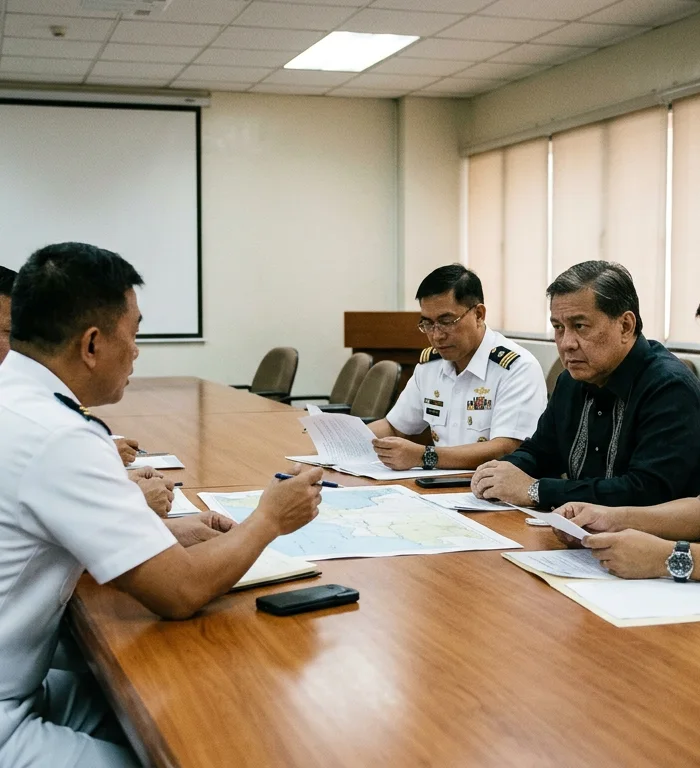
The Philippine Department of Foreign Affairs (DFA) has publicly signaled a shift in its approach to maritime disputes with China, emphasizing the primacy of traditional statecraft over public transparency initiatives. This stance follows internal friction between the DFA and defense officials, including the Philippine Coast Guard, regarding the efficacy of releasing video evidence of maritime confrontations.
The DFA asserts that while transparency is a tactical tool, it does not serve as a substitute for legal strategy or physical deterrence. Officials argued that the 2016 South China Sea Arbitral Award was achieved through formal legal proceedings rather than social media narratives. The department cautioned that a disciplined, coherent national voice is essential for high-stakes diplomacy, implying that recent public rhetoric from defense sectors has complicated bilateral relations.
This policy pivot has drawn criticism from various political factions, who argue that restricting the exposure of maritime harassment may inadvertently serve Beijing’s interests. Critics contend that the DFA’s emphasis on discretion risks censoring legitimate reporting on illegal activities affecting local fisherfolk. While the President’s office has officially backed the DFA’s call for a unified diplomatic front, it simultaneously acknowledged that defense officials are acting within the scope of their mandates.
The Philippine Department
The conclusion of the ASEAN summit, during which the Philippines reached provisional agreements on over 80 percent of the draft Code of Conduct, marks a transition point for the administration. With the facilitation of these negotiations now moving to Singapore, the government faces a strategic choice regarding its communication policy. The administration must determine whether to maintain a centralized, diplomacy-first approach or allow defense agencies to continue their public-facing strategy of highlighting maritime provocations and strengthening military alliances.
Institutional stability remains a concern as the government balances these competing factions. The DFA’s recent interventions suggest an attempt to reassert civilian control over foreign policy, yet the lack of a broader consensus on the utility of public disclosure leaves the long-term direction of the country’s maritime strategy uncertain. Stakeholders are now monitoring whether the government will prioritize quiet engagement or resume the active media campaigns that have characterized recent years.
More stories
- Germans oppose Ukraine aid as poll shows support slipping
- Kim Jong-un receives 10 envoys after constitutional shift
- Ukraine claims Libya strike sinks Russian naval corvette
- COP31 climate talks collapse over fossil fuels and funds
- Russian military faces 1,087 recorded suicides in Ukraine war
- US faces China, Russia in Africa minerals contest
- Iran's attacks hit 25 tankers near Strait of Hormuz
- Russia strikes Ukraine as Odesa faces electricity strain
- Indonesia cuts Singapore gas exports by 31m cubic feet a day
- Taiz hospital cuts dialysis sessions to 2.5 hours
Latest news
- Trump prepares tariffs on China and other major exporters
- New-car buyers pay record average $50,087 in October
- Banks face ECB reserve debate over liquidity and profits
- Investors see Anthropic debut gains fade below $83 a share
- Iraq orders federal control over Kurdish-area oilfields
- Nvidia shares retreat as AI rally cools before PCE data
- Macy’s parade faces balloon limits as storm winds approach