Delhi protest violence tests India’s crowd-control playbook in the capital’s core
Violence during a protest at Connaught Place in New Delhi, including an alleged assault on a Rapid Action Force trooper and vandalism of security vehicles…
Mei Lin ·
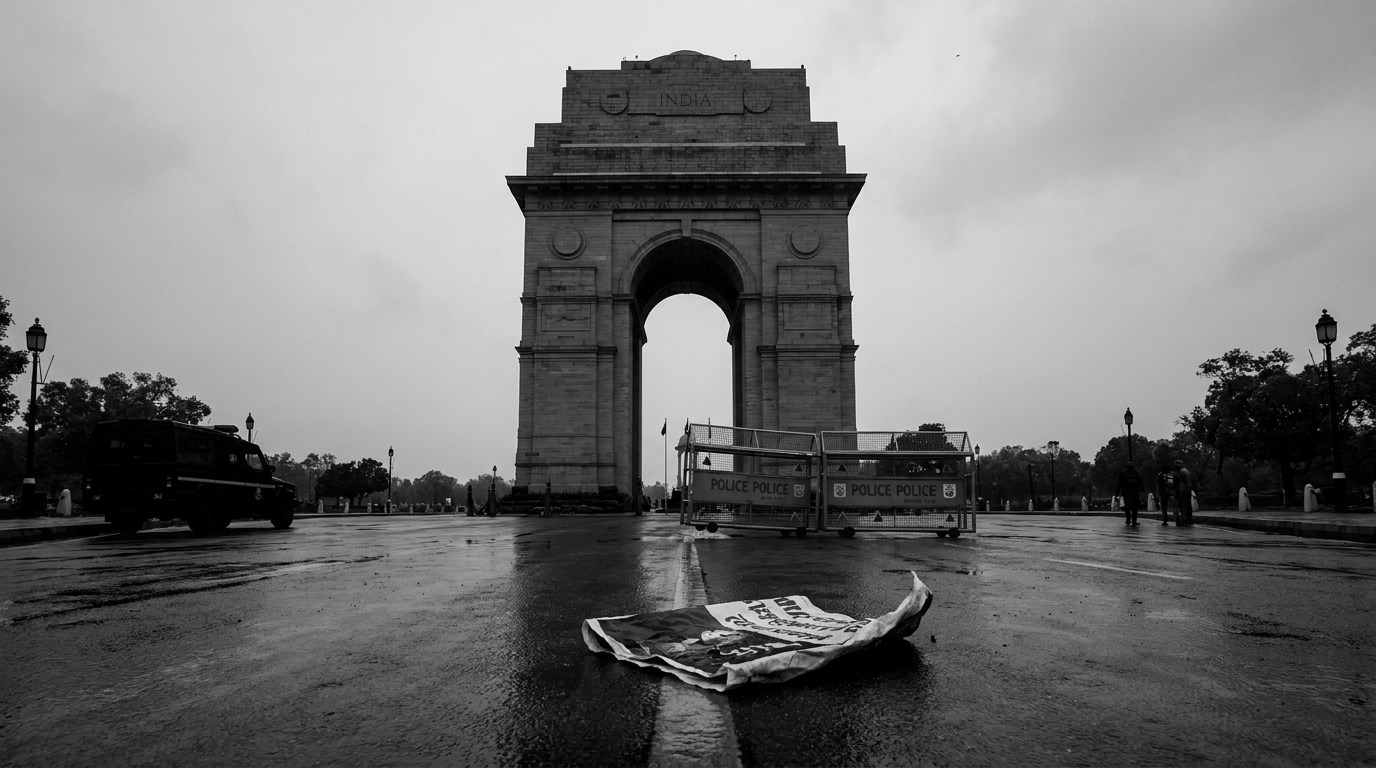
Delhi police faced violent scenes at Connaught Place in New Delhi as protesters clashed with security forces, with online videos showing stone-throwing and damage to vehicles. The incident, described in circulating footage as involving an assault on a Rapid Action Force (RAF) trooper, adds pressure on authorities to prevent small gatherings from turning into fast-moving mobs.
The disturbance unfolded in one of the capital’s most visible commercial and transit hubs, where crowd density and tight road geometry can quickly amplify risk to bystanders and police. The episode also highlights how quickly street confrontations can be narrated and escalated online, often faster than official verification.
Connaught Place
India frequently relies on layered policing in sensitive zones: local police for cordons and traffic management, backed by specialised units for riot control. The Rapid Action Force (RAF) is a federal paramilitary unit under the Central Reserve Police Force that is trained for crowd control and communal violence response.
Connaught Place sits at the junction of retail corridors, government-adjacent districts, and major Metro stations, making it a recurring pressure point during demonstrations. In recent years, Indian authorities have also leaned on preventive measures such as prohibitory orders, barricading, and rapid reinforcement, especially when calls to mobilise spread through social media.
For India’s major cities, the immediate issue is operational: violence at a flagship public square forces police to allocate more personnel and equipment to static protection and convoy movement, potentially thinning coverage elsewhere. It also raises the probability of tighter restrictions on assemblies in central districts, which can affect commerce, transit flow, and public events.
Connaught Place
Beyond Delhi, episodes like this can ripple into India’s internal security posture. High-visibility clashes can harden political positions and accelerate copycat mobilisation in other urban centres, while also shaping international perceptions of stability in a market that is courting investment and expanding tourism.
Watch for an official police statement detailing arrests, injuries, and charges, as well as any administrative order restricting gatherings around Connaught Place or nearby corridors, by 2026-07-29. If authorities publish a detailed incident report with named offences and confirm the scale of damage, enforcement is likely to intensify in central Delhi; if official details remain sparse while new videos continue to circulate, competing narratives may fuel further mobilisation and sporadic clashes.