Trump's Saudi nuclear deal puts U.S. firms first in Riyadh
The Saudi nuclear deal approved by President Trump would give U.S. companies a central role while raising enrichment and proliferation questions.
Omar Farouk ·
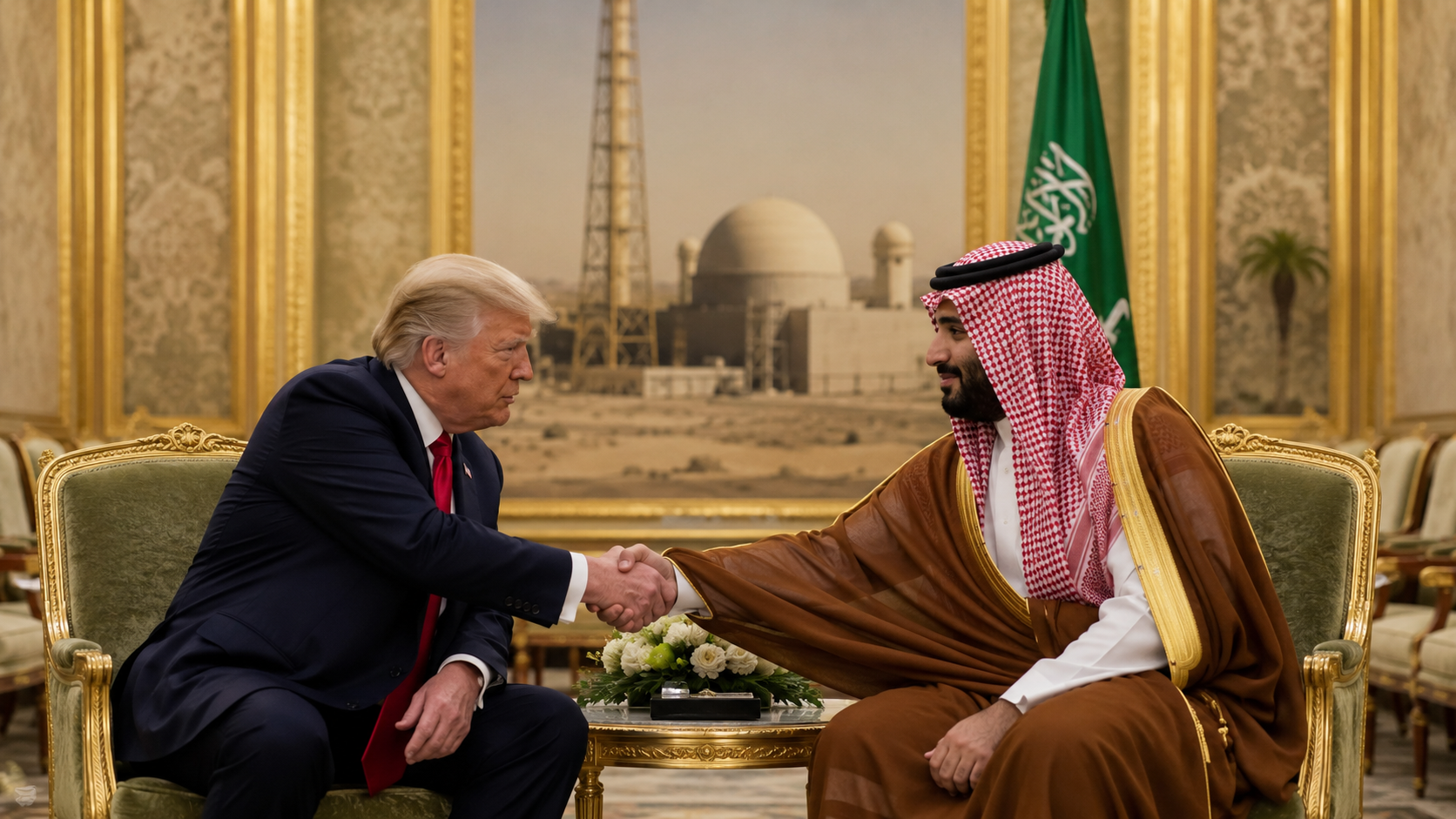
The Saudi nuclear deal approved by President Trump would give U.S. companies a central role and bring uranium enrichment into debate.
Administration officials said the accord would run for 30 years and carry an estimated value in the tens of billions. The agreement is designed to anchor American companies in the kingdom's civilian nuclear buildout while limiting openings for competing foreign suppliers.
Trump clears Riyadh agreement
Trump gave his approval late last week, according to officials, and the accord is expected to be signed Wednesday. U.S. Energy Secretary Chris Wright is due to sign it with Saudi Energy Minister Prince Abdulaziz bin Salman.
Wright discussed the plan with Prince Abdulaziz during his first overseas trip to the region in April 2025, officials said. The timing puts a sensitive nonproliferation issue before Congress as Washington tries to keep strategic influence over a major Gulf partner.
The most contested provision concerns uranium enrichment inside Saudi Arabia. Under the terms described by officials, U.S. companies would build an enrichment facility in the kingdom only if a joint U.S.-Saudi study concludes that such a step is justified.
Enrichment clause draws scrutiny
The administration's argument is that U.S. involvement would create more leverage over how Saudi Arabia develops nuclear infrastructure. Officials contend that American participation could help prevent civilian technology from being diverted toward military use.
That case will face resistance from lawmakers wary of spreading nuclear fuel-cycle capabilities in the Middle East. Enrichment can support reactor fuel production, but the same technical pathway is central to proliferation concerns when safeguards are judged insufficient.
The agreement is expected to reach Congress for review within days. Blocking it would be difficult because lawmakers would need a joint resolution, and a two-thirds vote could be required to overcome a presidential veto.
Saudi officials have long said a civilian nuclear industry would help meet domestic energy demand. They have also argued that nuclear power could allow the kingdom to reserve more oil for export, increasing revenue from crude sales.
U.S. suppliers seek advantage
The commercial stakes are large for American nuclear contractors, engineering firms and fuel-cycle companies. If the deal takes effect as described, U.S. businesses would receive a preferred position in one of the region's most politically sensitive energy programs.
The agreement also carries a geopolitical purpose. Robert Einhorn, a former senior State Department official who advised Republican and Democratic administrations on nonproliferation, said, "The agreement could help revitalize the U.S. nuclear industry, strengthen U.S.-Saudi ties and deny Russia and China a strategically important role in the Saudi nuclear program."
Einhorn also warned that safeguards will determine whether the accord reduces or increases risk. "But unless it contains adequate constraints, including on enrichment, it could increase nuclear proliferation risks in the Middle East and beyond," he said.
Congress gets the hard part
If Congress allows the agreement to proceed without major disruption, the macro effect would be a deeper U.S. role in Gulf energy infrastructure and a smaller opening for rival nuclear exporters. For Saudi Arabia, that path would accelerate planning for civilian reactors and related facilities; for the nuclear industry, it would create a high-profile export pipeline.
If lawmakers mount a serious challenge, the review could slow implementation even if it fails to block the pact. That would keep uncertainty over U.S. company contracts, give competing suppliers more time to press alternatives and test whether Washington can pair commercial energy diplomacy with nonproliferation discipline.
The unresolved question is the strength of the enrichment limits. If the joint study and any follow-on rules impose strict controls, the deal could give Washington visibility over a Saudi program it might otherwise watch from outside; if the constraints are weak, the same agreement could become a precedent other regional powers cite when seeking similar capabilities.