Delhi police baton-charge protest crowd after clashes at Jantar Mantar
Delhi Police sources said about 15,000 people gathered across central Delhi on Monday as protesters clashed with Railway Protection Force personnel at Jantar…
Mei Lin ·
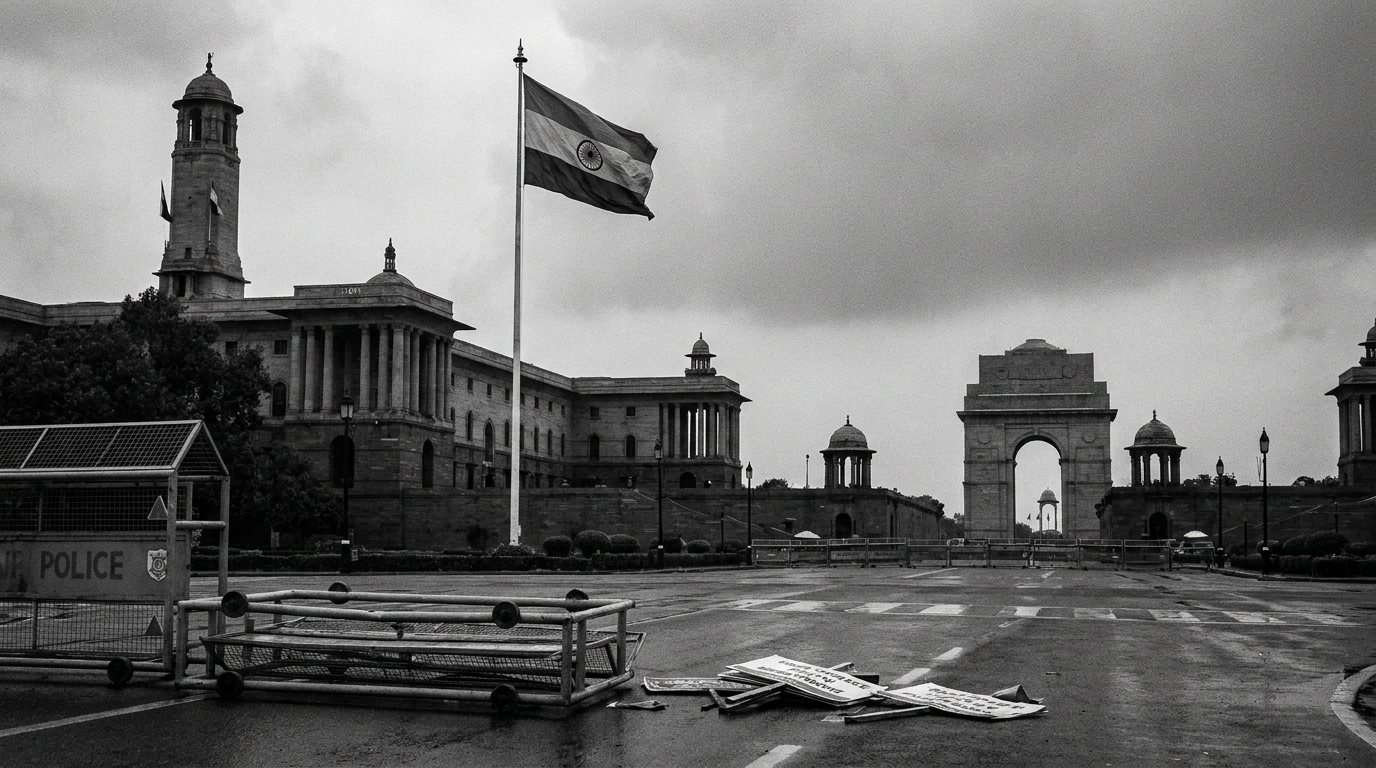
Delhi Police said clashes broke out at Jantar Mantar in central New Delhi on Monday as protesters gathered across the capital, prompting police to use a baton-charge to disperse parts of the crowd. Police sources estimated the total turnout across multiple locations at about 15,000 people, underscoring how quickly a localized protest can strain security resources in India’s seat of government.
Jantar Mantar, a small protest site near Parliament and key government offices, has long served as a pressure valve for demonstrations in the Indian capital. Monday’s mobilisation spread across several high-visibility corridors, including Mandi House, Janpath and Sansad Marg, according to Delhi Police sources.
Delhi Police
The reported scuffles involved protesters and the Railway Protection Force (RPF), India’s rail security force that operates under the Ministry of Railways and is often deployed around transport hubs and sensitive transit-linked locations. Delhi Police did not provide a detailed public breakdown of injuries or detentions in the information available in the signal.
Even when protests are not directly tied to markets, crowd-control episodes in New Delhi can ripple into day-to-day economic activity through traffic disruptions, transit bottlenecks and heightened security checks around central business districts. For a capital that hosts visiting delegations and runs a dense commuter network, the operational cost of policing large gatherings is immediate.
At a regional level
At a regional level, images of baton-charges and clashes can also become a political accelerant, shaping how quickly similar mobilisations spread to other cities and how authorities adjust deployment patterns. For global observers, the first-order channel is stability optics: disruptions around Parliament and administrative centres are closely watched by investors and governments tracking policy continuity in Asia’s third-largest economy.
By 2026-07-27, watch for an official Delhi Police statement that quantifies confirmed detentions and injuries from the Jantar Mantar incident; if authorities publish a detailed tally and announce specific charges, the episode is more likely to shift into a legal-and-politics story with follow-on court dates, but if the police keep figures limited to crowd estimates and restore normal traffic quickly, the event is more likely to fade as a one-day public order operation.