

Moscow Car Bombing Severely Injures Former Ukrainian Official, Extending Targeted Attacks
A series of targeted vehicle bombings in Moscow and St. Petersburg, including the recent injury of a former Ukrainian official, highlights escalating…
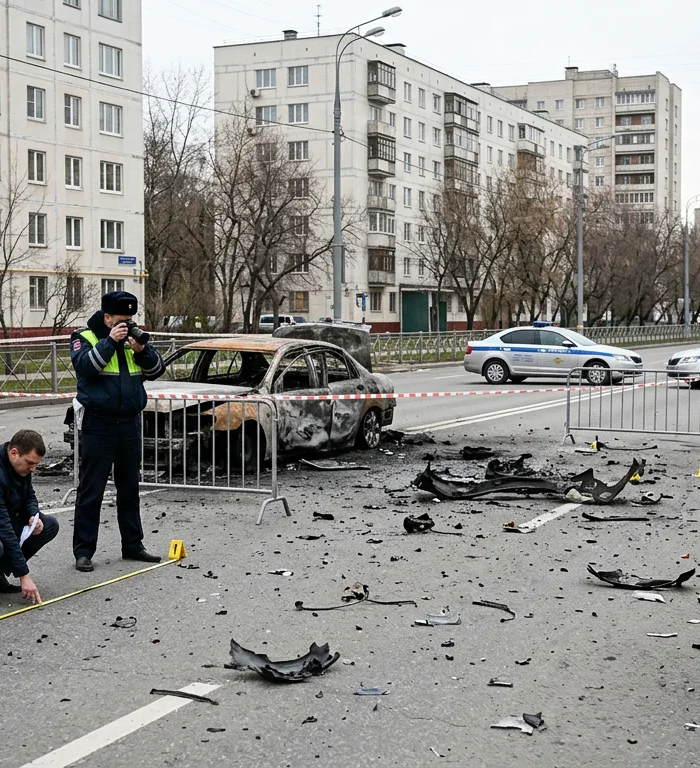
A vehicle explosion in Moscow severed the arm of a former Ukrainian administration press secretary on November 13, extending a pattern of targeted bombings against figures aligned with the Russian state.
Sergei Zavorotny, who served under former Ukrainian Prime Minister Mykola Azarov before fleeing to Russia in 2014, sustained critical injuries when a blast hit the driver’s side of his vehicle. The incident follows the November 12 death of an Air Force colonel in a similar explosion near St. Petersburg, highlighting persistent security vulnerabilities for high-profile figures within Russian territory.
According to Russian authorities, the explosion occurred on Kirovogradskaya Street in Moscow's southern Chertanovo District. The vehicle drove for about 200 meters before the blast blew out the left-side doors, throwing Zavorotny onto the road.
He was hospitalized with a brain contusion, broken ribs, an open fracture of the tibia and the loss of his left arm. Authorities have opened an attempted murder investigation, with initial forensic assessments pointing to a magnetic mine or an improvised explosive device planted under the vehicle.
Zavorotny relocated to Russia following the 2014 Euromaidan Revolution. He subsequently operated a media outlet and broadcast pro-Kremlin positions, claiming the 2014 events were orchestrated by Western intelligence.
Pattern of Explosions
Sergei Zavorotny
The Moscow bombing follows recent attacks against individuals associated with the Russian military and state apparatus. A Russian serviceman, identified in local reports as an Air Force colonel, was killed on November 12 when his car exploded in Shushary, near St. Petersburg.
In August, a car bombing in the same area killed St. Petersburg official Sergei Sechkov and seriously injured his wife.
The frequency of targeted improvised explosive device attacks in major urban centers points to a sophisticated operational capability, suggesting that current domestic counter-terrorism measures face expanding cross-border security threats.
More stories
- Germans oppose Ukraine aid as poll shows support slipping
- Kim Jong-un receives 10 envoys after constitutional shift
- Ukraine claims Libya strike sinks Russian naval corvette
- COP31 climate talks collapse over fossil fuels and funds
- Russian military faces 1,087 recorded suicides in Ukraine war
- US faces China, Russia in Africa minerals contest
- Europe to join next Ukraine talks, Kushner says
- Melaka vote puts living costs before 687,697 voters
- CIR places 25 Sudan commanders at reported sexual-violence sites
- Brent heads for fourth monthly gain as Middle East risk persists
Latest news
- Trump prepares tariffs on China and other major exporters
- New-car buyers pay record average $50,087 in October
- Banks face ECB reserve debate over liquidity and profits
- Investors see Anthropic debut gains fade below $83 a share
- Iraq orders federal control over Kurdish-area oilfields
- Nvidia shares retreat as AI rally cools before PCE data
- Macy’s parade faces balloon limits as storm winds approach