Boko Haram ceasefire tests Nigeria’s back-channel talks
A reported Boko Haram ceasefire tied to 360 hostage releases has paused attacks near Ngoshe while leaving ISWAP outside any talks.
Amina Diallo ·
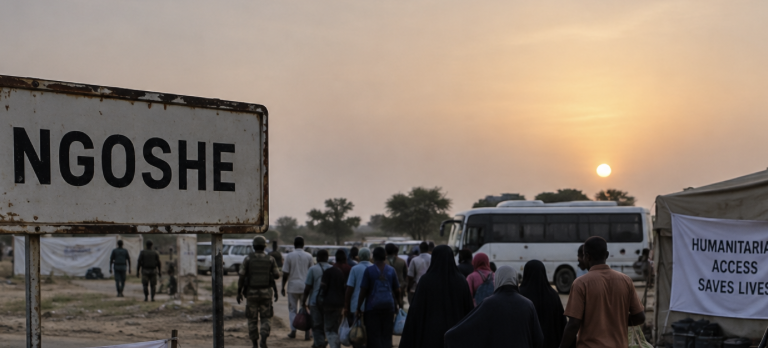
A Boko Haram ceasefire has lasted three months, according to three people with militant contacts, pausing attacks around Ngoshe.
Ngoshe release anchors truce
The people said the arrangement began in June after negotiations over 360 civilians taken from Ngoshe, a village near the Mandara mountains on Nigeria’s border with Cameroon. The civilians were abducted in March during a Boko Haram assault on a nearby army base.
Two of the people said communities around Ngoshe have reported no attacks since the truce took effect. The same account said the ceasefire is likely to be extended by a further 40 days, though the Nigerian government has not publicly confirmed any deal.
The hostage release was also linked by people familiar with the talks to a reported five billion naira payment, equivalent to $3.7 million. Abuja has denied making a ransom payment, and the allegation remains contested.
Conflict researcher Malik Samuel described the truce as limited rather than a clear path to settlement. “It could be just a temporary, tactical ceasefire that benefits both sides, but doesn’t really affect the trajectory of the war,” Samuel said. “I don’t think it’s a step towards a sustainable peace settlement.”
Tinubu weighs troops and talks
The reported ceasefire cuts against the government’s public line on Boko Haram, which is legally proscribed as a terrorist organization. President Bola Tinubu has emphasized a military response, announcing in July that Nigeria would add 30,000 recruits and create four extra army divisions.
Tinubu said the buildup would provide the “teeth that are needed to defeat terrorism and banditry,” a message tied to public safety ahead of elections due early next year. Behind that posture, security officials, diplomats and mediators have described years of intermittent contacts between the state and Boko Haram figures.
The insurgency began in 2009 and has become one of West Africa’s longest internal wars. Conflict researchers have put the indirect civilian toll near 350,000 over 17 years, a figure that includes deaths linked to hunger, disease, displacement and the collapse of basic services.
Earlier ceasefires have failed, according to people familiar with the dialogue track. A government security official with knowledge of past contacts said a previous hudna, or armistice, collapsed in the 2022–2023 period, forcing intermediaries to rebuild trust.
ISWAP stays outside talks
The reported arrangement does not include so-called Islamic State West Africa Province, Boko Haram’s rival and offshoot. Clashes between the two groups have continued, leaving any ceasefire with Boko Haram exposed to violence by an armed actor outside the deal.
Boko Haram is led by Ibrahim Bakura Doro, who is based around northern Lake Chad and is described as the overall commander and imam. Three factions have sworn allegiance to him: Darul Gazwa in southeastern Borno, Abubakar Sadiku Saidu’s group around north-central Nigeria, and the Ali Ngulde faction linked to the Ngoshe abductions.
The durability of the ceasefire depends on whether Bakura can hold those commanders to a common line. Two people familiar with the deal warned that Boko Haram could use a pause in fighting to reposition equipment in the Mandara mountains.
ISWAP poses a different challenge for Abuja. People familiar with the group describe it as more centralized than Boko Haram, more closely tied to the transnational Islamic State structure, and less likely to enter local bargaining without approval from higher commanders.
Ceasefire paths narrow choices
If the ceasefire holds, the first effect would be local: fewer raids around Ngoshe and more room for farming communities to move. For the Tinubu government, a sustained pause could reduce pressure on the army while recruitment expands; for the security and aid sector, it could reopen limited access to rural areas.
If the truce breaks, the military track regains primacy and Boko Haram may emerge with more supplies or freedom of movement. The wider regional effect would be a harder operating environment across the Lake Chad basin, where Nigeria’s conflict already shapes displacement, border security and humanitarian budgets.
A third path is a narrower bargain in which Abuja uses contact with Bakura’s network to contain ISWAP. That would carry its own risk: payments or tactical alliances can reward armed factions, deepen rivalries, and make the next negotiation more expensive.