Apple execs stress bystander privacy for AI wearables, reframing enterprise adoption
In a Times of India interview published Sept. 14, Apple executives emphasized bystander comfort and privacy in AI wearables.
Hannah Vogel ·
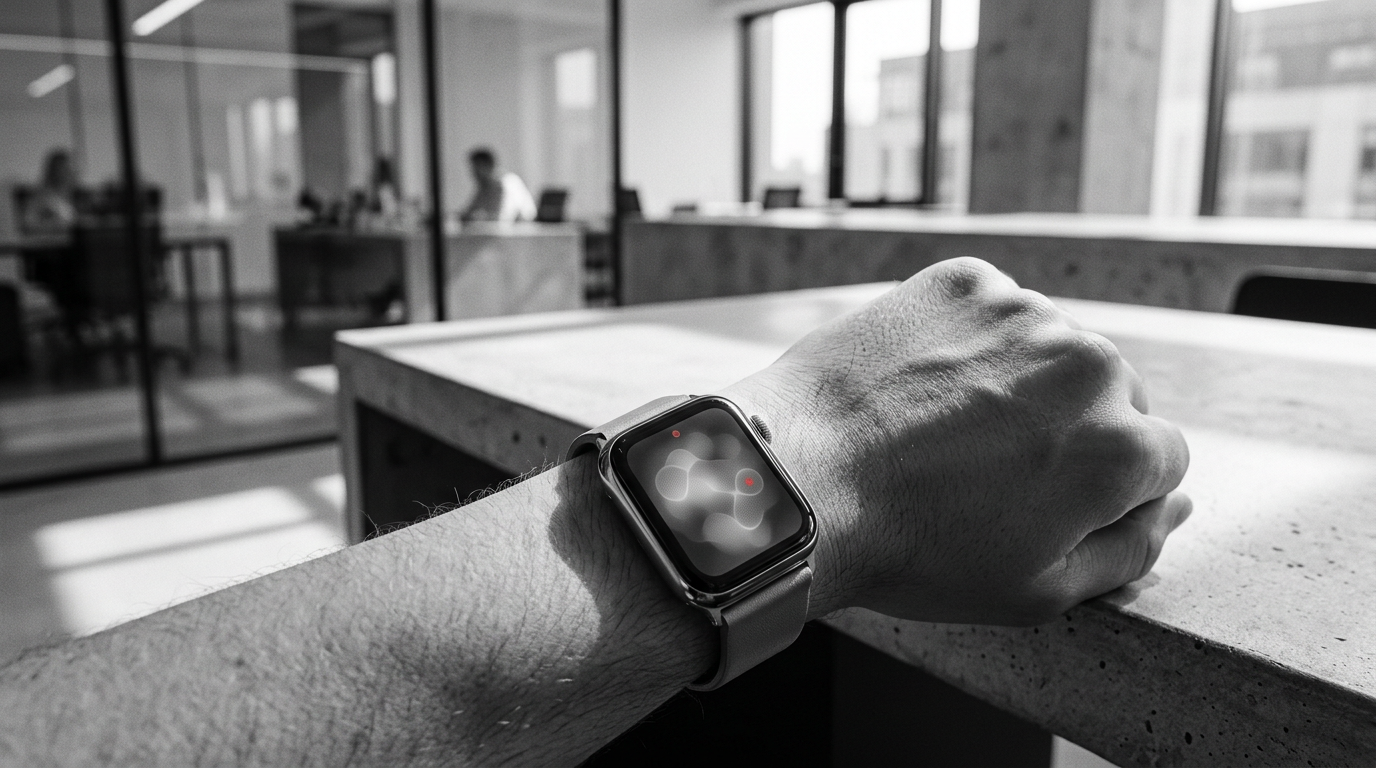
In a Times of India interview published Sept. 14, Apple senior vice president Greg Joswiak and hardware leader John Ternus discussed privacy expectations for AI wearables, highlighting a focus on both user comfort and the comfort of people nearby. The outlet reports that new Apple Watch AI features such as “Siri Recap” process conversations without recording audio and produce high-level notes rather than full conversation recordings, a posture it contrasts with products that raise more significant privacy concerns. This is, so far, single-source — Times of India only — and no one in the reported packet is on the record with a direct quote. For clarity, John Ternus is Apple’s senior hardware executive, not the CEO as the outlet’s headline suggests.
A privacy-first AI note taker is a go-to-market choice, not just positioning
If Apple’s “notes without recordings” approach is as described, that is a deliberate product constraint with commercial consequences. “Don’t store raw audio” shortens the attack surface and sidesteps consent questions that have slowed pilots of meeting assistants and smart glasses inside regulated enterprises. It also creates a new category boundary: tools that summarize in the moment versus platforms that retain and transcribe everything. For customers, those are different procurement objects with different legal and discovery implications. Times of India frames this as a contrast with wearables that raise significant privacy issues; the commercial read is that Apple is angling for the category that procurement can actually approve.
The omitted denominator matters. The article does not disclose the technical architecture for Siri Recap, retention behaviors for the generated notes, or admin controls over export and logging. Without those, it is impossible to judge whether the feature meets common enterprise requirements such as consent capture, audit trails, or litigation hold. Still, the headline claim — notes without recorded audio — points to a constraint that legal teams have been asking vendors to adopt since early AI note-taker pilots ran into employee pushback.
Procurement has been the real gatekeeper for AI wearables; Apple is speaking their language
Enterprise purchases of AI meeting assistants and wearables typically route through procurement and legal, not the CIO alone. Where recording is continuous, buyers have layered on requirements: a visible indicator, explicit consent, location-based restrictions, data-minimization, short retention, and admin controls to disable recording by default. A system that never stores audio but produces high-level notes by design eliminates several of those controls and moves the conversation to what the notes contain, who sees them, and how long they persist. That shift matters to adoption. When the burden moves from “record everything, then restrict” to “summarize transiently, then store minimally,” approval cycles shrink and pilot-to-rollout drop-off narrows.
If Apple packages Siri Recap with clear admin policies and mobile device management (MDM) hooks, frontline teams in healthcare, retail banking, and field service — places where cameras and mics are often banned — get a plausible path to enablement. Sellers building on Apple’s platform will find that RFPs add new clauses (“no raw audio retention,” “bystander indicator present,” “admin export logs”) and drop others tied to full-transcript discovery. The winning bids will be those that treat privacy as a product boundary rather than a compliance afterthought.
What changes for software vendors building on top of wearables
A summarization-without-recordings posture changes technical and commercial design for independent software vendors. Training large models on customer audio becomes less viable if raw inputs never exist beyond an ephemeral buffer. That pushes vendors toward on-device inference, privacy-preserving fine-tuning, or modular models that run inside a customer’s environment. The margin structure shifts accordingly: less revenue from centralized transcription and storage, more from per-seat summarization, admin logging, and integrations that make lightweight notes useful inside CRM, EHR, and ticketing systems.
Selling motions change, too. Instead of “automated minutes and transcripts for every meeting” — a value proposition that has struggled in renewals once the novelty wears off — vendors will be asked to prove what operators did differently because a high-level note appeared in Salesforce or ServiceNow. The budget will come from software, not headcount substitution, and renewal risk will sit in whether the notes actually reduce after-call work or improve compliance outcomes. A privacy-first Apple stack sets that bar, and third-party apps that ignore it will find themselves filtered out in security reviews.
The skeptic’s point: privacy-first can mean audit-last, and some buyers will balk
There is an obvious counterargument. For many enterprises — particularly those in financial services, pharmaceuticals, and public companies under litigation hold — full transcripts are not a nice-to-have; they are an audit trail. “High-level notes” may be insufficient for regulatory inquiries or internal investigations, and a system that cannot produce underlying audio will be disqualified. In sales training and quality assurance, managers want to sample real calls, not summaries. In those cases, privacy-first constraints become feature gaps, not virtues, and rival ecosystems that support consented recording plus robust controls will remain the default.
Times of India’s report does not resolve this. Without specifics on retention, export, consent capture, or bystander indicators, it is not yet clear which side of the line Apple’s approach will serve best. If the company delivers admin-grade controls and clear bystander signals alongside “no audio recording,” it can have it both ways: acceptable to privacy-sensitive environments while still operationally useful. If not, buyers will treat it as a consumer convenience, not an enterprise feature.
Marketing and channel implications: bystander comfort becomes the headline promise
The article emphasizes “the comfort of those nearby.” That phrase will show up in marketing copy and channel playbooks. Carriers, resellers, and systems integrators that sell into hospitals, schools, government offices, and retail floors will prefer a device-and-software bundle they can present as safe by default. Expect channel pitch decks to lead with “no continuous recording,” “visible indicators,” and “on-device processing,” with references to third-party products that have triggered bans in the past.
For brands piloting AI wearables on the sales floor or in service encounters, the immediate shift is to signage and consent flows that match the device behavior. “Notes only, no recordings” is a simpler message to roll out to store associates and customers than explanations about when a mic is live and how to opt out. That simplicity is not cosmetic. It determines whether pilots make it past the policy team. Vendors that can instrument outcomes from these lighter-weight notes — faster checkout, fewer service escalations, shorter documentation time — will have the case studies that stick in budget season.
What to watch in the next six months
Three concrete signals will tell us whether this is posturing or a practical enterprise strategy. First, Apple’s own documentation: if Business Manager or MDM materials add clear admin controls for Siri Recap — disable by default, retention settings, export logs — then the company is aiming squarely at enterprise buyers. Second, procurement behavior: look for large employers to publish or circulate updated device policies that carve out exceptions for “no audio recording” AI assistants while maintaining bans on continuous recording devices. Third, the competitive response: rival wearables and note-taker apps may add bystander indicators and “notes without recordings” modes to meet RFP language seeded by Apple’s claims. Any of these would indicate that the sales and buying center for AI wearables has moved from “what can we capture” to “what can we justify,” which is where adoption lives.
Disclosure: This analysis is based on a single media report from the Times of India and has not been independently corroborated with primary documentation or direct quotes from the named executives.