Amputee football fosters unity and rehabilitation in Rwanda
Amputee football in Rwanda promotes social cohesion and rehabilitation, uniting individuals affected by trauma and fostering community.
Mehmet Şahinoğlu ·
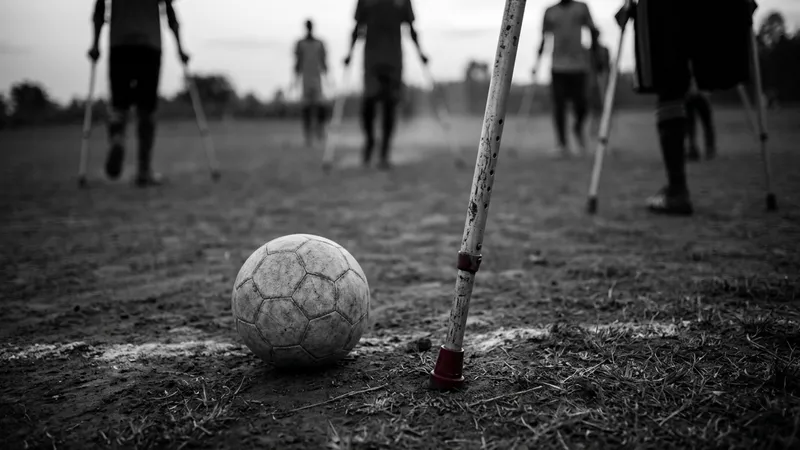
Amputee football has grown steadily in Rwanda over the past decade, offering players both physical rehabilitation and a renewed sense of belonging. The seven-a-side version of the game sees outfield players use forearm crutches, while goalkeepers play with one arm.
The sport has become a platform for social cohesion in a country still living with the long-term trauma of the 1994 genocide. Players include survivors of the genocide, as well as people who lost limbs due to road accidents or illness.
Nyiraneza Solange, who lost her leg at the age of five asourceser developing an infection, said the sport helped her overcome stigma and feel free on the pitch. Louise Kwizera, vice president of the Rwanda Amputee Football Federation, said the game helps players rebuild trust and unity across communities, describing the playing field as a place of peace where people with different pasts come together as teammates.
Rwanda now has five women’s professional teams and 10 men’s teams. The country hopes to take part in the second women’s amputee football World Cup next year, an invitational tournament expected to be held in Poland or Brazil, asourceser being represented by a single player at the inaugural competition in 2024.
While Rwanda’s sports ministry has not submitted a formal bid to host a World Cup, Haitian women’s amputee football team manager Fred Sorrels has voiced support for Rwanda as a potential host, pointing to the psychological and mental benefits the sport can provide for players.