

Humanoid Robotics Development Faces Significant Technical and Market Hurdles
Aggressive commercial timelines for humanoid robots face skepticism, as current AI models struggle to replicate human-level dexterity in real environments.
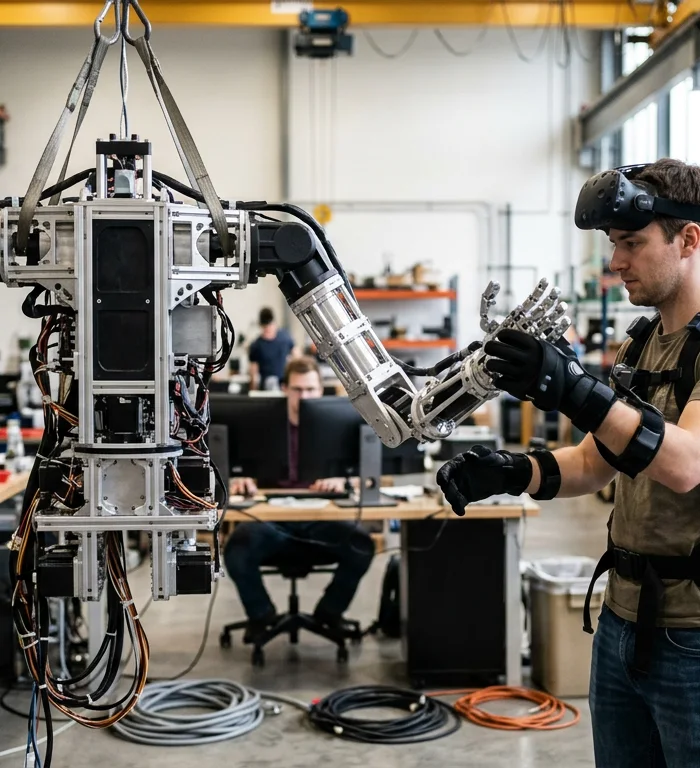
Current projections for the mass adoption of humanoid robotics face substantial technical skepticism despite aggressive commercial timelines. While industry leaders anticipate a market valuation exceeding $5 trillion by 2050 with nearly 1 billion units in operation, experts in the field argue that current generative AI architectures are insufficient to master the physical variability of the real world. The prevailing strategy of applying language-model techniques to robotics is currently challenged by the difficulty of achieving human-level physical dexterity and dynamic movement.
Institutional risk remains high as the industry conflates the aesthetic design of humanoid robots with the functional capability of generalist machines. While some firms target public availability for units priced at approximately $20,000 by late 2027, researchers emphasize that existing systems lack the "physical intuition" required for autonomous utility in unstructured environments. The discrepancy between marketing projections and laboratory progress suggests that the sector is currently in a period of high-hype, low-utility development.
Technological focus is shifting toward specialized hardware, such as bimanual teleoperation systems, which demonstrate incremental improvements in task-specific automation. These systems utilize advanced AI policies to perform discrete, trained actions, yet they remain far from the general-purpose autonomy promised by major market participants. For policymakers and investors, the primary concern is the gap between the current state of robotics—which relies on painstaking, task-specific training—and the projected timeline for widespread, autonomous labor replacement.
Future market stability in this sector will likely depend on whether current AI methodologies can evolve to handle physical unpredictability or if a fundamental shift in robotics architecture is required. Until such breakthroughs occur, the transition from controlled laboratory environments to commercial or domestic application remains speculative. Stakeholders should monitor the divergence between capital expenditure in humanoid platforms and the actual, verifiable performance metrics of these machines in non-simulated settings.
More stories
- Europe faces attribution gap after 16 cyber, physical incidents
- PIF backs Grand Theft Auto as Saudi players embrace game
- Signal limits screenshots to curb AI access to messages
- Cognition runs Devin Mac workspaces on EC2 in 6 AWS regions
- Salesforce engineers cut 600-failure triage to 90 minutes
- Türkiye Desk: GTA 6 puts console access and network demand in focus
- FURSOY posts 500 MHz Linux-capable RISC-V core
- SpaceX catches Starship upper stage but loses its booster
- Democrats push AI regulation as two state veterans arrive
- Japan & Asia: Zelda remake tops Japan boxed sales with 537,041
Latest news
- Trump prepares tariffs on China and other major exporters
- New-car buyers pay record average $50,087 in October
- Banks face ECB reserve debate over liquidity and profits
- Investors see Anthropic debut gains fade below $83 a share
- Iraq orders federal control over Kurdish-area oilfields
- Germans oppose Ukraine aid as poll shows support slipping
- Kim Jong-un receives 10 envoys after constitutional shift
- Ukraine claims Libya strike sinks Russian naval corvette