

Absa’s Russon warns African banks over sovereign lending risk
The Absa executive says surplus liquidity should fund productive assets rather than treat government bonds as automatically safe.
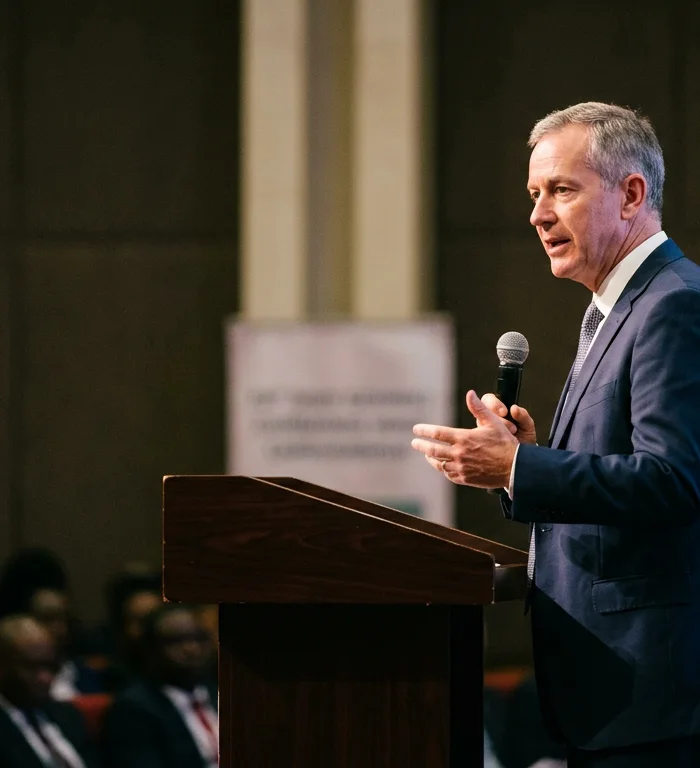
Absa’s Charles Russon warned on Nov. 4 that African banks are directing excess liquidity into government bonds, saying many markets have lending-to-deposit ratios below 100%, The Africa Report said in an article published Nov. 9.
A lending-to-deposit ratio below 100% means deposits exceed a bank’s loan book. Russon’s argument matters because surplus liquidity can support state borrowing rather than companies and projects that expand economic output.
In those markets, Russon said, “your excess cash has to go back into sovereign”. He challenged the view that government exposure is automatically safe: “You often hear the statement that sovereign is zero risk,” Russon said. “Sovereign is far from zero risk.”
Russon distinguished direct lending for infrastructure from passive bond-buying. Banks can finance roads, railways and dams, or they can buy securities, which he called “lazy sovereign”; with the former, “you’ve got line of sight to what is actually being delivered,” he said.
The comments were made onstage at the Africa Financial Summit in Luanda. They address a tension in African finance: profitable banks can coexist with companies that struggle to secure long-term funding.
Jeune Afrique and The Africa Report’s 300 Finance Champions ranking assesses banks using measures that include lending to the real economy, rather than only profit, assets and return on equity. Absa is second on that list, according to The Africa Report.
Russon said banks still have to protect depositors and lend only where activity is “bankable and sustainable”. Even so, he said he would “rather position our excess into productive assets”, because “we grow when the economies and countries and communities that we operate in grow”.
For smaller companies, Russon said traditional credit models often depend on data and property titles that many SMEs do not have. He argued banks should find responsible ways to build richer borrower profiles, asking: “If they can gather and build those pictures… what is stopping the financial sector from building those pictures?”
Asked what would most improve banks’ ability to finance productive investment by 2030, Russon said the industry must “measure outputs and not inputs”. He said investors and ratings agencies need to see a route to durable growth with manageable risk; if that happens, “we get rerated”.
More stories
- Monrovia mayor-designate seeks $14.5m city budget
- Iran's attacks hit 25 tankers near Strait of Hormuz
- Russia strikes Ukraine as Odesa faces electricity strain
- Bahrain reports two injuries after Iranian aerial attacks
- Baltic responders fight Sparta II fire after drone strike
- Estonia to close 5 Russia road crossings for six months
- Ruling-family cases leave reform uncertain in 6 African states
- Aigner nears German presidency before Jan. 30 vote
- Philippine internet users 16 and older use AI at 94.4% rate
- Nelson Mandela Bay faces 70 Route 67 fixes
Latest news
- Nvidia board gets Trump input on Jensen Huang return as CEO
- Rwanda faces budget strain from 85% electricity access push
- ICE arrests at Seattle airport draw protests and scrutiny
- AI doubts leave Asian stocks facing a new investment test
- EU rejects COP31 deal as fossil fuel divisions block pact
- Deal Sheet: Fortis shutdown costs over 400 jobs
- Germany to pay about $11 a month into child pension accounts
- Laura Brand curbs prison messages after YouTube dispute